
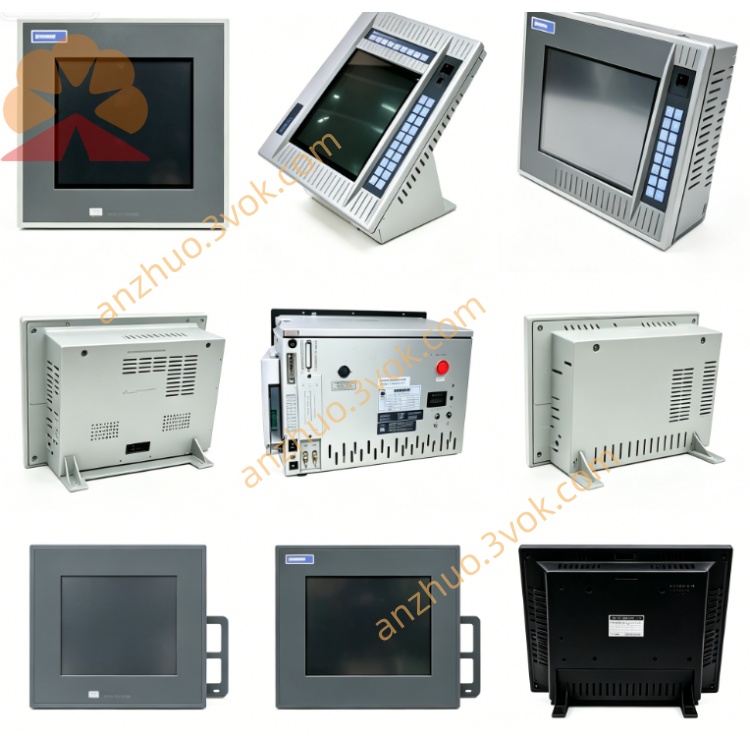
XYCOM XVME-530 VME Analog Output Module
Description
XYCOM XVME-530 Product Description
I. Product Overview
The XVME-530 is a 6U dual-high VMEbus 8-channel isolated analog output module launched by XYCOM (now under Pro-face). It is designed for industrial high-precision and strong-isolation analog control scenarios based on the VME architecture. Its core positioning is a high-isolation, multi-range, and calibratable industrial-grade analog output card. Each channel has independent 12-bit D/A conversion and 300V photoelectric isolation. It is suitable for industrial process control, valve/servo drive, instrument calibration, power monitoring, and high-reliability analog output expansion for outdated VME systems. This module has been officially discontinued and is mainly available in second-hand, refurbished, and inventory spare parts in the market.
Core Positioning
As a VMEbus standard slave device, the XVME-530 focuses on "6U dual high + 8-channel full isolation + 12-bit high precision + voltage/current dual mode + independent calibration + industrial-grade anti-interference + long-distance stable transmission". Each slot integrates 8 isolated analog outputs. Each channel has a hardware jumpers for setting the range, and comes with a DC/DC isolated power supply. It solves the core pain points of multi-channel, high-precision, and high-safety analog signal output in strong-interference industrial sites.
II. Core Functional Characteristics
1. Standard VMEbus interface (fully compatible slave device)
Complies with the IEEE 1014 VMEbus specification, compatible with all 6U VME chassis and backplanes, operates in standard slave device mode, supports A16 short address space, the base address is configured through onboard switches, fixedly occupying 1KB address boundary, avoiding system address conflicts. Data width is compatible with D08/D16, compatible with 8/16-bit VME master controllers, backplane connection uses P1/P2 connectors, supports VME standard interrupts (I1-I7) and system fault signals (SYSFAIL), plug-and-play.
2. 8-channel independent isolated analog output (core function)
Equipped with 8 independent 12-bit D/A converters, each channel has 300V optocoupling (digital logic and analog circuit completely isolated), provides 8 independent, hardware-configurable analog output channels (channels 0-7), each channel can independently set the voltage or current mode, channels do not interfere with each other, can be connected to regulating valves, proportional valves, frequency converters, servo amplifiers, industrial instruments and other types of analog control devices.
Resolution: 12-bit D/A converter, total error ≤ ±0.5 LSB (voltage), ±0.66 LSB (current), excellent linearity.
Voltage range (single/dual polarity): 0–5V, 0–10V, ±2.5V, ±5V, ±10V, covering the industrial standard voltage signal range.
Current range: 4–20mA (industrial standard current loop), compatible with long-distance transmission and two-wire transmitter.
Drive capability: maximum voltage output drive current ±10mA; maximum load resistance for current output 500Ω.
Isolation characteristics: 300V optocoupling per channel, effectively blocking ground loop interference, suitable for strong electrical interference sites.
Calibration function: each channel has independent gain/bias adjustment, can be hardware zeroed, long-term stability is good.
Response time: conversion time 42μs; voltage stability time 8μs, current stability time 30μs, dynamic response is fast.
3. Onboard isolated power supply and anti-interference design
Built-in independent DC/DC isolated converter, no need for external auxiliary power supply, directly powered by VME bus + 5V, power supply for analog and digital circuits is completely isolated, further reducing interference. The circuit board adopts multi-layer board wiring, gold-plated gold fingers design, key circuits add filtering and surge protection, strong anti-static and vibration resistance, suitable for harsh industrial environments.
4. Flexible control and status monitoring
Supports query-style or interrupt-style output update, compatible with different system real-time requirements; the front panel is equipped with DB37 output connector and status indicator light, can intuitively monitor module power supply, operation and output status, facilitating rapid fault diagnosis in the field.
III. Hardware Specifications Details
Bus Interface Specifications
Bus Protocol: IEEE 1014 VMEbus, standard slave device mode;
Address Space: A16 short address, switch configuration 1KB boundary base address;
Data Width: D08/D16; Interrupt support: VME standard interrupt I1-I7, configurable vector;
Backplane interface: P1/P2 connectors;
Dimensions: 6U (160mm×233.4mm), single slot;
Weight: Approximately 0.5kg.
Analog output specifications
Number of channels: 8 independent isolated analog outputs;
Converter: 12-bit D/A (per channel independently);
Voltage range: 0–5V, 0–10V, ±2.5V, ±5V, ±10V;
Current range: 4–20mA;
Drive capability: ±10mA voltage, maximum 500Ω load current;
Isolation level: 300V光电 isolation per channel;
Accuracy: Voltage ±0.5 LSB, current ±0.66 LSB;
Stabilization time: Voltage 8μs, current 30μs;
Calibration: Independent gain/bias per channel adjustable.
Electrical and environmental specifications
Power supply: +5V DC (VME bus power supply), typical power consumption 2.6A (full load);
Operating temperature: 0℃~+65℃;
Storage temperature: –40℃~+85℃;
Humidity: 5%–95% RH (non-condensing);
Anti-vibration: Compliant with industrial standards, suitable for equipment vibration environments.
Four. Typical application scenarios
1. High-reliability actuator driver for industrial process control
Suitable for strong interference scenarios in industries such as chemical, energy, and water treatment, with 8 isolated outputs for controlling valves, proportional valves, frequency converters, etc., 300V isolation to block ground loop interference, 4–20mA current output for long-distance transmission, ensuring control stability.
2. High-precision signal output for servo and motion control
Used in industrial automation production lines, robot control, output ±10V analog signals to drive servo amplifiers, 30μs current stabilization time to meet dynamic motion control requirements, multiple channels independent output suitable for multi-axis linkage control.
3. Test measurement and instrument calibration system
Used in industrial test equipment, calibration systems, simulate standard voltage/current signals (such as 4–20mA, 0–10V) to calibrate instruments, test control system response, 8 independent outputs can simultaneously calibrate multiple devices, improving test efficiency.
4. Power and energy monitoring system
Used in substations, grid monitoring scenarios, output analog signals to control excitation regulators, reactive power compensation devices, high isolation design to resist interference from the high-voltage side, ensuring safe and stable operation of power equipment.
5. Upgrade of old VME systems with high isolation output
Directly replace non-isolated or low-isolation analog output modules in old systems, no need to modify the chassis structure, upgrade to 8 channels of 300V isolation output, suitable for maintenance of old VME equipment in military, aerospace fields, extend equipment lifespan.
Five. Installation and programming key points Installation steps
Preparations: Ensure that the P1/P2 slots of the VME chassis are intact and the +5V power supply is stable; Prepare shielded twisted-pair cables according to the output type (voltage/current) and range.
Jumper configuration: Set the voltage/current mode and corresponding range for each channel independently; Set the A16 base address through the switch to avoid address conflicts; Configure the interrupt vector (if interrupt is required).
Module insertion: Align the XVME-530 to the 6U slot and push it in smoothly to ensure that the gold fingers make good contact with the backplane P1/P2, and tighten the panel fixing screws.
Wiring connection: Connect through DB37 connectors, with voltage output connected to the positive pole and ground, current output connected to the positive and negative poles and ground, and the shielded layer grounded at one end; The load resistance of the current output should be ≤ 500Ω.
Power-on self-test: After the chassis is powered on, the POWER indicator light is constantly on, indicating that the module is running normally; The corresponding status indicator light will light up when the channel outputs.
Programming flow (simplified)
Address mapping: Configure the A16 base address, map the D/A control, data, status, and interrupt registers to the system memory to establish the communication channel between the CPU and the module.
Channel configuration: Read the hardware jumper status to confirm the output mode and range of each channel; Enable the output channels through software.
Data output: Write 12-bit digital quantities (0–4095) to the data register, and the module automatically converts them to corresponding analog signals for output, supporting query or interrupt-based updates.
Calibration operation: Adjust the gain and offset of each channel through the calibration register to minimize errors and ensure long-term accuracy.
Interrupt configuration: Enable the required interrupts (such as output completion, fault alarm), and write the interrupt service program to handle real-time status.
Reset operation: When the system resets, the module clears the output register, turns off the interrupt, and clears the flags to ensure safe output.
Six. Core advantages
1. 8-channel full isolation + 12-bit high precision, safe and reliable
Each channel has 300V photoelectric isolation to block ground loop interference; The 12-bit D/A accuracy reaches ±0.5 LSB, with an independent calibration design, suitable for strong interference and high-precision control scenarios.
2. Voltage/current dual mode + multiple ranges, adaptable
Support 5 voltage ranges and 1 standard current range, each channel has independent hardware configuration, covering the industrial standard signal range, suitable for various actuators and loads.
3. On-board isolated power supply + industrial-grade design, strong anti-interference
Built-in DC/DC isolated power supply, no need for external assistance; 6U compact size, wide temperature operation (0°C to +65°C), anti-vibration, suitable for industrial harsh environments.
4. Fast response + long-term stability, excellent performance
Voltage stabilization time 8μs, current 30μs, fast dynamic response; Each channel's gain/bias can be independently adjusted, no drift in long-term operation, low failure rate.
5. DB37 interface + status indication, easy maintenance
Standard DB37 connector wiring is convenient; The front panel status indicator light is intuitive, facilitating quick fault diagnosis on-site and reducing maintenance difficulty.
Seven. Precautions
The module is no longer in production. When purchasing, prefer to choose second-hand/reconditioned spare parts with complete test reports, check the model (XVME-530) and version, to avoid faulty or incompatible modules.
When wiring, strictly distinguish voltage/current output; The load resistance of the current output must not exceed 500Ω, otherwise the output circuit will be burned; For long-distance current output, use shielded twisted-pair cables, with the shielded layer grounded at one end.
The power supply is +5V bus power supply to ensure voltage stability (±5%), avoiding voltage fluctuations that cause output drift; Do not reverse the power supply connection to prevent module damage. The wiring at the site separates the strong and weak electrical systems, keeping them away from strong interference devices such as frequency converters and motors, reducing the impact of electromagnetic interference on the signals, and avoiding output fluctuations or errors.
Operating temperature: 0℃ to +65℃. During installation, ensure that the chassis has good ventilation to avoid overheating; in high-frequency dynamic output scenarios, appropriately reduce the update frequency to extend the module lifespan.
During installation and maintenance, take precautions against static electricity, wear an anti-static wristband, and operate on an anti-static workbench; before plugging or unplugging the module, cut off the power supply of the chassis to prevent damage to the backplane and the module due to live insertion or removal.
Regularly calibrate the output accuracy, especially in long-term operation or harsh environmental conditions, by adjusting the gain/bias to ensure that the output error remains within the allowable range.
Get a Quote