
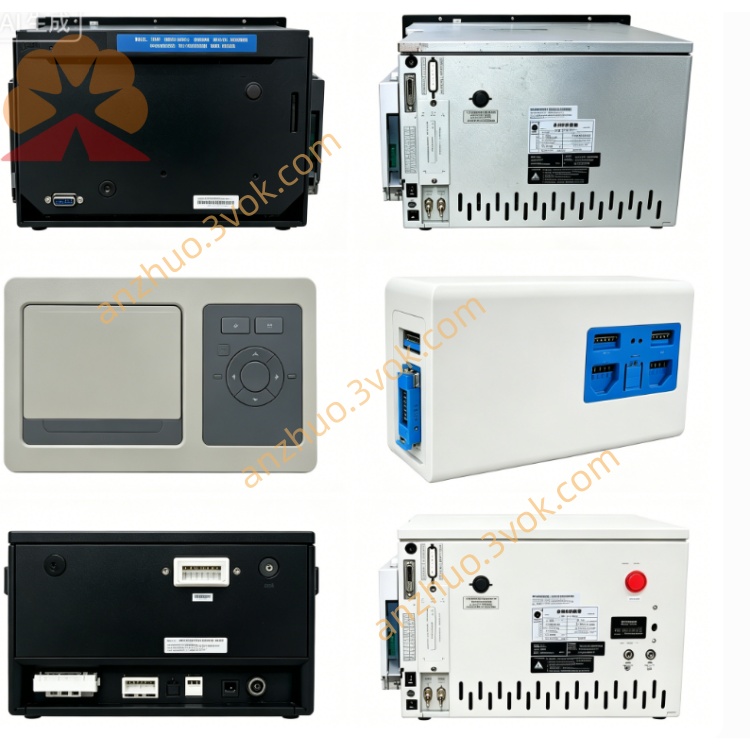
XYCOM XVME-401 VME Digital I/O Module
Description
XYCOM XVME-401 Detailed Product Description
I. Product Overview
XVME-401 is a 3U single-height VMEbus four-channel RS-422A/RS-485 differential serial communication module launched by XYCOM (now under Acromag/Xembedded). It is specifically designed for industrial long-distance, high-interference resistance, and multi-node serial communication. It is a differential version of XVME-400 (RS-232C) and is compatible with VME architecture for measurement and control, data acquisition, distributed device networking, and upgrading of outdated systems. This module has been officially discontinued. The market circulation mainly consists of second-hand, refurbished, and inventory spare parts. The standard order number is 70401-001.
Core Positioning
As a VMEbus slave device, XVME-401 focuses on "4 independent RS-422A/RS-485 differential serial ports + multiple protocol communication + each channel independent baud rate + interrupt-driven + long-distance interference resistance", high-density integrated differential communication capability per slot, and solves the problem of reliable communication in industrial sites with long distances and strong interference environments. It is suitable for multi-node, long-distance industrial equipment interconnection scenarios.
II. Core Functional Characteristics
1. Standard VMEbus Interface (Fully Compatible Design)
Complies with the IEEE 1014 VMEbus specification, compatible with all 3U VME enclosures and backplanes, operating in device mode. The address space supports A16 (64KB), with a fixed 1KB address window, the base address is flexibly configured through onboard jumpers to avoid system address conflicts. The data width is compatible with D08/D16, compatible with 8/16-bit VME master controllers. The backplane connection uses P1 connector, compatible with single-high module standards, supports VME 7-level interrupts (configurable priorities and vectors), can generate 16 independent interrupt vectors, meeting real-time data transmission and fault alarm requirements.
2. 4 Independent RS-422A/RS-485 Differential Channels (Core Function)
Equipped with 2 Zilog Z8530 serial communication controllers (SCC), providing 4 completely independent RS-422A/RS-485 differential interfaces, each channel has independent baud rate generator, modulation and demodulation control signals, and interrupt capabilities. The channels do not interfere with each other, support full-duplex (RS-422A) or half-duplex (RS-485) transmission, and can simultaneously connect 4 differential devices (such as PLC, serial port sensors, industrial instruments, multi-node bus devices).
Communication mode: Supports asynchronous (ASCII), single synchronous, double synchronous, HDLC/SDLC protocols, compatible with industrial standards and custom communication requirements.
Baud rate range: Asynchronous up to 57.6kbps, synchronous up to 500kbps, each channel can be independently programmed for setting, flexibly matching different device rates.
Differential drive and anti-interference: RS-422A/RS-485 differential levels, high common-mode suppression ratio, strong anti-electromagnetic interference capability, maximum transmission distance of 1200 meters (low baud rate), compatible with long-distance wiring in industrial sites.
Multi-node networking: RS-485 mode supports 1 master and multiple slaves (up to 32 nodes) bus networking, compatible with cascading of distributed measurement and control system devices.
Modem control: Each channel provides RTS, CTS, DCD, DTR hardware handshake signals, supports standard Modem connection and hardware flow control, ensuring stable data transmission.
3. Flexible Interrupt and Data Reception/Transmission Control
Supports multiple event interrupts, including data reception/ transmission completion, reception errors (odd/even/frame/overflow), Modem signal status changes, etc. Can shield any channel interrupt, interrupt vectors can be configured, compatible with high real-time data transmission scenarios. Interrupt response is fast, supports DMA or query-style data reception/transmission, meeting different system architecture requirements.
4. Industrial-grade High Reliability Design
Standard operating temperature: -20℃ to +70℃, storage temperature: -40℃ to +85℃, humidity: 5%–95% RH (non-condensation), compatible with industrial sites, outdoor and test equipment, etc. harsh environments. The circuit board uses multi-layer board wiring, gold-plated gold fingers design, key circuits add noise suppression, CE/FCC Class A certification, strong anti-static and anti-interference capability, stable long-term operation.
5. Panel Status Indicator Lights
The front cover is equipped with POWER, RUN, CH0–CH3 TX/RX indicator lights: POWER constantly on indicates +5V power supply is normal; RUN constantly on indicates self-check passed and module is running normally; TX/RX corresponding to the channel sending/receiving data flashes, facilitating quick troubleshooting of channel communication status in the field.
III. Hardware Specifications Details
Bus Interface Specifications Bus protocol: IEEE 1014 VMEbus, slave device mode;
Address space: A16 (64KB), 1KB window, jumper configuration base address;
Data width: D08/D16;
Interrupt support: VME 7-level interrupt, configurable priority and vector, 16 independent interrupt vectors;
Backplane interface: P1 connector;
Size: 3U (100mm × 233.4mm), single slot;
Weight: Approximately 0.3kg.
Serial channel specifications
Number of channels: 4 independent RS-422A/RS-485 differential interfaces;
Communication controller: 2 × Zilog Z8530 SCC;
Communication mode: Asynchronous, single synchronous, double synchronous, HDLC/SDLC;
Baud rate: Asynchronous maximum 57.6kbps, synchronous maximum 500kbps;
Handshake signals: RTS, CTS, DCD, DTR (per channel);
Electrical standard: RS-422A/RS-485 differential level;
Transmission distance: Maximum 1200 meters (low baud rate);
Networking capability: RS-485 supports 1 master 32 slave multi-node bus;
Connector: Front panel JK1/JK2 interface (DB9 or DB25, depending on version).
Electrical and environmental specifications
Power supply: +5V DC ±5%, typical current 1.4A, maximum 1.6A; +12V DC typical current 100mA, maximum 110mA;
Operating temperature: -20℃ to +70℃;
Storage temperature: -40℃ to +85℃;
Vibration resistance: 5–2000Hz, 2.5g;
Shock resistance: 30g (working)/50g (non-working);
Humidity: 5%–95% RH (non-condensation);
Altitude: Working maximum 3048 meters, non-working maximum 15240 meters.
IV. Typical application scenarios
1. Long-distance industrial communication and distributed measurement and control
Suitable for long-distance scenarios in factories, rail transit, energy equipment, etc., connecting remote PLCs, sensors, and instruments, achieving distributed data acquisition and control through RS-485 multi-node networking, with differential anti-interference design ensuring stable communication in strong electromagnetic environments.
2. Multi-node industrial bus networking
Used in intelligent buildings, security systems, production lines automation, building RS-485 bus networks, connecting access control controllers, alarm hosts, frequency converters, remote I/O modules, achieving 1 master 32 slave device interconnection, simplifying wiring and reducing costs.
3. Upgrade of old VME system differential communication
Directly replace RS-232C short-distance modules in old systems (such as XVME-400), without modifying the chassis architecture and main program, can upgrade 4 channels of RS-422A/RS-485 long-distance differential communication capabilities, suitable for maintenance of old VME equipment in military, aerospace, industrial control, etc., extending equipment lifespan.
4. High-speed data acquisition and instrument interconnection
Used for industrial test equipment, data recorders, connecting high-speed serial port instruments, encoders, data acquisition devices, through synchronous communication mode to achieve high-speed data transmission (maximum 500kbps), differential signals guaranteeing data integrity in long-distance transmission.
5. Industrial automation equipment interconnection
Used for CNC machines, robots, semiconductor equipment, connecting remote operation panels, servo drives, I/O modules, through RS-422A full-duplex mode to realize real-time control signals and status data interaction, vibration-resistant, wide-temperature design suitable for equipment harsh operating environments.
V. Installation and programming key points Installation steps
Preparations: Ensure that the P1 slot of the VME chassis is intact and the +5V/+12V power supply is stable; Prepare RS-422A/RS-485 twisted shielded cable, distinguish the differential A/B lines from the ground line.
Jumper configuration: Set the A16 base address jumper to avoid address conflicts; Configure the interrupt priority and vector jumper (if interrupt is required).
Module insertion: Align the XVME-401 to the 3U slot and push it in smoothly to ensure that the gold fingers make good contact with the backplane, and tighten the panel fixing screws.
Cable connection: Connect the differential devices to the JK1/JK2 interface on the front panel, connect the A line to the A line, the B line to the B line, and connect the ground line; Connect the shield layer in a single-ended manner, keep away from strong interference equipment such as frequency converters and motors, and avoid parallel wiring for long-distance wiring.
Power-on self-check: After the chassis is powered on, the POWER and RUN indicator lights are constantly on, all TX/RX indicator lights are off; When sending data, the corresponding TX/RX flashes, indicating that the module is running normally.
Programming flow (simplified)
Address mapping: Configure the A16 base address, map the control, data, status, and interrupt registers to the system memory, establish the communication channel between the CPU and the module.
Channel configuration: Write the configuration word to the control register, set the communication mode (asynchronous/synchronous), baud rate, data bits/parity bits/stop bits, flow control method, and select RS-422A/RS-485 mode.
Data reception and transmission: Send/receive data through the data register, read the status register to obtain channel status (transmitting empty, receiving full, error flag), support query or interrupt-based reception and transmission.
Interrupt configuration: Enable interrupts and set trigger conditions (receiving data, transmission completion, error), write the interrupt service program to handle real-time data and fault alarms.
Reset operation: When the system/software resets, the module clears the transmission/reception cache, turns off interrupts, and clears flags, ensuring communication security.
Six. Core advantages
1. 4 differential serial ports, strong anti-interference ability over long distances
Single slot integrates 4 RS-422A/RS-485 differential interfaces, the farthest transmission distance is 1200 meters, with high common-mode suppression ratio, suitable for industrial strong interference environments, solving the pain points of short-distance RS-232C and susceptibility to interference.
2. Multiple protocols + independent baud rate, wide application scenarios
Support asynchronous, synchronous, HDLC/SDLC and other protocols, each path can be independently programmed with baud rate (up to 57.6kbps asynchronous / 500kbps synchronous), compatible with various differential devices, suitable for long-distance communication, multi-node networking, and high-speed data acquisition scenarios.
3. RS-485 multi-node networking, simple wiring and low cost
RS-485 mode supports 1 master 32 slave bus networking, reducing the number of wiring and complexity, lowering the system hardware cost, suitable for distributed measurement and control and device networking requirements.
4. Industrial-grade wide temperature reliability, stable in harsh environments
-20℃ to +70℃ wide temperature design, resistant to vibration, shock, EMC compliance, suitable for industrial sites, outdoors, and equipment vibration, long-term operation stable, low maintenance cost.
5. Standard VME bus, easy integration and upgrade
Fully compatible with VMEbus specification, directly compatible with existing 3U VME systems; simple configuration, convenient wiring, can directly replace XVME-400 and RS-232C modules, support upgrading of old systems and building of new systems, strong compatibility.
Seven. Precautions The module has been discontinued. When purchasing, prioritize choosing second-hand / refurbished spare parts with complete test reports. Verify the model 70401-001 and version to avoid faulty or incompatible modules.
The interface is RS-422A/RS-485 differential level. Do not connect to RS-232C or high-voltage signals; otherwise, the interface circuit will be burned out. Long-distance transmission must use twisted-pair shielded cables, and the A/B lines must not be reversed.
Power supply must provide +5V and +12V simultaneously to ensure stable voltage and avoid voltage fluctuations causing communication abnormalities; do not reverse the power supply connection to prevent module damage.
When networking with the RS-485 bus, both ends of the bus need to be connected with 120Ω terminal resistors to reduce signal reflection; the node address must be unique to avoid conflicts that cause communication failures.
On-site wiring should separate the strong and weak electrical lines, single-ended ground the shielding layer, stay away from strong interference equipment, reduce the influence of electromagnetic interference on differential signals, and avoid data transmission errors.
The operating temperature is -20℃ to +70℃. During installation, ensure that the chassis has good ventilation to avoid overheating; in high-temperature or high-frequency communication scenarios, reduce the baud rate to extend the module's lifespan.
During installation and maintenance, take precautions against static electricity, wear an anti-static wristband, and operate on an anti-static workbench; before plugging or unplugging the module, cut off the power supply of the chassis to prevent damage to the backplane and module due to live plugging or unplugging.
Get a Quote