
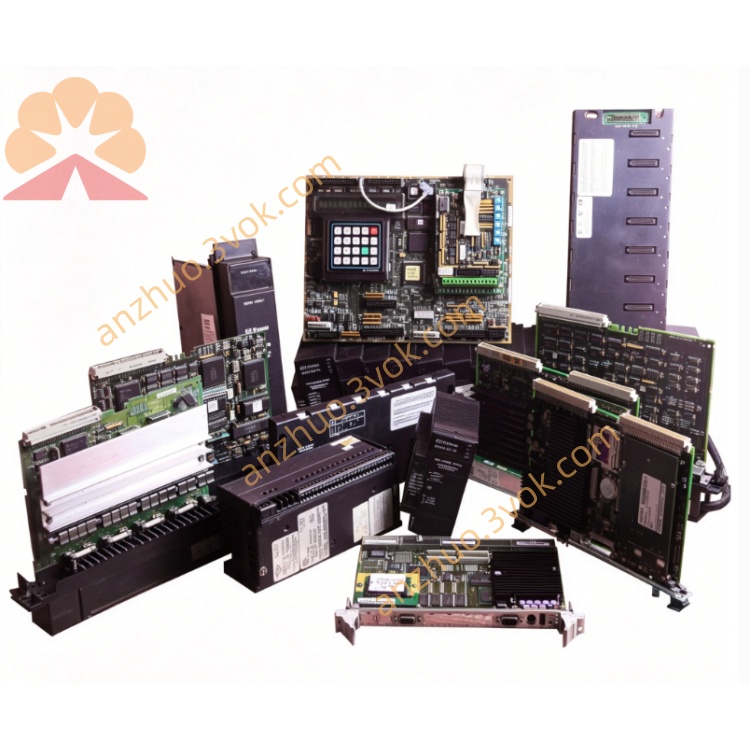
XYCOM XVME-085 VME Analog Input Acquisition Module
Description
XYCOM XVME-085 (VMEbus Non-Self-Contained Core Prototype Development Module) Detailed Product Description
I. Product Overview
The XYCOM XVME-085 is a 6U standard VMEbus non-intelligent core (NIKL) prototype development module, specifically designed for rapid prototype verification and small-scale customized development of non-standard VME peripheral devices. It provides a complete VME bus interface and mature signal links, and reserves a large area for user-defined wiring, helping engineers quickly build dedicated VME slave modules without having to design the bus circuit from scratch. The product has been discontinued, and the market is mainly composed of second-hand / refurbished spare parts. It has strong compatibility, stable long-term operation, and high cost performance.
II. Model Positioning and Core Functionality
Model Positioning: XVME-085 is a 6U prototype module. The 3U version in the same series is XVME-087. The core adopts the XYCOM standard non-intelligent core (NIKL) architecture, which is the same as the production-type non-intelligent I/O modules of the company. Its reliability has been verified.
Core Functionality:
VME Non-standard Interface Development: Quickly design 8/16-bit VME slave devices, such as dedicated I/O, motion control, communication interface cards;
Prototype Verification and Small Batch Production: Custom functional modules for scenarios such as semiconductors, military, and rail transportation for verification and small batch production;
Teaching and Research Platform: Research and experimental platform for VME bus timing, interrupts, and interface technologies;
Expansion of Old Systems: Add non-standard function interfaces to existing VME systems without replacing the main controller and backplane.
III. Core Functional Characteristics
1. Standard VMEbus Interface, Complete Slave Signal Support
Fully compatible with VMEbus IEEE 1014 standard, supports A16 address space, D08 (8-bit) / D16 (16-bit) slave device mode, provides all the signals required by the VME bus: address / data / control buffer, timing generation, DTACK/DIACK response, SYSFAIL system failure, etc. Built-in VME interrupt circuit, supports IRQ0–IRQ7 dynamic interrupt requests (ROAK), compatible with multi-master system interrupt interaction.
2. Non-intelligent Core (NIKL) Architecture, Simple and Reliable Easy to Use
Adopts a non-intelligent design without a local processor, with the bus logic implemented by hardware circuits, not relying on firmware / software, powers on and works immediately, low failure rate, and simple maintenance. Users only need to build application circuits in the prototype area to quickly implement custom functions, significantly reducing the development threshold of VME slave modules.
3. Large Prototype Development Area, Flexible Customization
Board-mounted 35.5 square inches (approximately 229 cm²) grid wiring area, accounting for 72% of the board area, can accommodate approximately 75 14-pin devices, supports through-hole / surface-mount component soldering. Reserved standard I/O interfaces, power / ground grid, and signal vias, can directly connect VME bus signals and custom circuits, quickly build analog, digital, motion control, etc. dedicated interfaces.
4. Flexible Configuration and Status Indicators, Easy Debugging
Address Decoding: Board-mounted multiple sets of jumpers / switches, can flexibly configure A16 base address and chip select logic, avoiding address conflicts;
Status Indicator Lights: Panel equipped with POWER, BUS, FAIL, etc. LEDs, real-time display of power, bus activity, and fault status, no need for software to quickly locate problems;
Standard I/O Architecture: Integrated XYCOM standard I/O registers (status / control), facilitating对接 with system software.
5. Industrial-grade High Reliability Design, Adaptable to Harsh Environments
Wide Temperature Operation: Working temperature 0℃~+65℃, storage temperature -40℃~+85℃, covering industrial site temperature fluctuations;
Anti-Vibration / Shock: 6U rugged board card, metal panel fixation, anti-vibration 1g (10–100Hz), anti-shock 15g, suitable for equipment vibration and transportation shock;
Electrical Isolation and Anti-interference: Board gold-plated gold fingers, shielding design, complies with CE/FCC Class A standards, anti-static, anti-electromagnetic interference, can operate stably in strong interference environments such as frequency converters, motors, etc.;
Low Power Consumption: Powered by +5V, typical current 700mA (3.5W), no additional heat dissipation required, low heat generation during long-term operation. IV. Hardware Specifications Overview
Bus and Interface
Bus standard: VMEbus IEEE 1014 (2.0/3.0 compatible);
Slave mode: A16/D08 (EO), A16/D16;
Interrupt support: IRQ0–IRQ7 (dynamic ROAK);
Signal support: Address / Data / Control Buffer, Timing Generation, DTACK, DIACK, SYSFAIL, etc.
Prototype Development Area
Area: 35.5 square inches (approximately 229 cm²);
Wiring Grid: Standard spacing, supports through-hole / surface-mount components;
Reserved Interfaces: VME signals, power (+5V), ground, I/O terminals.
Electrical Parameters
Power Supply: +5VDC ±5%, typical current 700mA;
Power Consumption: typical 3.5W, maximum ≤5W;
Power Protection: Overvoltage, Overcurrent, Reverse Connection Protection.
Timing Performance
Read Cycle Total Duration: Maximum 535ns;
Write Cycle Total Duration: Maximum 665ns;
Interrupt Response Delay: Low to 425ns.
Environment and Mechanics
Operating Temperature: 0℃~+65℃;
Storage Temperature: -40℃~+85℃;
Humidity: 10%~90% RH (no condensation);
Anti-Vibration: 1g (10–100Hz);
Anti-Shock: 15g;
Size: Standard 6U VME (233.35mm × 160mm), single slot;
Weight: Approximately 0.6kg.
V. Main Application Scenarios
1. VME Custom I/O Module Development
Used for developing non-standard digital / analog I/O, motion control interfaces, sensor signal conditioning cards, suitable for special interface requirements of semiconductor equipment, military electronics, industrial robots, etc.
2. Embedded System Prototype Verification
In aerospace, rail transportation, medical equipment, etc., quickly verify VME bus interface logic, timing and interrupt design, reduce development risks and cycles.
3. Function Expansion of Old VME Systems
To add new function interfaces to ** discontinued VME systems (such as XYCOM XVME-661/010 platform)** without replacing core modules, extend equipment service life, and reduce renovation costs.
4. Teaching and Research Experimental Platform
For universities and research institutions, used for VME bus protocol, timing analysis, interrupt mechanism, embedded system design, etc. course teaching and experimental research.
5. Small Batch Special Module Production
Applicable for high-reliability small batch scenarios in military, aerospace, etc., directly based on XVME-085 development area to solder components, quickly produce special function modules, without re-designing PCB.
VI. Installation and Maintenance Key Points Installation steps
Box Preparation: Select a standard 6U VME chassis with a backplane, and confirm that the +5V power supply is normal and the slots are not oxidized;
Address and Interrupt Configuration: According to the system address mapping, set the onboard jumpers/switches, and configure the A16 base address and interrupt level;
Custom Circuit Welding: In the prototype area, solder the required components and wiring, connect VME signals, power supply and ground, and perform insulation and anti-interference treatment;
Board Installation: Align the slot and push it in smoothly, tighten the panel screws, and ensure that the gold fingers make good contact;
Power On Debugging: After powering on, the POWER light is always on; confirm the normal bus communication by the BUS light flashing; use an oscilloscope/logic analyzer to verify the timing and interrupts, and troubleshoot the faults in the custom circuit.
Daily Maintenance
Regular Cleaning: Disconnect the power supply every 3 months, wipe the board and gold fingers with a dry soft cloth. The gold fingers can be lightly wiped with an alcohol cotton swab to prevent oxidation and poor contact;
Configuration Check: Regularly check if the jumpers/switches are loose or shifted, ensuring the correct address and interrupt configuration;
Prototype Area Inspection: Check if the soldering points are short-circuited or not, if the components are overheating and damaged, and repair potential hazards in time;
Environmental Monitoring: Keep the working environment temperature and humidity within the allowable range, avoid dust, corrosive gases and strong electromagnetic interference.
Common Fault Troubleshooting
POWER light does not light up: Check if the +5V power supply on the VME backplane is normal; troubleshoot the oxidation or poor contact of the gold fingers; check if the power circuit of the board card is damaged;
BUS light does not flash: Confirm that the VME bus master control is normal; check if the address configuration is conflicting; troubleshoot if the custom circuit is short-circuited and affecting the bus;
FAIL light is always on: Check if the SYSFAIL signal is triggered; troubleshoot power abnormalities, bus timing errors or faults in the custom circuit;
Interrupt without response: Check the interrupt level configuration; inspect the interrupt circuit wiring; troubleshoot the enable and response logic of the main control interrupt.
VII. Product Core Advantages
The XYCOM XVME-085 is a benchmark module for 6U VME non-intelligent core prototype development. Its core advantages lie in standard VME compatibility, mature NIKL architecture, large area custom area, flexible configuration, industrial-grade high reliability, and low power consumption for easy maintenance. It significantly reduces the development threshold of non-standard VME modules, is suitable for harsh working conditions and long lifecycle requirements in various fields, has stable spare parts, sufficient second-hand market, and high cost performance. It is an ideal choice for VME prototype verification and custom development.
Get a Quote