
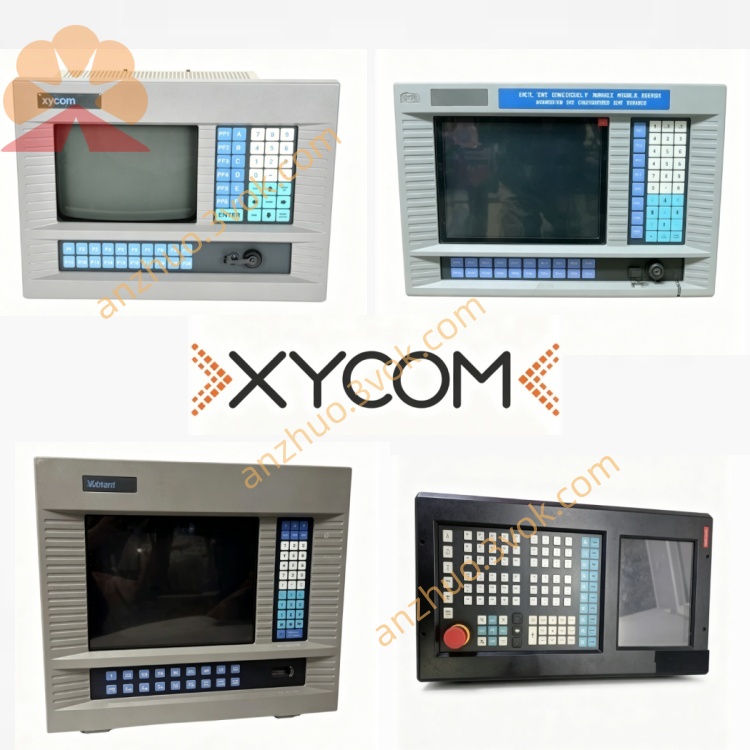
XYCOM XVME-661 VMEbus Pentium III SBC
Description
VME-70661-714 (XYCOM XVME-661) High-performance VME Bus Processor Module Detailed Product Description I. Product Overview
VME-70661-714 (the original model is XVME-661) is a 6U VME bus embedded processor module launched by XYCOM (now part of Pro-face/Acromag), designed for high-reliability and strong real-time scenarios such as industrial control, aerospace, and semiconductor equipment. It adopts a low-power Pentium III architecture, integrates VME bus interface, high-speed cache, large-capacity memory, and flexible expansion capabilities. It is the core computing unit of the VME system and has been discontinued. The mainstream is second-hand / refurbished spare parts, with strong compatibility and long-term stability.
II. Model Positioning and Core Functions
Model Definition: VME-70661-714 is the material number, corresponding to the standard configuration version of XVME-661; derivative models include 70661-099 (basic version), 70661-715 (high-capacity memory version), suitable for different computing power and storage requirements.
Core Functions:
Industrial process control: real-time monitoring, data acquisition, PID regulation and interlock protection in chemical, metallurgy, power, and water treatment industries;
Aerospace / military: onboard control, radar data processing, high-reliability computing and command control for weapon systems;
Semiconductor / electronic manufacturing: motion control, timing scheduling, data processing for lithography machines, etching machines, and detection equipment;
Core unit of VME system: as the main control unit of the VME bus, coordinating I/O modules, communication modules, and storage modules to build a complete industrial control station;
Upgrade of old systems: replacing XYCOM XVME-660, 670, etc., compatible with VME bus standards, with programs that can be directly transplanted.
III. Core Functional Characteristics
1. Low-power high-performance processor, strong real-time computing power
Equipped with an Intel Pentium III 700MHz low-power CPU, integrated 256KB secondary cache, standard 128MB SDRAM (maximum 256MB), supports 144-pin SODIMM memory expansion, balancing low power consumption (typical ≤ 15W) and strong real-time processing capabilities, suitable for industrial configuration, motion control algorithms, and real-time database operation.
2. Standard 6U VME bus architecture, full compatibility and expandability
Bus standard: fully compatible with VMEbus 2.0/3.0, supports 32-bit address / data transmission, asynchronous bus design, independent of system clock, strong anti-interference and high stability;
PMC expansion: onboard 32-bit PMC (PCI Mezzanine Card) slot, can be equipped with high-speed I/O, communication cards, graphics cards, flexible expansion functions, suitable for customized requirements;
Storage interface: onboard Type I/II IDE CompactFlash slot (supports solid-state storage, shock-resistant and drop-resistant), optional XVME-977 (hard disk / floppy drive module), XVME-979 (hard disk / CD-ROM module), meeting different storage capacity requirements.
3. Rich industrial-grade interfaces, seamless connection with on-site equipment
Communication interface: 2×RS-232, 1×RS-422/485, 1×10/100Mbps Ethernet, supports Modbus-RTU/TCP, TCP/IP protocols, compatible with PLC, sensors, and upper computers;
Video interface: 1×VGA, supports external display, resolution up to 1024×768, suitable for local debugging and monitoring. I/O and Debugging: On-board watchdog (Watchdog), hardware reset button, status indicator lights (POWER/FAIL/TEST), fault self-diagnosis, automatic reset in case of system freeze, enhancing system reliability;
Expansion Buses: Up to 16 VME modules can be connected through the VME backplane, expanding I/O such as analog, digital, motion control, and building large-scale distributed control systems.
4. Industrial-grade anti-interference and reliability design, stable operation in harsh environments
Wide temperature compatibility: Working temperature 0℃~+55℃, storage temperature **‑40℃~+70℃**, capable of withstanding industrial site temperature fluctuations;
Anti-vibration / shock: 6U standard board card, metal reinforced structure, anti-vibration 1g (10‑100Hz), anti-shock 15g, suitable for equipment operation vibration and transportation shock;
Electromagnetic compatibility: Compliant with CE, FCC Class A standards, gold plating process of the board, shielding design, anti-static, anti-electromagnetic interference, capable of stable operation near strong interference equipment;
Redundancy and protection: Supports +5V, +12V, -12V redundant power supply, overvoltage, overcurrent, reverse connection protection; power loss data protection, preventing program and data loss.
5. Compact standardized design, convenient installation and maintenance
Size specifications: Standard 6U VME board card (233mm×160mm×30mm), single-slot design, no occupation of additional slots, saving cabinet space;
Installation method: Compatible with 6U VME standard chassis / backplane, supports hot swapping (some chassis), installation simple, replacement quick;
Maintenance-friendly: Modular design, CPU, memory, storage, interface circuits are independently partitioned, fault location precise, maintenance cost low.
Four. Hardware Specification Overview
Core Configuration
Processor: Intel Pentium III 700MHz (low power version), 256KB secondary cache;
Memory: Standard 128MB SDRAM, maximum 256MB (144‑pin SODIMM);
Storage: On-board IDE CompactFlash (Type I/II), optional hard drive / optical drive module;
Expansion slots: 1×32-bit PMC slot, 1×VMEbus 64-bit interface;
Operating System: Supports Windows XP, Windows 2000, Linux embedded system. Interface configuration
Serial Port: 2×RS-232, 1×RS-422/485;
Ethernet: 1×10/100Mbps RJ45;
Video: 1×VGA (1024×768);
Debugging: Watchdog, reset button, status indicator lights (POWER/FAIL/TEST);
Bus: VMEbus 2.0/3.0 (32-bit address / data).
Electrical Parameters
Input Power Supply: +5V ± 5%, +12V ± 5%, -12V ± 5%;
Power Consumption: Typical ≤ 15W, Full Load ≤ 20W;
Power Protection: Overvoltage, Overcurrent, Reverse Connection Protection.
Environmental and Mechanical Parameters
Operating Temperature: 0℃~+55℃;
Storage Temperature: -40℃~+70℃;
Humidity: 10%~90% RH (No Condensation);
Anti-Vibration: 1g (10-100Hz);
Anti-Shock: 15g;
Size: 233mm×160mm×30mm (6U Standard);
Weight: Approximately 0.8kg.
VII. Main Application Scenarios
1. Industrial Automation Control Station
As the core of the VME system, it drives the automation of production lines, process monitoring, and equipment linkage, suitable for high-temperature, dust, and strong interference scenarios in industries such as chemical, metallurgy, power, and water treatment, ensuring continuous and stable production.
2. Aerospace and Military Electronics
Used for onboard control, radar signal processing, navigation systems, weapon control, meeting high reliability, strong real-time, and harsh environment requirements, suitable for military standards and long lifecycle needs.
3. Semiconductor and Precision Manufacturing
Suitable for motion control, timing scheduling, data acquisition and analysis of lithography machines, etching machines, and wafer inspection equipment, ensuring nanometer-level processing accuracy and equipment stability.
4. Rail Transit and Energy Management
Used for train on-board control, signal systems, substation monitoring, wind power / solar energy data collection, achieving real-time monitoring, fault warning, and energy efficiency management, suitable for outdoor and mobile scenarios.
5. Upgrade and Replacement of Old VME Systems
Directly replace old processor modules such as XYCOM XVME-660, 670, 674, without the need for re-designing hardware or rewriting programs, reducing renovation costs and downtime, and extending equipment service life.
VIII. Installation and Maintenance Key Points Installation steps
Box Preparation: Select a standard 6U VME chassis and install the VME backplane. Ensure that the backplane slots are intact and free from oxidation;
Board Card Installation: Align VME-70661-714 with the chassis slot, push it in smoothly, and tighten the panel fixing screws to ensure good contact;
Wiring: Connect +5V, +12V, -12V power supplies, and connect serial ports, Ethernet, and VGA interfaces to the corresponding devices;
Power On and Debugging: After powering on, the POWER indicator light will light up, and the system will start; connect the display via the VGA interface, configure the IP address, serial port parameters, install drivers and configuration software, and test VME bus communication and I/O control.
Daily Maintenance
Regular Cleaning: After every 3 months of power off, use a dry soft cloth to wipe the surface of the board card, interfaces, and gold fingers, remove dust and oil; the gold fingers can be wiped with an alcohol cotton swab to avoid oxidation and contact failure;
Interface Inspection: Regularly check if the serial ports, Ethernet, and VGA interfaces are loose or damaged, and replace faulty cables in time;
Storage Maintenance: Regularly back up the system and important data, check the health status of CompactFlash, and avoid data loss;
Environmental Inspection: Ensure that the working environment temperature and humidity are within the allowable range, avoid long-term high temperature and high humidity, and strong corrosive environments, to extend the lifespan of the board card.
Common Fault Troubleshooting
System Unable to Start: Check if the power connection is normal and the power voltage is stable; check if the gold fingers are oxidized, and if the board card is firmly inserted; troubleshoot if the CPU, memory is loose or damaged;
VME Bus Communication Failure: Check if the backplane is intact and the slots are oxidized; verify if the VME bus address and interrupt number configuration is correct; replace the board card or the backplane and try again;
Serial Port / Ethernet Not Working: Check if the cable connections are correct, and if the interfaces are damaged; verify if the baud rate, IP address, and subnet mask configuration are consistent;
System Crash / Restart: Check if it is overheated (clean dust, improve ventilation); troubleshoot if there are conflicts in programs, or insufficient memory; check if the Watchdog configuration is reasonable.
VII. Product Core Advantages
VME-70661-714 (XVME-661) is a 6U VME bus high-performance processor module. Its core advantages lie in low power consumption, strong real-time computing power, standard VME bus compatibility, flexible PMC expansion, industrial-grade high reliability, compact standardized design, and easy installation and maintenance. It is suitable for harsh working conditions in industrial control, aerospace, semiconductor manufacturing, etc., with stable spare parts supply, sufficient second-hand market, and high cost performance. It is a reliable choice for the core computing unit of the VME system.
Get a Quote