
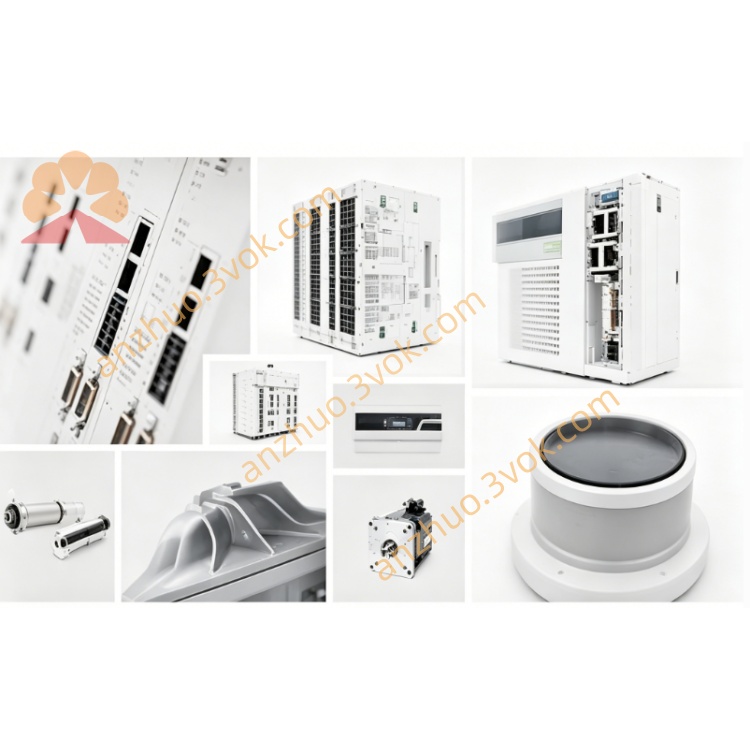
XYCOM 70240‑001 Industrial Control Circuit Board
Description
XYCOM 70240‑001 (XVME‑240) Detailed Product Description
I. Product Overview
XYCOM 70240‑001 (XVME‑240) is a 6U dual-slot VMEbus high-density TTL digital I/O module launched by XYCOM Company. It is specifically designed for industrial automation, real-time data acquisition, embedded control systems, and measurement and control platforms. It can provide large-scale, high-speed, and highly reliable switch input and output capabilities in harsh industrial environments, and is compatible with various chassis and backplanes of the VME bus architecture. It is the core board card for discrete signal processing.
II. Hardware Architecture and Mechanical Characteristics
The module adopts the standard 6U double-width VME bus form factor, following the VMEbus specification. It can be directly inserted into the 2 mm slots of the standard VME chassis, providing convenient installation and strong compatibility. The circuit board is made of industrial-grade PCB material, equipped with VME bus interface circuits, power distribution units, clock/reset logic, and I/O expansion arrays. It is structurally sturdy, with excellent vibration and shock resistance, and complies with IEC 60068‑2‑27/28 standards. It can adapt to strong vibration conditions. The external part is equipped with standard connectors, facilitating on-site wiring and signal interconnection. The overall size and weight are suitable for industrial cabinet installation, making it convenient for dense deployment of multiple modules.
III. I/O Channel Configuration and Function Definition
The module integrates 80 TTL-compatible I/O channels. The channel layout and function division are clear, balancing flexibility and scalability.
64 bidirectional I/O channels: form 8 byte-wide (8-bit) bidirectional I/O ports. Each port can be independently configured as input or output mode through programming, suitable for different directions of signal transmission requirements. It supports single-ended TTL signals (0 V/5 V), and can directly connect TTL-level sensors, relays, indicators, and various digital devices.
8 interrupt input channels: have edge selectable triggering capability (rising edge / falling edge can be software-configured), supports programmable masking, can precisely capture the signal transitions of external devices, trigger VME bus interrupts, achieve event-driven real-time response, and enhance system processing efficiency.
8 flag output channels: can be used as interrupt response signals, status indication signals, or control signals for external devices. Combined with the interrupt input channels, it builds a complete signal interaction and response mechanism, enhancing the system's closed-loop control capability.
IV. Electrical Characteristics and Performance Parameters
Signal Level: Standard TTL level, input low level ≤ 0.8 V, high level ≥ 2.0 V; output low level maximum 0.5 V, high level ≥ 2.4 V, with strong compatibility.
Drive Capacity: Single channel maximum driving current 48 mA, pulling current 15 mA. It can stably drive TTL loads and small relays, without the need for additional driving circuits.
Bus Occupancy: Occupies only 1K byte of VME short I/O address space. The addressing is simple, not occupying a large amount of system address resources, facilitating multi-module cascading expansion.
Power Supply Requirements: Provided by the VME bus with +5 V and +12 V power supply. Low power consumption, no need for additional external power supply, simplifying the system power supply design.
Operating Temperature: Industrial-grade wide temperature design, standard operating temperature range -40 ℃ to +85 ℃. Can operate stably in high-temperature and low-temperature extreme environments.
Electromagnetic Compatibility: Complies with IEC 61000‑6‑2/4 industrial EMC standards, with excellent anti-electromagnetic interference capability, capable of resisting industrial site's electromagnetic noise and static interference, ensuring stable signal transmission.
V. Core Functions and Software Characteristics
Programmable Configuration: On-board status/control registers, supporting the host to configure port direction, interrupt trigger mode, and masking status through the VME bus, and can read the real-time status of each channel, facilitating system monitoring and fault diagnosis.
Status Diagnosis: Built-in Pass/Fail indicator lights, can quickly and intuitively determine the power supply, bus communication, and I/O channel working status, simplifying on-site maintenance and fault troubleshooting processes. Real-time Response: The firmware is developed based on a real-time operating system (RTOS), with strong code portability and fast real-time response speed, which can meet the strict requirements of industrial control for deterministic I/O.
Multi-module Expansion: Multiple XVME-240 modules can be cascaded in the same VME chassis. Through address mapping configuration, the number of I/O channels can be flexibly expanded to meet the requirements of large-scale discrete signal processing.
Compatibility: Compatible with other I/O modules of the XYCOM XVME series (such as XVME-202, XVME-244), which can work collaboratively to build a complete VME bus I/O system and meet the mixed signal processing requirements of different scenarios.
Six. Typical Application Scenarios
Industrial Automation Production Line: Equipment start-stop status collection, limit signal detection, solenoid valve / relay control output.
Power and Energy System: Switch status monitoring, protection signal collection, circuit breaker control output.
Petrochemical and Process Control: Digital signal collection of on-site instruments, valve control, alarm signal output.
Embedded Measurement and Control Platform: High-speed parallel data acquisition, real-time switch quantity control, interrupt-driven event processing.
Railway and Ship Control: Vehicle / ship equipment status monitoring, signal interlock control, indicator light driving.
Seven. Product Advantages
High I/O Density: 6U dual-slot size integrates 80 TTL channels, with a large number of I/Os per unit space, saving chassis slot resources.
High Reliability: Industrial-grade wide temperature, strong anti-interference design, suitable for harsh working conditions, stable long-term operation, and reducing maintenance costs.
Flexible Programmability: Port direction and interrupt triggering can be configured by software, adaptable to multiple scenarios of signal requirements, without hardware modifications.
Easy Integration: Standard VME bus interface, simple address mapping, complete status indication, quick integration into existing VME system.
High Cost Performance: Single-channel cost is low, balancing performance and economy, suitable for large-scale I/O deployment projects.
Get a Quote