
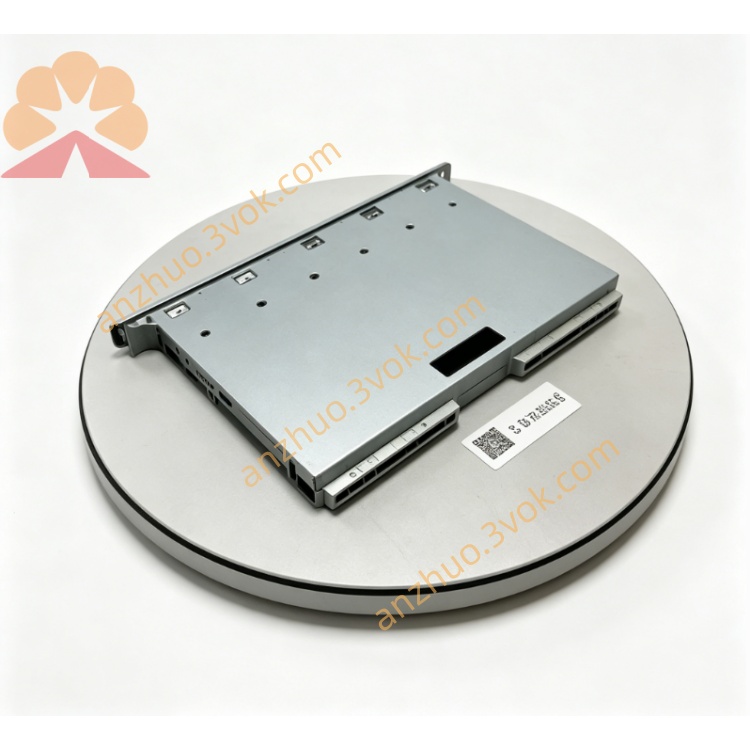
KEBA CU312/E/51993 Compact CPU Controller
KEBA CU312/E/51993 is an industrial‑grade compact CPU controller for the KEBA KeControl automation platform, built to handle real‑time logic execution and motion‑control tasks for production‑floor machinery. Designed for DIN‑rail cabinet mounting, it operates on standard 24 VDC industrial power and integrates multiple industrial communication interfaces to connect with I/O modules, servo drives and HMI units. Optimized circuit design delivers strong immunity against workshop electromagnetic noise generated by motors and frequency converters. Fully compatible with KEBA engineering software, it supports program download, parameter configuration, live runtime monitoring and detailed fault diagnosis. Widely deployed on injection‑molding machines, robotic cells and packaging lines, this controller enhances operational stability and reduces unplanned equipment downtime.
Description
KEBA CU312/E/51993 is a compact central processing unit within the KEBA KeControl hardware portfolio. It serves as the main control core for mid‑range industrial machinery, executing user‑defined application logic, motion‑sequence scheduling and process‑data management. Via industrial field buses, it exchanges real‑time commands and feedback signals with distributed I/O modules, servo drives and operator panels, forming complete automation control systems for injection‑molding equipment, robotic handling stations, packaging machinery and continuous‑process production lines. It provides reliable central‑control support for stable automated‑manufacturing workflows.
Mechanically, the CU312/E/51993 adopts compact modular construction with high‑strength flame‑retardant industrial enclosure. It supports standard DIN‑rail installation inside electrical cabinets, saving cabinet space and fitting the compact layout requirements of modern automation devices. Its mechanical assembly is validated to endure typical plant‑floor stress including mechanical vibration, dust accumulation and ambient‑temperature fluctuation. Such mechanical robustness supports long‑term continuous‑run operation and complies with mainstream international industrial hardware durability standards.
This controller integrates rich industrial communication interfaces to achieve low‑latency real‑time data interaction with peripheral hardware. Optimized hardware‑circuit layout improves anti‑interference performance, effectively suppressing electromagnetic noise from nearby inverters and high‑power actuators. It guarantees stable program execution and accurate command transmission even in electrically noisy factory workshops. Powered by universal 24 VDC industrial supply, the unit offers broad power‑supply adaptability compatible with most global factory power‑distribution infrastructures. Standardized connectors simplify field wiring and commissioning work and improve working efficiency for on‑site maintenance technicians.
During runtime, KEBA CU312/E/51993 runs automation application programs, completes logic computation, multi‑axis motion scheduling and bidirectional data exchange with connected field devices. Its onboard memory stores user programs, system configuration parameters and process‑related data to sustain stable machine cyclic operation. Multiple embedded protection mechanisms cover over‑voltage, over‑current and short‑circuit conditions. When power‑supply or wiring abnormalities occur, protective logic activates to limit fault propagation and lower risks of permanent hardware damage and unexpected production stops.
For commissioning and servicing, the controller is fully compatible with KEBA official engineering software. Technicians can complete program downloading, parameter setup, real‑time runtime‑status observation and precise fault diagnosis both locally and remotely. Readable diagnostic feedback accelerates fault localization and shortens unplanned‑halt duration. Thanks to good compatibility and scalability, KEBA CU312/E/51993 can be integrated into newly‑built or retrofitted KeControl‑based control systems without large‑scale hardware modification. It reduces project‑renovation expenditure and shortens implementation cycles, acting as a dependable compact central‑control component for contemporary industrial‑automation applications.
Get a Quote