
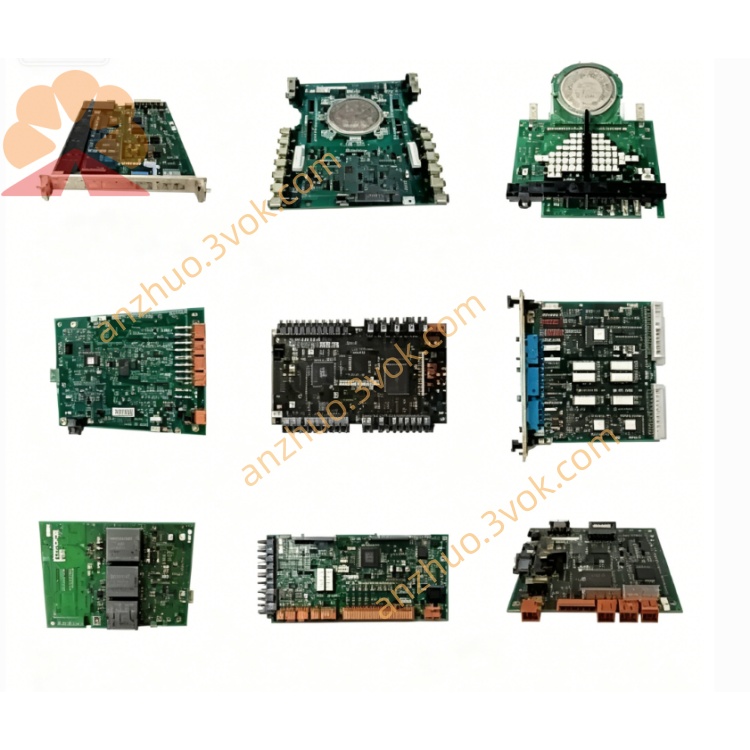
ABB SNAT633PAC( 61049444)high‑performance pulse amplifier board
Description
Product Introduction
Model Interpretation
SNAT: ABB series code for pulse amplifier boards.
633: Product specification and version number.
PAC: Pulse Amplifier Circuit, indicating pulse amplifier type.
61049444: Unique part number for ordering and traceability.
Technical Parameters
Operating voltage: 24VDC (±10% tolerance).
Output capacity: 5V @ 18A maximum.
Pulse frequency range: 1Hz to 20kHz.
Number of channels: 8 independent pulse output channels.
Operating temperature: −20°C to +70°C.
Storage temperature: −40°C to +85°C.
Protection degree: IP20.
Dimensions (W×H×D): 75×230×15mm.
Weight: Approximately 0.8kg.
Certification: CE, UL, CSA.
MTBF: >100,000 hours.
Interface and Communication Configuration
Power interface: 24VDC input terminal with reverse polarity protection.
Signal input: 8‑channel pulse signal input, compatible with 5V/24V logic levels.
Signal output: 8‑channel high‑current pulse output, isolated from input side.
Communication interface: RS‑485 for status monitoring and parameter configuration.
Auxiliary interfaces: LED indicators for power, operation, and fault status; test points for on‑site debugging.
Connection type: Industrial‑grade plug‑in terminals for reliable wiring.
Core Functions
Pulse signal amplification: Converts weak control pulses into high‑current drive pulses for power semiconductor devices.
Signal isolation: Electrical isolation between input and output sides to suppress interference and protect control circuits.
Multi‑channel output: 8‑channel independent pulse output for multi‑phase or multi‑device coordinated control.
Overload and short‑circuit protection: Built‑in current limiting and fault self‑protection to prevent board and load damage.
Status monitoring: Real‑time working status and fault information via LEDs and RS‑485 communication.
Application Scenarios
Industrial drive systems: Pulse amplification for DC drives, AC variable‑frequency drives, and soft starters.
Power conversion equipment: Thyristor rectifiers, inverters, and UPS systems requiring precise pulse control.
Process automation: Metallurgy, chemical, and paper industries with high‑power motor control and power regulation.
ABB system integration: Supporting ABB DCS, PLC, and drive products as a key signal conditioning component.
Operation and Maintenance Instructions
Install on a standard panel in a well‑ventilated cabinet; avoid direct sunlight, moisture, and corrosive gases.
Confirm 24VDC power supply polarity and voltage range before power‑on; check all signal and power connections for tightness.
Observe LED indicators during operation: power light on, run light flashing normally, fault light off for healthy status.
Keep the board clean; periodically remove dust with dry air to prevent poor heat dissipation and short circuits.
Do not disassemble or modify components without authorization; replace the board immediately if abnormal noise, overheating, or persistent faults occur.
Disconnect all power sources before maintenance or replacement to ensure safety.
Get a Quote