
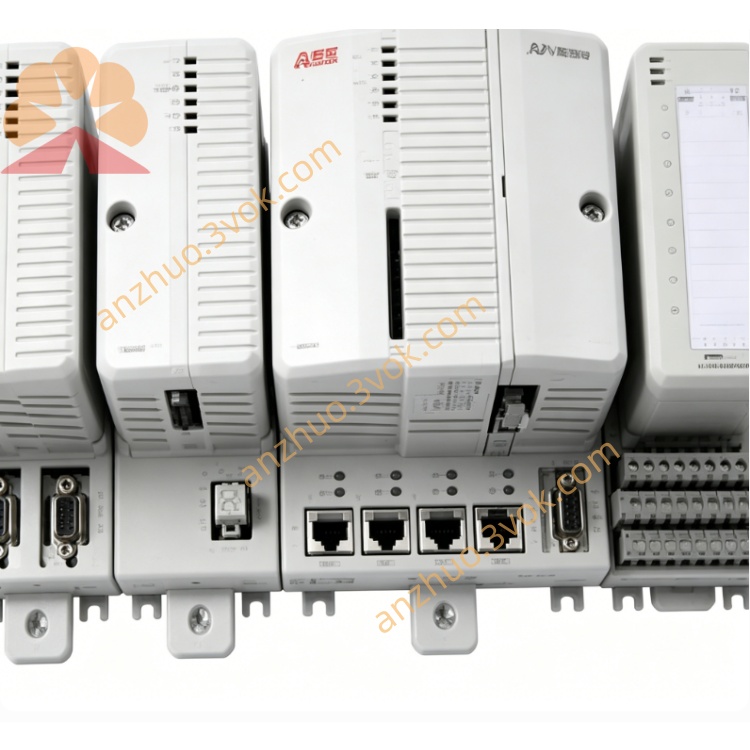
ABB UNS0118a-Z (3BHE016011R0002) high‑performance control and logic processing unit
Description
Product Introduction
Model Interpretation
UNS: Series code for ABB UNITROL series excitation control modules.
0118: Product specification and hardware version identifier.
a: Revision level of the printed circuit board.
Z: Variant code for specific configuration or application.
3BHE016011R0002: Unique ABB part number for ordering, traceability, and system configuration.
Technical Parameters
Power supply: 24VDC (±10% tolerance), 110/220VAC optional.
Continuous output current: Up to 20ADC for excitation control.
Voltage regulation accuracy: ±0.5% of rated generator voltage.
Control algorithm: PID‑based regulation with rotating diode monitoring (RDM).
Operating temperature: −20°C to +60°C.
Storage temperature: −40°C to +85°C.
Protection degree: IP20.
Dimensions (W×H×D): 120×280×35mm.
Weight: Approximately 1.2kg.
Certification: CE, UL, CSA.
MTBF: >100,000 hours.
Interface and Communication Configuration
Power interface: 24VDC input terminal with reverse polarity and overvoltage protection.
Signal input: Generator voltage/current sensing inputs, 4–20mA analog signals, 16‑channel digital inputs.
Signal output: Excitation drive outputs, 16‑channel digital outputs, alarm relay contacts.
Communication interface: RS‑485 (Modbus RTU), Ethernet optional for remote monitoring and parameter setting.
Auxiliary interfaces: LED indicators for power, run, and fault status; test points for on‑site debugging.
Connection type: Industrial‑grade plug‑in terminals for secure and fast wiring.
Core Functions
Precision voltage regulation: Stabilizes synchronous generator terminal voltage and suppresses load‑induced fluctuations.
Excitation current control: Adjusts excitation current via IGBT power conversion to ensure stable generator operation.
System protection: Integrates overcurrent, overvoltage, undervoltage, and rotating diode failure protection.
Real‑time monitoring: Tracks operating parameters and fault status via local LEDs and remote communication.
Logic processing: Executes control sequences, interlocks, and alarm management for power plant systems.
Application Scenarios
Power generation plants: Diesel, gas, steam, and hydro turbine‑driven synchronous generators.
Industrial power systems: Backup power supplies and distributed generation units in factories and facilities.
Marine propulsion: Shipboard generators and power management systems.
ABB system integration: Compatible with Symphony Plus DCS and AC500 PLC platforms for automation solutions.
Operation and Maintenance Instructions
Install in a well‑ventilated, dust‑free cabinet; avoid direct sunlight, moisture, and corrosive gases.
Verify 24VDC power supply voltage and polarity before power‑on; check all signal and power connections for tightness.
Observe LED indicators during operation: power light on, run light flashing, fault light off for normal status.
Keep the module clean; periodically remove dust with dry compressed air to prevent overheating and short circuits.
Do not disassemble or modify components without authorization; replace the module immediately if abnormal noise, overheating, or persistent faults occur.
Disconnect all power sources before maintenance or replacement to ensure safety.
Get a Quote