
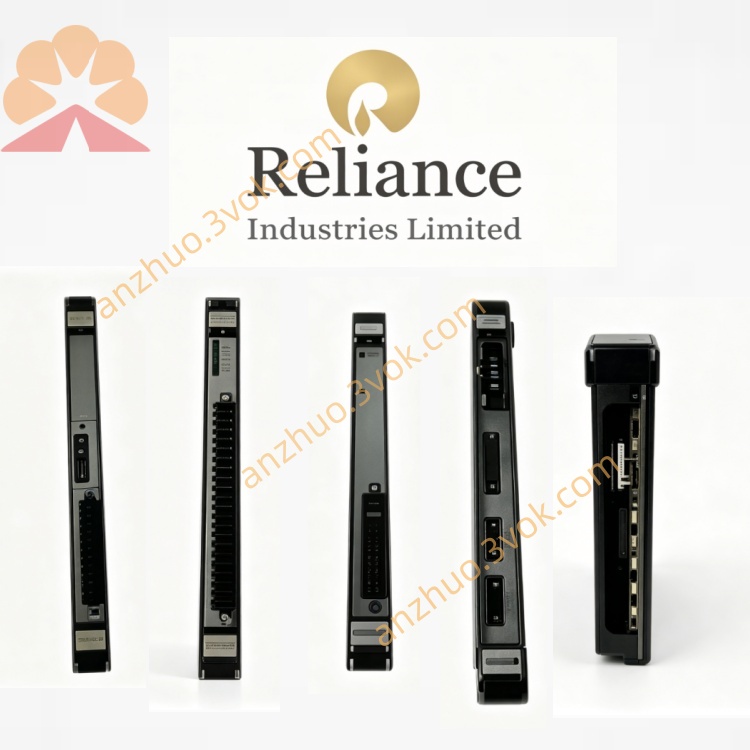
Reliance Electric 15V4160
Description
Product Description
Model Number Interpretation
15 – Rated power: 15HP (11.2kW)
V – Series: GV3000/SE, sensorless enhanced vector AC drive
4160 – Configuration: 460VAC, 3‑phase, standard build
Technical Specifications
Input Power: Three‑phase AC, 380–460VAC ±10%, 50/60Hz
Output Rating: 15HP (11.2kW), 25.4A continuous current
Control Modes: V/Hz (Volts‑per‑Hertz), sensorless vector (SV) control
Speed Range: 100:1 (sensorless vector), 20:1 (V/Hz)
Enclosure: NEMA 1 / IP20, indoor use only
Keypad/Display: Integrated, for local programming and status readout
Protection: Overcurrent, overvoltage, undervoltage, overtemperature, short circuit, ground fault, motor stall prevention
Ambient Conditions: 0–45°C, 5–95%RH (non‑condensing)
Dimensions: 288 × 463 × 238mm (H × W × D)
Weight: 15.9kg (35lbs)
Interface and Communication Configuration
Power Terminals: L1/L2/L3 (AC input), U/V/W (motor output), PE (protective earth)
Control Terminals: Digital inputs (start/stop, forward/reverse, fault reset), analog inputs (0–10VDC / 4–20mA speed reference), analog output (speed monitor), relay output (fault indication)
Communication: RS‑232/485 port for serial communication and programming; optional fieldbus modules available for advanced networking
Core Functions
Sensorless Vector Control – Delivers high starting torque and tight speed regulation without requiring an encoder, ideal for standard induction motors.
V/Hz Control Mode – Simple, stable operation for general‑purpose applications with basic speed control needs.
Built‑in Keypad & Display – Enables quick local configuration, parameter adjustment, and real‑time monitoring of speed, current, and fault codes.
Comprehensive Protection – Safeguards drive and motor from electrical and thermal faults, ensuring reliable operation in harsh industrial environments.
Flexible Speed Reference – Accepts common analog signals (0–10VDC, 4–20mA) for seamless integration with PLCs and control systems.
Application Scenarios
General‑Purpose Machinery: Conveyors, fans, pumps, mixers, and material handling equipment.
Process Industry: Extruders, agitators, and small‑to‑medium processing lines requiring variable speed.
Legacy System Replacement: Direct retrofit for older GV3000 series drives in manufacturing and industrial facilities.
HVAC Systems: Fan and pump control for energy‑efficient building climate management.
Usage and Maintenance Instructions
Installation: Mount vertically in a clean, dry, well‑ventilated indoor cabinet; maintain minimum clearance around the drive for proper airflow and cooling.
Wiring: Use appropriately rated copper conductors for power and control circuits; separate power and control wiring to minimize electrical noise; verify all connections before power‑up.
Startup: Perform a visual inspection for damage or loose connections; confirm input voltage matches the drive rating; start with no load and gradually apply load while monitoring operating parameters.
Maintenance: Keep the enclosure clean and free of dust; inspect cooling fans and heat sinks regularly; check terminals and wiring for signs of overheating or corrosion; replace worn components as needed.
Troubleshooting: Use the integrated display and fault codes to diagnose issues such as overcurrent, overtemperature, or motor stall; resolve faults before restarting the drive.
Get a Quote