
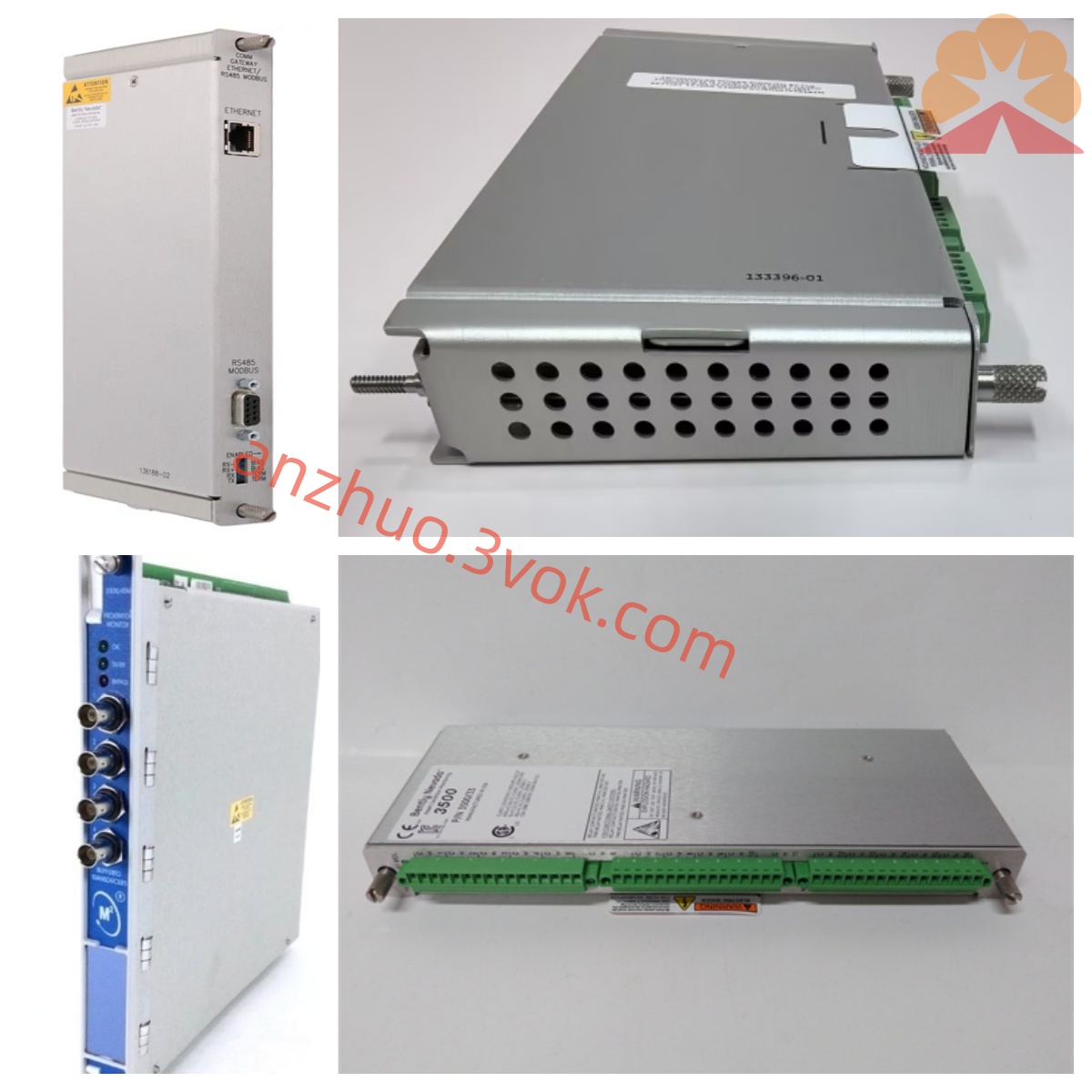
Bently Nevada 330101-00-20-05-12-00 Eddy Current Proximity Probe
Description
BENTLEY 330101-00-20-05-12-00 Product Description
I. Product Overview
The BENTLEY 330101-00-20-05-12-00 is a 8mm electro-vortex proximity probe of the 3300 XL series from Bently Nevada under Baker Hughes, which complies with the API 670 industrial standard. It is the core sensing component of the rotating machinery condition monitoring system. It adopts the non-contact electro-vortex measurement principle and is specifically used for radial vibration, axial displacement, shaft eccentricity, phase detection and rotational speed signal monitoring of large industrial rotating equipment. It is widely applied in power, petrochemical, metallurgy, gas and other industries, providing precise and stable raw data for online equipment monitoring, fault early warning, over-limit alarm and safety interlock.
II. Model Code Interpretation (330101-00-20-05-12-00)
330101: Basic model, 3300 XL series 8mm standard electro-vortex probe, 3/8-24 UNF external thread, without armor.
00: Standard non-threaded installation length, suitable for conventional installation bases.
20: Probe housing total length 2.0 inches (approximately 50.8mm), ultra-short housing design, suitable for installation positions with extremely limited space.
05: Built-in integral cable length 0.5 meters, without armor structure, compact and flexible wiring.
12: Connector type, micro coaxial 12 feet (approximately 3.66 meters) extension line dedicated connector, suitable for long-distance signal transmission scenarios.
00: Certification level, no explosion-proof certification, only applicable to conventional non-flammable and non-explosive industrial environments.
III. Working Principle
Based on the electro-vortex effect. The coil inside the probe is supplied with high-frequency alternating current, generating a stable alternating magnetic field; when the probe approaches the metal measured shaft, the metal surface induces electro-vortex, whose reverse magnetic field changes the inductance and impedance of the probe coil. The 3300 XL preamplifier (Proximitor) captures this parameter change, linearly converts it into a standard negative voltage analog signal, the signal size is proportional to the gap between the probe and the shaft. Non-contact measurement is not affected by oil stains, moisture, dust, and can operate continuously and stably for a long time.
IV. Core Technical Parameters
(1) Measurement Performance
Applicable system: 3300 XL 8mm electro-vortex sensing system (probe + extension cable + preamplifier).
Linear range: 2.0mm (80mil), effective working range 0.25–2.3mm (10–90mil).
Sensitivity: 7.87V/mm (200mV/mil), tolerance ±5%.
Linearity: ≤±0.025mm (±1mil).
Output voltage: linear range - 1VDC to - 17VDC; standard installation gap 1.27mm (50mil), corresponding output - 9VDC.
Frequency response: 0–10kHz, covering the monitoring requirements of high and low-speed rotating machinery.
Probe resistance (25℃): 7.59Ω ± 0.50Ω (0.5m cable).
(2) Environmental and Physical Characteristics
Operating temperature: -51℃ to + 177℃ (-60°F to + 350°F), suitable for high and low temperature conditions.
Shell material: AISI 303/304 stainless steel, corrosion-resistant, high mechanical strength.
Probe tip: PPS (polyphenylene sulfide), high temperature resistance, good insulation.
Cable insulation: FEP (fluoroethylene propylene), resistant to oil, aging resistance, good flexibility.
Protection level: IP65, dustproof, water-resistant, suitable for harsh industrial environments.
Certification: CE, UL regular safety certification; no explosion-proof qualification. Interchangeability: The probe, extension cable, and preamplifier are fully interchangeable, and no separate pairing and calibration is required.
V. Mechanical Structure and Core Advantages
(1) Mechanical Structure
Thread specification: 3/8-24 UNF standard external thread, compatible with industry-standard installation bases, equipped with anti-loosening nuts to prevent vibration-induced displacement.
Shell design: 2.0-inch ultra-short shell, suitable for equipment installation positions with limited space.
Cable configuration: 0.5-meter unarmored integral cable, with a minimum bending radius of ≥5 times the cable diameter, compact and flexible wiring.
Connector design: Micro coaxial 12-foot dedicated connector, suitable for long-distance signal transmission, resistant to vibration, stable connection, and convenient for on-site disassembly, inspection, and maintenance.
(2) Core Advantages
High precision and stability: Nanometer-level resolution, small temperature drift, stable long-term operation data, accurately capturing micro vibrations and displacements of the shaft.
Strong anti-interference ability: Built-in electromagnetic shielding structure, resistant to EMI/RFI interference, suitable for strong electromagnetic interference working conditions such as frequency converters and high-power motors.
Low maintenance cost: Components are interchangeable, spare parts are unified, reducing inventory and on-site maintenance difficulty.
Long service life: Non-contact measurement without shaft wear, IP65 protection suitable for harsh environments, high comprehensive reliability.
Compact wiring compatibility: 0.5-meter short cable design, suitable for installation scenarios with limited equipment internal space and short wiring distances.
VI. System Composition and Compatibility
It cannot be used alone. A complete measurement system requires the combination of:
This probe (330101-00-20-05-12-00);
3300 XL series 12-foot extension cable;
3300 XL preamplifier (Proximitor).
Key requirements: The total length of the probe and extension cable must strictly match the calibration length of the preamplifier to ensure measurement accuracy.
Compatible with Bentley 3300, 3500 monitoring frames, output signals can be directly connected to DCS/PLC systems, supporting static (position) and dynamic (vibration) measurements, and achieving real-time display, over-limit alarm, and safety interlock.
VII. Typical Application Scenarios
Power industry: Steam turbines, gas turbines, power generation units, feed pumps, exhaust fans, supply fans, etc., main equipment and large auxiliary equipment.
Petrochemical industry: Centrifugal compressors, process pump sets, high-speed rotating power equipment (non-explosion-proof areas).
Metallurgy and general industries: Large drive motors, fans, gearboxes, high-speed rotating equipment.
Monitoring parameters: Radial shaft vibration, axial displacement, shaft eccentricity, key signal, speed.
VIII. Installation and Maintenance Specifications
(1) Installation Key Points
Gap setting: Set the static gap to 1.27mm, corresponding to an output of -9VDC;严禁 the probe to come into contact with the shaft, to prevent damage.
Fixation and anti-loosening: After the thread installation is in place, tighten the anti-loosening nut to avoid displacement due to vibration.
Cable laying: Away from high-voltage cables and large-power electrical equipment to reduce electromagnetic interference; minimum bending radius ≥5 times the cable diameter.
System length: The total cable length (probe + extension) must be consistent with the calibration parameters of the preamplifier and cannot be changed arbitrarily.
(2) Daily Maintenance
Calibration cycle: It is recommended to calibrate once a year to ensure measurement accuracy.
Fault troubleshooting: When there is an abnormal signal, prioritize checking the connector connection, cable damage, and whether the environmental temperature exceeds the limit.
Cleaning and maintenance: Regularly clean the oil stains and dust at the tip of the probe to avoid foreign objects affecting measurement.
IX. Usage Precautions
Temperature limit: Use strictly within the range of -51℃ to +177℃. Do not forcefully impact or bend the probe body, to avoid damage to the internal coil.
Explosion-proof prohibition: This model has no explosion-proof certification. Do not install and use in flammable and explosive hazardous areas. Accessory requirements: It is recommended to use the original Bentley components for matching. Mixing non-original accessories may lead to inaccurate measurements or system failures.
Corrosion protection: Avoid long-term immersion in strong corrosive media. In high-corrosion and high-dust working conditions, the inspection frequency should be increased.
Get a Quote