
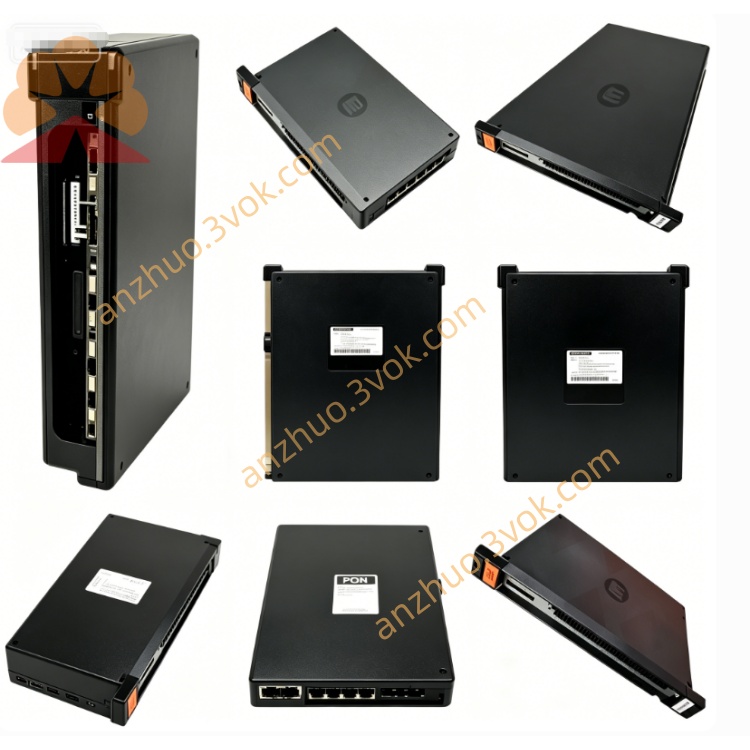
Reliance Electric 14C208
The 14C208 is a three-phase DC motor drive from Reliance Electric, now under Rockwell Automation. It is designed to deliver stable speed and torque control for industrial DC motors. Built with robust power circuitry and comprehensive protection features, this drive adapts to heavy-duty operating conditions. As a legacy model that has been discontinued, refurbished and surplus units are commonly used for maintenance and replacement of existing industrial drive systems.
Description
Product Description
The 14C208 is a three-phase DC motor drive from Reliance Electric, now under Rockwell Automation. It is designed to deliver stable speed and torque control for industrial DC motors. Built with robust power circuitry and comprehensive protection features, this drive adapts to heavy-duty operating conditions. As a legacy model that has been discontinued, refurbished and surplus units are commonly used for maintenance and replacement of existing industrial drive systems.
Model Definition
14 represents the series classification of the DC drive product line. C indicates the product type as a motor control drive. 208 stands for the three-phase input specification and corresponding power configuration of this unit.
Technical Specifications
This drive adopts three-phase AC power input. The rated input voltage is 208 VAC, compatible with 50 Hz and 60 Hz power frequency. It outputs adjustable DC voltage and current for motor armature and field winding. It supports open-loop voltage regulation and closed-loop speed regulation with external tachometer feedback. Integrated protection functions include overcurrent, overvoltage, undervoltage and thermal protection. The operating ambient temperature ranges from 0 degrees Celsius to 55 degrees Celsius, with relative humidity between 5 percent and 95 percent and no condensation. The whole unit is constructed with metal housing for mechanical strength and heat dissipation.
Interface and Communication Configuration
Dedicated terminal blocks are arranged for three-phase AC power input, DC armature output, DC field output and protective grounding. Independent control terminals are provided for start-stop signals, direction switching, external speed reference and tachometer feedback connection. It uses analog signal feedback to complete internal speed and current regulation. There is no built-in network communication function, and all control and signal transmission rely on hard wiring. The unit supports standard panel mounting for installation inside industrial control cabinets.
Core Functions
It achieves precise speed regulation for DC motors and keeps steady operation when the load changes. The internal dual-loop control system optimizes torque response and running stability. Multiple protection mechanisms can effectively protect the drive and motor from damage caused by abnormal working conditions. The rational circuit layout and heat dissipation structure ensure long-term continuous operation. It can match different external control signals to realize flexible speed adjustment on site.
Application Scenarios
It is widely applied to medium-power DC motors in general industrial equipment. It is suitable for machine tools, material handling equipment, mixers and production assembly lines that require reliable DC drive control. It is an ideal replacement part for upgrading and maintaining old three-phase DC drive systems. It works stably in ordinary factory workshops with moderate dust and vibration.
Usage and Maintenance Instructions
Usage
Mount the drive vertically on a rigid panel, and reserve sufficient space around for heat dissipation. Connect power cables, motor cables and control cables strictly following terminal definitions, and ensure reliable grounding. Adjust parameters such as maximum speed and current limit via onboard potentiometers according to actual requirements. After all wiring and settings are finished, power on the unit and conduct jog test to check motor rotation direction. Run the motor with load to verify overall performance before formal operation. Avoid long-term overload operation during daily use.
Maintenance
Perform regular inspection every three to six months to check the unit appearance, housing, cables and terminals. Cut off all power supply before cleaning, and wipe off dust with dry cloth. Do not use liquid or chemical cleaners. Retighten all wiring terminals every year to prevent faults caused by loose contact. Keep heat dissipation channels clear and clean dust on heat sinks regularly. The internal circuit components are sensitive to static electricity, so do not disassemble the unit without authorization. Store spare drives in cool, dry and dust-free places. All inspection and repair work should be carried out by professional technicians.
Get a Quote