
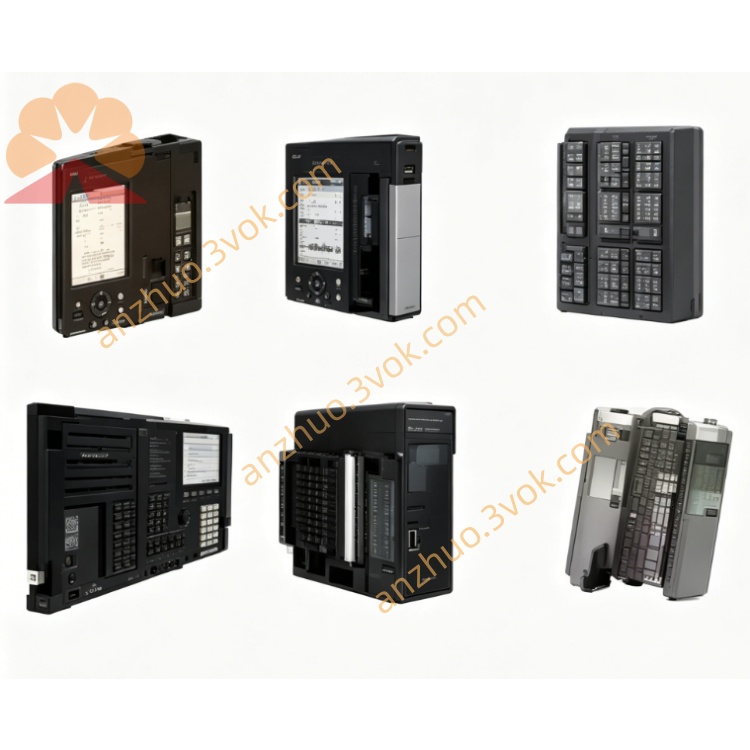
TRICONEX EPI3382 Enhanced Pulse Input Module
Description
I. Core Positioning
EPI3382 is the communication and control hub of the Tricon system, installed in the key slots of the mainframe frame; it adopts the TMR triple redundancy architecture, integrating dual Ethernet ports + local I/O + real-time processor, responsible for data exchange between Tricon and DCS/SCADA/upper computer/third-party devices, and can also expand local I/O and execute safety interlock logic. It is the core for SIS system interconnection and edge control.
II. Specifications and Parameters (Official Standard Version)
1. Basic Hardware
Model: EPI3382 (S2 version)
Processor: 32-bit high-performance embedded CPU (Motorola MPC860, 50MHz)
Architecture: TMR triple redundancy, three-channel synchronous computing, single-point failure without disturbance
Power Supply: Backplane 24VDC (18–36VDC wide voltage)
Power Consumption: ≤10W
Size: 208 × 188 × 45mm (standard Tricon module size)
Weight: Approximately 1.4kg
Installation: Standard slot of the mainframe frame, hot-swappable
2. Communication Interfaces (Core Capability)
Ethernet: 2 × 10/100Mbps network ports (redundant, supports link aggregation)
Serial Port: 1 × isolated RS-232 (local debugging / diagnosis)
Backplane Bus: TriBus (25Mbps, 32-bit CRC check)
Supported Protocols:
Modbus TCP/IP (master / slave)
Modbus RTU/ASCII (serial port)
TCP/UDP custom protocol
Ethernet/IP (adaptation)
OPC (through server)
3. Integrated I/O (Expansion Capability)
Analog Input: 8 channels isolated 4–20mA
Analog Output: 8 channels isolated 4–20mA
Digital Input: 16 channels 24VDC isolated
Digital Output: 16 channels 24VDC isolated (each point maximum 5A)
4. Environment and Reliability
Operating Temperature: -40℃ ~ +70℃ (SIS wide temperature standard)
Storage Temperature: -55℃ ~ +85℃
Humidity: 5%–95%, no condensation
Vibration: 10–150Hz, 0.1g sine wave
Certification: TÜV SIL3, CE, UL, CSA, ATEX/IECEx
Diagnosis: Comprehensive self-diagnosis (communication failure, I/O abnormality, power / temperature over-limit)
5. Panel Indicator Lights
PWR (green): Module power supply is normal
OK (green): Triple redundancy operation is normal
FAULT (red): Fault / alarm
LINK/ACT (green): Network port connection / data activity
TX/RX (yellow): Serial port receive / transmit
III. Main Features
Triple Redundancy Safety: TMR architecture, three-channel independent computing and voting, SIL3 level, single-point failure does not affect operation
Multi-protocol Communication Gateway: Dual Ethernet + serial port, supports mainstream industrial protocols, seamless connection to DCS/SCADA/upper computer
Integrated I/O Expansion: Built-in 8 channels AI/8 channels AO/16 channels DI/16 channels, simplifies the architecture of small systems
High-speed Real-time Processing: Dedicated processor + TriBus high-speed bus, low-latency data exchange and logic execution
Redundant Hot Swap: Supports online replacement, no downtime maintenance, redundant modules automatically synchronize System seamless compatibility: Compatible with Tricon V10.0+ system, TriStation configuration software for online configuration / monitoring / diagnosis
IV. Typical application scenarios
Core of SIS system communication: Tricon and DCS, SCADA, historical database, operator station bidirectional data interaction
Small SIS integration: Built-in I/O, directly connected to on-site sensors / actuators, no need for additional I/O cards
High-risk process isolation gateway: Data isolation transmission between safety zone and non-safety zone in oil, chemical, natural gas, and power industries
Redundant communication links: Dual network ports redundancy, automatic link failure switching to ensure communication continuity
Local edge control: Small-scale safety interlock logic processing in on-site cabinets, reducing the load on the mainframe rack
Get a Quote