
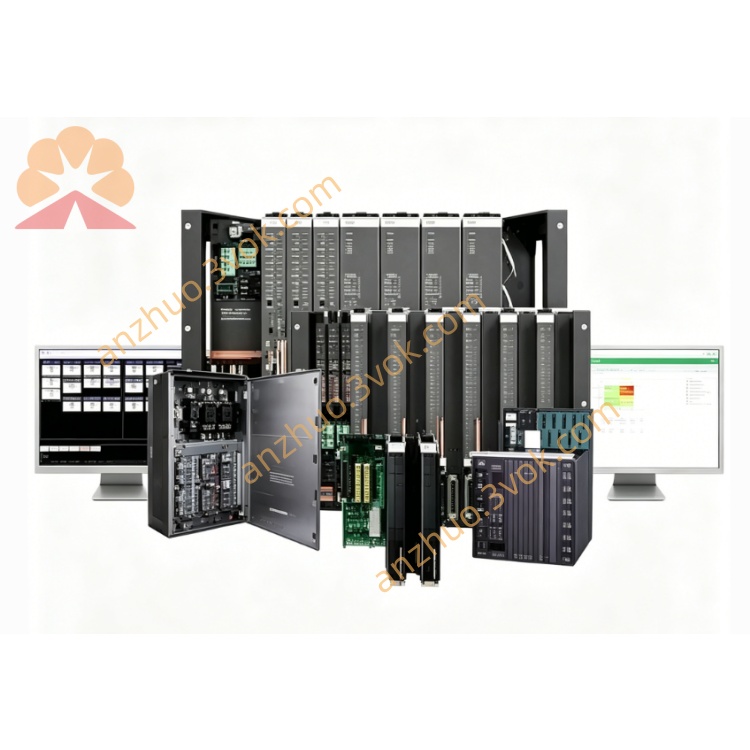
TRICONEX RXM4201 Tricon remote expansion communication module
Description
I. Core Parameters
Communication Architecture: TMR triple redundancy (three fiber links operating in parallel)
Transmission Medium: Multi-mode fiber (RXM4201 is multi-mode; RXM4211 is single-mode)
Communication Rate: High-speed real-time bus, no delay synchronization
Transmission Distance: Single segment maximum 2 km (multi-mode)
Topology: Host rack ↔ Remote rack used in pairs, can be cascaded at multiple levels
Data Support: Full types of DI/DO/AI/AO/Pulse signals are forwarded
Redundancy Switching: Automatic non-disruptive switching in case of single link failure
Isolation: Communication and internal circuits are isolated by 1500VAC
Anti-interference: Electromagnetic shielding, surge suppression, signal filtering
Hot Swap: Supports online insertion and replacement without interrupting the system
Power Supply: Backplane 24VDC (±10%)
Power Consumption: Approximately 10W
Operating Temperature: -40°C ~ +70°C
Certifications: TÜV SIL3, CE, UL, CSA, ATEX/IECEx
Size: 225 × 112 × 40 mm
Weight: Approximately 1.4 kg
II. Panel Indicator Lights
PWR (Green): Module power supply is normal
OK (Green): Triple redundancy links are synchronized normally
FAULT (Red): Link abnormal / fault alarm
LINK1/2/3 (Green): Corresponding fiber link data transmission is normal
III. Main Features
Long-distance Expansion: Multi-mode fiber 2 km, meeting the requirement of interconnection of cabinets across different areas in the factory
Triple Redundancy Reliability: Three links operate simultaneously, with strong fault tolerance, in line with SIL3
Real-time Synchronization: The host and remote racks have complete synchronization of programs, data, and status
Strong Anti-interference: Fiber transmission is not affected by EMI/RFI, suitable for strong electromagnetic environments
Configuration Convenience: TriStation can monitor the status, load, and fault points of the links online
IV. Typical Applications
Large-scale Chemical / Petrochemical: Remote rack interconnection of distributed SIS systems in multiple areas
Power Station: Remote centralized control of generator sets and auxiliary systems
Oil and Gas Industry: Long-distance fiber communication between field substations and central control rooms
Large Compressor Station: Data intercommunication between local racks and remote field execution cabinets
Overall Factory Safety System: Integration of scattered interlock points, unified into the central SIS
Get a Quote