
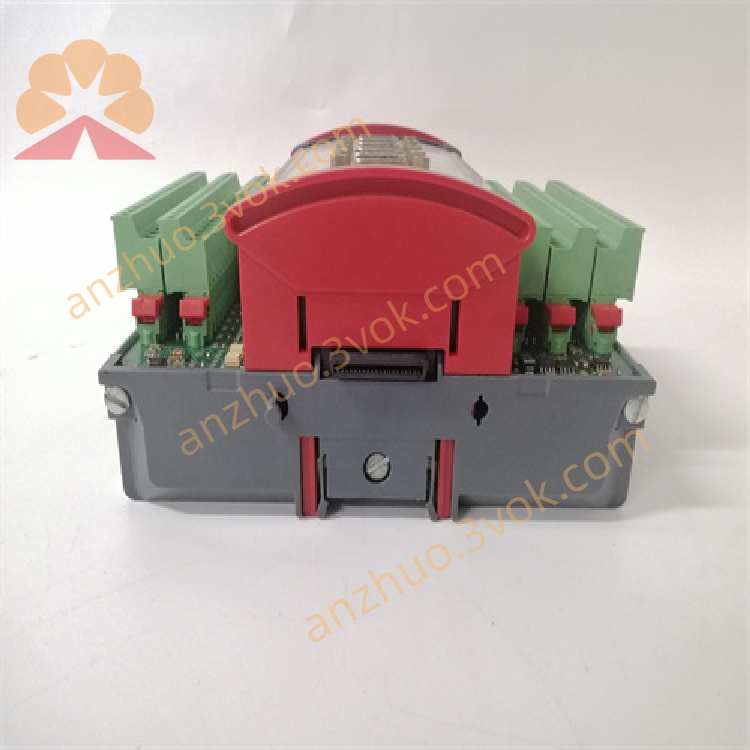
D136-001-008
Description
1. Basic Product Information
2. Product Overview
3. Core Functions & Technical Features
- Multi‑Axis High‑Performance Closed‑Loop Control
Supports up to 8 axes of independent / synchronous servo control, covering multi‑parameter closed‑loop control of position, velocity, force and pressure, with a minimum control cycle of 250μs and high inter‑axis synchronization accuracy, meeting complex trajectory and multi‑axis coordinated motion requirements
Built‑in advanced servo control algorithms, compatible with electro‑hydraulic servo valves, proportional valves and electric servo actuators, featuring fast dynamic response, high steady‑state accuracy and strong anti‑interference capability
Supports signal conditioning and acquisition for LVDT/RVDT displacement, pressure/force, velocity and other types of sensors
- Rich I/O and Bus Interfaces
Analog I/O: 16 channels of 16‑bit high‑precision analog inputs (±10V / ±20mA), 8 channels of 16‑bit analog outputs (±10V, max 5mA, overload protection)
Digital I/O: 32 digital inputs, 32 digital outputs, with isolation, status indication and fault diagnosis
Communication: E‑bus local expansion bus, EtherCAT, PROFINET, CANopen, RS232, compatible with distributed control, master‑slave architecture and third‑party device connection
1 channel +10V reference voltage output (short‑circuit protected), providing reference power for external sensors
- Industrial‑Grade Reliability Design
Power Supply: 24VDC ±10%, max power consumption 45W, wide operating temperature: 0°C~+55°C, storage temperature: -20°C~+70°C, high resistance to vibration and electromagnetic interference (EMC), suitable for harsh industrial field environments
Electrical isolation, multiple protections against overvoltage, overcurrent and short‑circuit, hardware‑level safety mechanisms, fault diagnosis and status LED indication for quick troubleshooting and maintenance
Standard DIN‑rail mounting, compact structure, standardized wiring, protection class IP20, easy for cabinet integration
- Flexible Configuration & Software Support
Supports programming environments such as IEC 61131‑3 and C++, compatible with MOOG MACS (Axis Control Software), allowing flexible configuration of control modes, I/O parameters, signal ranges and compensation parameters
Modular architecture, expandable with D136 series I/O modules (e.g., D136‑001‑007) to meet multi‑axis and large‑point system expansion requirements
4. Key Technical Specifications
Control Axes: Max 8 axes
Processor: High‑performance industrial‑grade processor with strong real‑time computing capability
Control Cycle: Min 250μs
Analog Input: 16 channels, 16‑bit, ±10V / ±20mA, sampling frequency 14–60kHz
Analog Output: 8 channels, 16‑bit, ±10V, max 5mA, overload protection
Digital I/O: 32 inputs / 32 outputs, opto‑isolated
Communication Interfaces: E‑bus, EtherCAT, PROFINET, CANopen, RS232
Power Supply: 24VDC ±10%, max power consumption 45W
Operating Temp: 0°C~+55°C, Storage Temp: -20°C~+70°C
Mounting: DIN‑rail, Protection Class IP20
Dimensions/Weight: 180mm × 120mm × 45mm, approx. 1.5kg
5. Typical Applications
Aerospace: Flight simulators, structural fatigue test benches, rudder loading systems
Material Testing: Material testing machines, fatigue test systems, dynamic loading benches, multi‑channel force control systems
Energy Equipment: Steam/gas turbine valve servo control, wind/hydropower hydraulic servo systems
Heavy Machinery: Hydraulic presses, rolling mills, injection molding machines, metallurgical equipment, construction machinery electro‑hydraulic control
Industrial Automation: Multi‑axis robots, precision forming equipment, automated production lines, simulation and test platforms
6. Product Advantages
Original MSC II series core controller, multi‑axis synchronization, seamless expansion and strong compatibility
Microsecond‑level real‑time control, 16‑bit high‑precision I/O, industry‑leading electro‑hydraulic servo control performance
Industrial‑grade protection, multiple protections and complete diagnostics, long‑term stable operation with low maintenance cost
Flexible programming, rich fieldbuses and modular expansion, adapting to complex systems and customized requirements
Get a Quote