
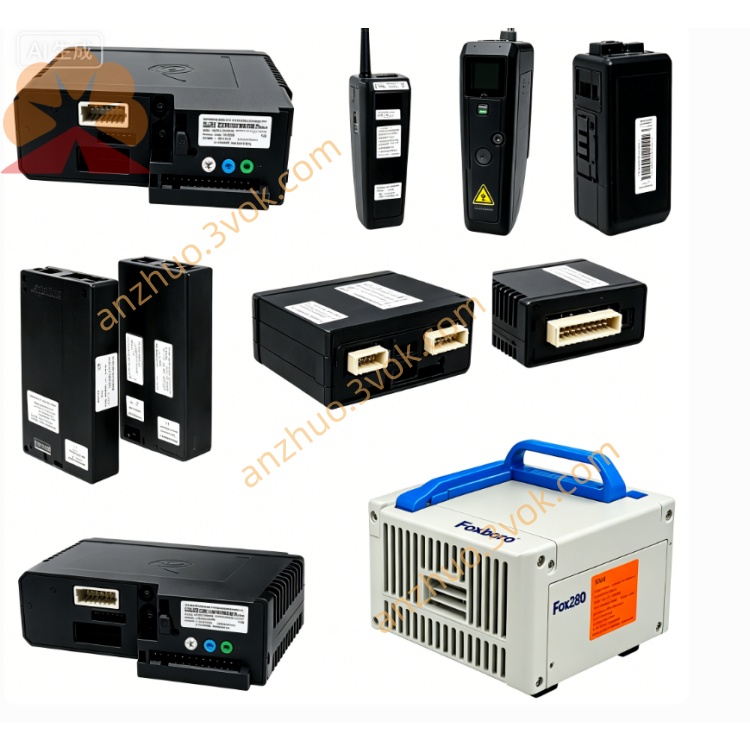
EMERSON A6110 AMS6500 Power Supply Module
Description
Part Code Definition
A6110 fixed part number for relative vibration module of AMS6500 system, no standard suffix variant; paired modules: A6120(casing vibration), A6210(axial displacement).
Technical Specifications
Backplane power: -26.7VDC from rack backplane, power consumption ≤5.8W
Dual independent input channels for EPRO eddy current sensor (6422/6423/6424 series probe + preamplifier)
Frequency response: 10Hz~10kHz; measuring range configurable 0~250μm /0~500μm etc., precision ≤±1%FS
Each channel outputs isolated 4~20mA analog signal for DCS access; relay dry contact for Alarm/Trip interlock
Working ambient: 0℃~+65℃, storage -30~+85℃, 5%~95%RH non-condensing
Dimension: 6TE×3HE standard AMS6500 card, net weight≈0.31kg
Interface & Communication Layout
Front panel: Two SMB signal input sockets for probe extension cable; POWER/RUN/ALARM/TRIP LED indicators; debug SMB test output
Rear gold finger: AMS6500 dedicated backplane bus for data upload to system mainframe
Rear terminal block: 4~20mA analog output terminals + two groups of relay contact terminals for on-site interlock wiring
Core Functions
Collect rotor radial relative vibration displacement via non-contact eddy current probe, monitor rotor unbalance, misalignment, rub-impact abnormal fault
Independent Alert and Danger threshold programmable per channel; vibration exceeding preset value triggers relay trip output for unit protection
Auto diagnosis for probe open circuit, short circuit and power fault, fault message uploaded to AMS monitoring host and upper DCS system
Online hot swap replacement without power off rack, unaffected channel continues normal monitoring
Application Scenarios
Thermal power steam turbine shaft vibration monitoring; petrochemical centrifugal compressor safety protection; large induced draft/blower machinery protection; spare replacement of existing AMS6500 system cabinet.
Operation & Maintenance Notes
Use original matched EPRO eddy current probe to ensure measurement accuracy; sensor shield cable routed separately from high voltage power cable to avoid EMI interference
Set measuring range and alarm parameters via upper configuration software after installation and wiring
Check front panel status LED and system fault log periodically during routine maintenance
Get a Quote