
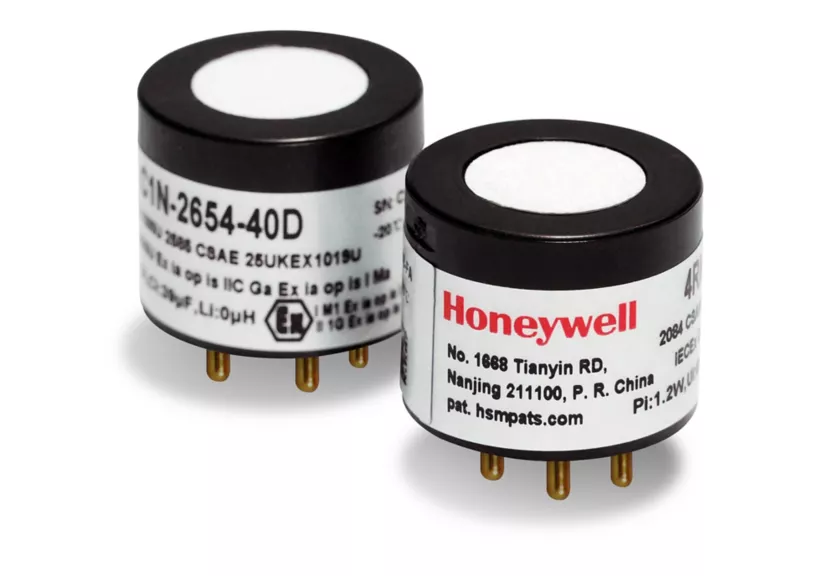
Honeywell has launched a new infrared gas sensor, helping to ensure the safety of industrial workers.
Charlotte, North Carolina, USA, April 14, 2026 — Honeywell (NASDAQ: HON) recently announced the launch of a new gas sensor that utilizes optical non-dispersive infrared (NDIR) technology. This sensor can detect combustible gases such as methane, propane, and butane in industrial environments. The NDIR hydrocarbon sensor is suitable for industries including mining, oil and gas, petrochemicals, and plastic manufacturing, helping to ensure the safety of on-site workers and the stable operation of critical facilities.
“In gas detection applications, the accuracy, precision and reliability of the sensors are of vital importance for ensuring personnel safety,” said Carmen Becker, Global President of Honeywell Sensing and Control Business. “This new combustible gas sensor is yet another example of Honeywell leveraging its profound industry expertise and continuous technological innovation to help enhance the operational safety level of critical infrastructure industries.”
The 4 series NDIR hydrocarbon gas sensors can be integrated into fixed and portable gas detection instruments used by workers, and are suitable for various scenarios such as field operations, deep underground areas, or production facilities. For such detection equipment, the use of advanced and precise sensors is crucial, as they can promptly alert workers to potential risks of hazardous gas exposure.
Since NDIR sensors usually need to operate under harsh conditions such as mine dust, methane leakage, and significant temperature variations indoors and outdoors, their design has fully taken into account their durability and reliability in various environments from the very beginning. This sensor integrates a condensation suppression system, which can effectively remove excess moisture and ensure stable detection performance even in high-humidity environments and enclosed spaces such as oil refineries.
Compared with traditional catalytic combustion gas sensors, NDIR sensors have stronger resistance to poisoning, which can reduce the risk of performance degradation or sensor failure caused by environmental factors, and minimize the occurrence of false alarms. Additionally, thanks to infrared detection technology, the power consumption of NDIR sensors is lower than that of traditional combustible gas sensors. This not only helps to extend the lifespan of the sensors themselves but also effectively improves the battery endurance of portable gas detection instruments.