
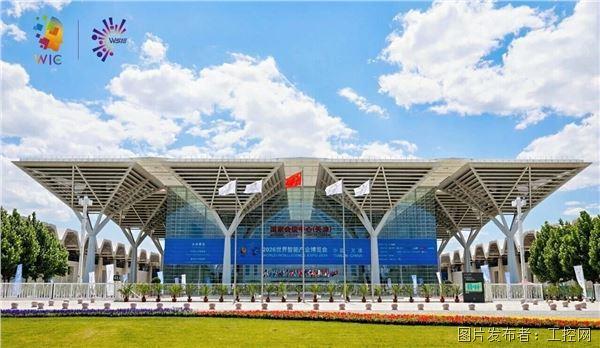
Observation on the 2026 Smart Expo: In the era of industrial AI, domestic computing power has truly entered the industrial field.
Over the past few years, the focus of AI competition has been on large model training. The parameter scale has reached a new level, and the Wanka clusters have been lit up, which have all sparked discussions in the industry. By 2026, the trend changed. AI gradually entered industrial sites such as manufacturing, power, and transportation. Many frictions began to emerge, and the industry began to question whether AI could really operate in the industrial field.
When it comes to the phrase "running", in an industrial setting, it becomes a series of concrete indicators. New contradictions then emerge. The cloud model has issues with network latency and data transmission pressure. Industrial sites generally face requirements such as data compliance, network stability, and long-term continuous operation. At the same time, the traditional industrial control system is not designed around AI inference. A large number of industrial systems still have significant barriers in terms of compatibility, migration costs, and ecological collaboration. For AI to truly take root, the computing infrastructure must be as solid and well-established as infrastructure construction, and industrial chips are a key component of this.
At the 2026 World Intelligent Industry Expo, Haiguang jointly with Guanghe Organization comprehensively showcased the entire chain open computing power system covering chips, complete machines, software and applications. Li Cheng, the assistant president and general manager of the Innovation Product Line of Haiguang Information, and Li Cheng, the general manager of the Enterprise Business Department of Haiguang Information, at the Expo site, elaborated on Haiguang's solutions to the real-world predicament of industrial computing power anxiety.
The implementation of industrial AI requires the deployment of computing power at lower levels as a necessary condition.
The main difference between industrial AI and internet AI lies in the fact that the former operates directly on the production site. Li Cheng observed that the current ecosystem of large models is showing a distinct "sling-shaped" trend: one end is the rapid downward penetration of productivity tools, the other end is the continuous improvement of model capabilities, while the middle layer is shrinking at an accelerated pace. Applied to the manufacturing industry, the application of large models also shows a "hot at both ends and cold in the middle" situation. Among them, marketing services and operation management have been implemented relatively quickly, while the proportion of research and design, pilot testing, and other links has gradually increased. However, truly deep applications in the core of production and manufacturing are still limited.
When it comes to the production site, the pain points are even more specific. Take AI quality inspection as an example. Industrial cameras need to continuously capture images and identify defects. If all the data is uploaded to the cloud, network fluctuations and link delays will directly affect the production line's rhythm. The same problem also exists in scenarios such as industrial robots, power monitoring, and rail transit operation maintenance. As AI enters the control chain, industrial systems' requirements for real-time performance, localization, and continuous operation capabilities have significantly increased.
Therefore, more and more enterprises are deploying some of their AI inference capabilities to the edge side, completing data processing on-site to reduce latency, alleviate bandwidth pressure, and ensure the continuous operation of the system. Li Cheng mentioned in an interview that the data flow in the AI era is moving towards cloud-edge-end collaboration. Especially in the industrial field, the edge side is becoming an important carrier for AI to enter the site, which is also the core logic of Haiguang's comprehensive layout across the cloud, edge, and end.
During this process, the importance of industrial chips has become increasingly prominent. Industry data shows that industrial applications account for approximately 21% of the global chip market and are one of the most stable demand sectors in the semiconductor industry. Industrial systems operate continuously in environments such as high temperatures, high humidity, electromagnetic interference, and vibration, and the lifespan of equipment often exceeds ten years. Industrial customers do not only consider computing power when selecting chips, but also place greater emphasis on stability, low latency, wide temperature adaptability, long-term supply, and security. Once the underlying hardware fails, it may directly lead to production line shutdowns or even abnormality of key infrastructure. This is the fundamental difference between industrial chips and consumer-grade chips. The industrial market does not pursue advanced manufacturing processes but values mature technologies, long-term reliability, and the ability to operate continuously under complex conditions.
Hai Guang's presentation at this IT Expo clearly demonstrated its strategic layout in the industrial sector. Li Cheng stated that as AI extends to the edge side, the demand from customers for embedded, low-power, and small-sized products continues to grow. In addition to products for servers and workstations, Hai Guang has also deployed edge products in industrial scenarios, including embedded and low-power solutions suitable for industrial sites, and some of these products have already been put into practical use.
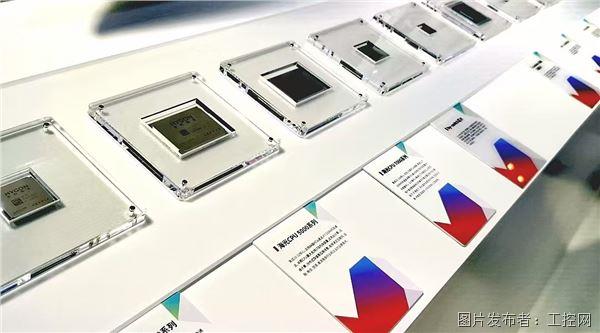
Haiguang has firmly laid the foundation of industrial computing power with three major pillars.
From the above text, it can be seen that the challenges that AI faces when entering industrial sites, such as resource competition, protocol compatibility, migration costs, and operational complexity, are all real obstacles.
A weak foundation leads to instability and shaking of the earth. In response to these problems, Haiguang uses a domestically produced, independently controllable computing infrastructure to lay the foundation for industrial AI. Li Cheng summarized the capabilities of this computing infrastructure into three levels, each corresponding to the most core practical needs in industrial sites.
The first aspect is about ecological integration. The Haiguang CPU is compatible with the x86 instruction set. A large number of existing software and applications in the industrial field can run directly without rewriting. Applications with millions of users can be put into use out of the box. Through the photic organization, Haiguang has aggregated over 6,500 upstream and downstream ecological manufacturers, jointly completing more than 15,000 software and hardware compatibility and adaptation tasks. In the pilot project of domesticization of railway signal systems, the industrial control computers of five core signal manufacturers all adopted the Haiguang C86 route, which is an example of its industrial control chips taking root in key infrastructure fields.
The second aspect is ecological collaboration. Haiguang adopts a dual-core strategy of CPU and DCU. The CPU is responsible for general computing and industrial control, while the DCU is specifically dedicated to AI training and inference. The two work together to adapt to the mixed loads in industrial sites. As AI enters the production line, the CPU not only needs to manage the software and hardware, but also needs to achieve high-speed interconnection with heterogeneous chips from different manufacturers. In December 2025, Haiguang opened a high-speed interconnection protocol based on the CPU, providing more efficient communication channels for heterogeneous chips, which is particularly important for the collaborative operation of multiple devices at the industrial edge.
The third aspect is the commitment to security. As AI gradually penetrates into key industries such as energy, power, and rail transportation, the importance of underlying trust capabilities is increasing. Compared to adding security modules later on, more and more industrial customers are now focusing on the security capabilities at the chip level itself.
Hai Guang supports national encryption algorithms, trusted computing and confidential computing at the instruction set level. It does not rely on external modules and does not sacrifice performance. These underlying capabilities can prevent or fix high-risk vulnerabilities such as out-of-order execution and spectre, and meet the rigid requirements for data security and information security in industries such as energy, power, and rail transportation.
Thus, the Haiguang computing power infrastructure is ecologically compatible, has open protocols for connectivity, and provides security guarantees. It precisely builds a computing power foundation that can adapt to industrial environments, balance control and AI loads, and can evolve over the long term.
In the end, the competition in industrial AI will be about ecological collaboration.
No matter how advanced the chip parameters are, without the accompanying complete machine and the properly adapted algorithms, users still find it difficult to truly utilize them. This is a recurring problem that domestic computing power has encountered over the past few years. Many chip manufacturers only claim good scores in benchmark tests, but when users actually use them, they find that what they need is an out-of-the-box solution rather than a component that requires them to deal with compatibility issues themselves.
Hai Guang's ecological construction through the optical communication organization is to implement the "open computing power ecosystem + full-chain collaboration" model on domestic computing power. Its essence is to break through the collaborative links among chips, complete machines, software, and applications. Thus, it provides a standardized channel for each link, eliminating the need for each user to build their own roads.
From a broader perspective, this direction is in line with the policy trend. At the beginning of the "14th Five-Year Plan", eight departments including the Ministry of Industry and Information Technology jointly issued the "Implementation Opinions on the 'Artificial Intelligence + Manufacturing' Special Action", clearly stating the need to accelerate the breakthrough of key intelligent manufacturing technologies and promote the deep application of artificial intelligence in the entire process of research and development, production, manufacturing, and operation management. At the same time, the self-sufficiency rate of domestic AI chips has rapidly increased. The latest report released by Morgan Stanley in May 2026 shows that the self-sufficiency rate of Chinese AI chips has risen from 20% in 2023 to 41% in 2026, doubling in three years, and it is expected to reach 85% by 2030.
Li Cheng stated that Haiguang is actively responding to this trend and has already explored in over 50 AI+ application scenarios, covering the entire process of manufacturing - research, production, supply, sales and service. Looking to the future, he believes that the democratization of computing power, deep integration of scenarios, closed-loop digital twins, innovation in industrial paradigms, and deepening human-machine collaboration will become the core directions of "Artificial Intelligence + Manufacturing". Haiguang has made corresponding preparations in areas such as heterogeneous infrastructure, in-depth scenario exploration, and openness and open-source development.
Specifically, Haiguang has completed over 15,000 software and hardware compatibility adaptations, and has established 28 ecological adaptation centers and 25 regional branches. It is promoting local ecological collaboration in key industries such as petroleum, automobiles, equipment manufacturing, and power. For industrial customers, this means lower system migration costs, more controllable project delivery cycles, and easier formation of continuous support capabilities for subsequent operations.
The market space has been opened up. In the industrial scenario, the system that can meet this round of demand must be the one with the most mature ecosystem, the most smooth adaptation, and the most efficient services. Hai Guang, relying on the open computing power ecosystem built by the Photosynthesis Organization, is precisely responding to the above industry demands with systematic capabilities.
Epilogue
What we are currently experiencing might be the foundational stage of industrial AI. When AI begins to enter production lines, equipment and control systems, the focus of industrial competition is changing. Computing power is no longer just a resource in data centers; it is beginning to evolve like electricity and networks, gradually becoming an infrastructure within industrial systems.
The demonstration made by Haiguang at the Smart Expo was precisely the answer it provided to this era's proposition. Whether it is the dual-core collaboration to build the industrial AI foundation, or relying on the light-union organization to promote the open computing power ecosystem, the essence of these actions is not merely to expand the scale of computing power, but to enable domestic computing power to truly integrate into the industrial scene, becoming a part of the industrial system that can operate, collaborate and evolve over the long term.
And this, perhaps, is the sign that industrial AI has truly entered the deep waters.