
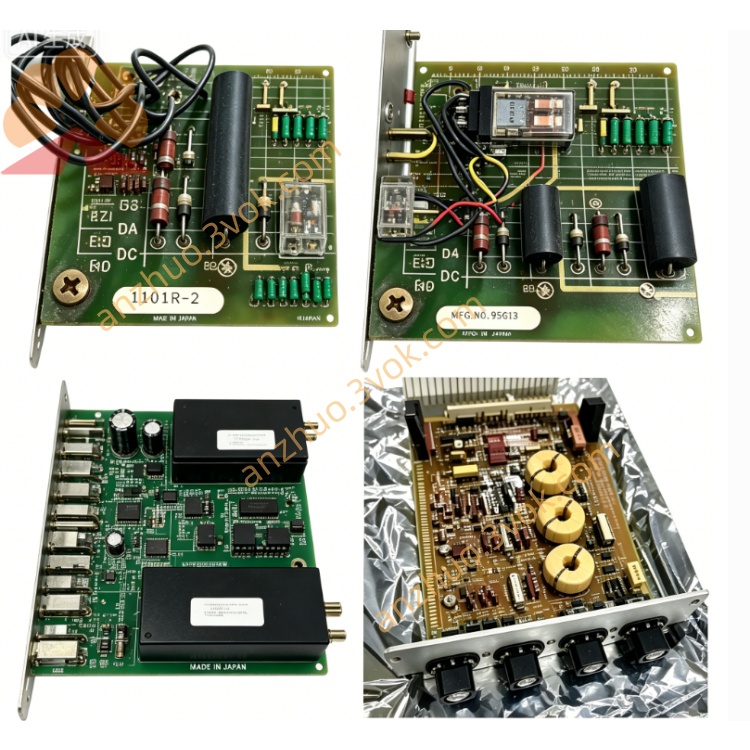
Reliance 110913-4R (Dynamic Memory Board)
Description
Product Introduction
Model Definition
110913: Base part number, identifying a Reliance dynamic memory board for industrial control systems.
4R: Revision 4, indicating the hardware revision level of the board; revisions denote component layout updates, compatibility improvements, or minor functional enhancements.
Technical Specifications
Manufacturer: Reliance Electric (ABB/Baldor‑Reliance)
Product Type: Dynamic Random‑Access Memory (DRAM) expansion board
Compatible Systems: Reliance AutoMax PLC and related industrial control platforms
Function: Provides additional volatile memory for user programs, data tables, I/O configuration, communication parameters, and diagnostic logs
Mounting: Plugs into dedicated backplane or memory expansion slot within the controller chassis
Weight: Approximately 0.55 kg
Dimensions: Standard industrial module form factor (length × width × height, typical for Reliance AutoMax series)
Operating Temperature: 0°C to +40°C
Humidity: 5%–95% RH (non‑condensing)
Status: Obsolete (available as refurbished, surplus, or used units with limited new stock)
Interface and Communication Configuration
Host Interface: Direct connection to the controller’s internal backplane via edge connector, enabling high‑speed data exchange between the memory board and the PLC’s central processing unit.
Communication Integration: No external communication ports; all data transfer occurs through the backplane, supporting seamless integration with the controller’s existing communication modules (e.g., DeviceNet, ControlNet, RS‑232/485) for networked system operation.
I/O Compatibility: Works with the controller’s digital/analog I/O modules by expanding memory for I/O mapping and configuration data storage.
Core Functions
Memory Expansion: Increases volatile DRAM capacity to accommodate larger user programs, complex ladder logic, and extensive data tables for timers, counters, and process variables.
Data Storage: Temporarily holds operational data, system parameters, and diagnostic information during controller operation; data is retained only while powered on (volatile memory).
System Performance: Reduces memory bottlenecks in large‑scale automation projects, supporting faster program execution and real‑time data processing.
Configuration Flexibility: Enables the controller to support additional I/O points, communication protocols, and control functions by providing extra storage for configuration settings.
Applicable Scenarios
Industrial Automation: Used in Reliance AutoMax PLC‑based systems for manufacturing lines, assembly plants, and process control applications requiring expanded program/data memory.
Legacy System Upgrades: Ideal for retrofitting older Reliance control systems to handle more complex automation tasks without full controller replacement.
Heavy‑Duty Control: Suited for applications with large I/O counts, complex motion control, or data‑intensive processes (e.g., packaging, material handling, chemical processing).
System Modernization: Supports extending the service life of legacy Reliance equipment in industrial facilities where downtime and replacement costs are critical.
Usage and Maintenance Instructions
Installation
Power off the controller and disconnect all power sources before installation to avoid electrical damage.
Locate the dedicated memory expansion slot on the controller backplane; align the board’s edge connector with the slot and insert firmly until fully seated.
Secure the board with mounting screws (if provided) to prevent vibration‑related disconnection.
Reconnect power and power on the controller; verify recognition of the new memory capacity via the controller’s programming software or local display.
Maintenance
Regular Inspection: Periodically check the board for physical damage, loose connections, or signs of corrosion; inspect the edge connector for dirt or oxidation.
Cleaning: Power off the system and use a soft, dry cloth to clean the board surface and edge connector; avoid liquid cleaners that may damage electronic components.
Environmental Control: Ensure the controller enclosure maintains recommended temperature (0°C to +40°C) and humidity (5%–95% RH, non‑condensing) levels to prevent component degradation.
Handling Precautions: Use electrostatic discharge (ESD) protection (e.g., anti‑static wristband) when handling the board to avoid static damage to sensitive electronic components.
Replacement: If the board fails, replace with a compatible 110913‑4R or equivalent revision; always back up controller programs and data before replacement.
Get a Quote