
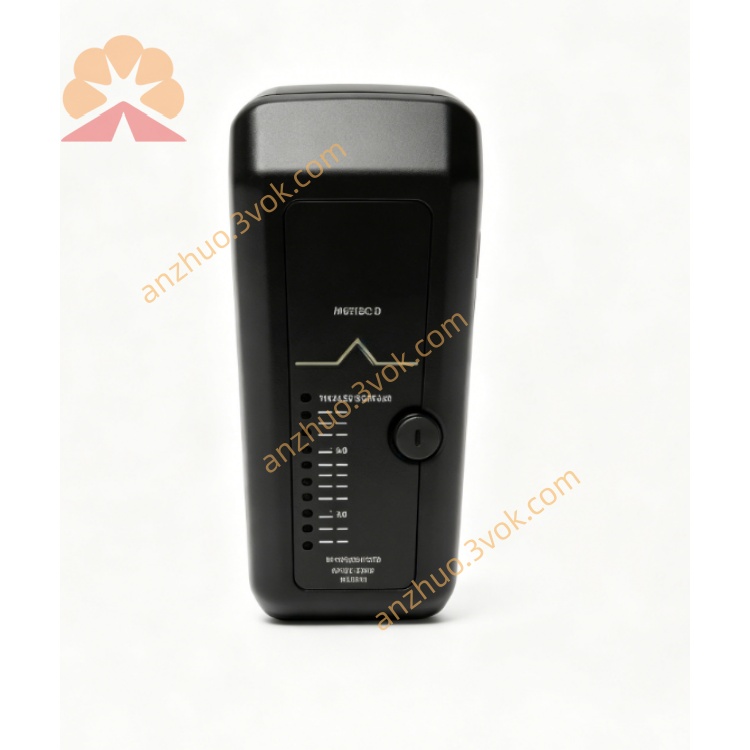
Emerson 12P2531X122 DeltaV HART Analog Output Module
Description
1. Product Overview
2. Main Features
4 fully independent isolated analog output channels
Standard 4-20mA current output, built-in HART Bell 202 protocol
16-bit high precision DAC conversion, excellent linearity and stability
1500VDC dielectric isolation between field side and internal circuit
Support 1:1 redundant backup and automatic switchover
Hot swap function allows online replacement without system shutdown
Built-in comprehensive channel diagnosis: open circuit, short circuit, overload fault detection
HART communication supports device configuration, parameter modification and fault self-diagnosis
Industrial wide temperature design, suitable for harsh on-site environment
Adopt 35mm standard DIN rail mounting, easy installation and wiring
Meet industrial EMC electromagnetic compatibility and anti-interference standards
Flame-retardant plastic housing, safe and reliable for long-term continuous operation
3. Technical Specifications
3.1 General Parameters
3.2 Analog Output Parameters
3.3 HART Communication Parameters
3.4 Environmental & Mechanical Performance
4. Safety Precautions
Installation, wiring, commissioning and maintenance must be operated by qualified professional technical personnel.
Cut off all power supply of the module and field loop before wiring, disassembly and replacement to avoid electric shock and module burnout.
Do not install the module in flammable, explosive, dusty and strong corrosive environment without explosion-proof certification.
HART and analog signal lines must use shielded twisted-pair cables; signal cables and high-voltage power cables shall be laid separately to avoid electromagnetic interference.
The shielding layer of the signal cable shall be grounded at single end only, to prevent circulating current interference affecting measurement and communication accuracy.
Strictly follow the terminal definition for wiring; wrong connection may cause module damage or abnormal control.
Do not connect over-range voltage and current to any output channel.
It is forbidden to disassemble, modify or refit the internal circuit of the module privately, otherwise the warranty will be invalid.
5. Installation and Terminal Definition
5.1 DIN Rail Installation
Fix the 35mm standard DIN rail firmly on the cabinet mounting plate.
Buckle the upper fixed bayonet of the module on the edge of the DIN rail.
Press the module down slightly until the bottom locking structure clicks and locks tightly.
Shake the module gently to confirm it is installed firmly without loosening.
5.2 Terminal Pin Assignment
5.3 Wiring Instructions
Strip about 6mm insulation layer at the end of the shielded twisted-pair wire, insert into the corresponding terminal, and tighten the terminal screw properly.
For 4-20mA HART loop wiring: connect the field HART device signal positive to channel positive terminal, signal negative to channel negative terminal.
The cable shielding layer is connected to the frame ground terminal, and only grounded at the module side.
Signal lines shall not be laid in parallel with high-power AC lines and inverter lines, keeping a safe distance to reduce interference.
Do not add low-pass filter and isolation device on HART signal loop, so as not to affect HART digital communication.
6. Parameter Configuration
Add 12P2531X122 module in DCS or PLC system configuration software, and match the actual rack and slot address.
Configure basic parameters of the module, enable or disable redundant function according to system requirements.
Set parameters for each output channel one by one:
Define 4-20mA engineering range and physical unit
Set channel fail-safe mode: hold last value, zero position or full position
Enable channel open circuit, short circuit and overload fault alarm
Turn on HART communication function, bind field HART device address and tag
Download the configuration to the controller and the module.
After configuration completion, simulate control output and check HART device online status, communication data and diagnosis information.
7. Working Principle and Operation Description
7.1 Power-on Self-test
7.2 Main Functions
Receive digital control commands from DCS/PLC system, convert to standard 4-20mA analog signal output.
Drive field regulating valves, actuators and other equipment to realize process closed-loop control.
Realize HART digital communication with smart devices, complete remote parameter setting, calibration and real-time data reading.
Real-time monitor output channel status, automatically detect open circuit, short circuit and overload fault.
Support redundant backup automatic switchover to ensure uninterrupted control of important loops.
Support hot swap, realizing online replacement and maintenance without stopping production.
7.3 Indicator Function Description
8. Daily Maintenance
Regularly check module terminal wiring tightness, prevent loosening, oxidation and corrosion caused by long-term operation.
Use dry soft cloth to clean dust on module surface regularly, do not use liquid and chemical solvent for cleaning.
Keep the ambient temperature and humidity of the control cabinet within the allowable range of the module.
Periodically inspect signal cables for aging, damage and poor shielding, replace defective cables in time.
Regularly view system diagnosis logs, check channel status and HART device operation information.
Regularly calibrate the output loop as required to ensure long-term control accuracy.
9. Troubleshooting
- Power indicator not litCause: No 24VDC power supply, power polarity reversed or power line brokenSolution: Check power loop voltage and wiring, correct polarity connection
- No bus communication, module not recognized by systemCause: Wrong module address setting, loose backplane contact or bus line faultSolution: Confirm address parameter, re-seat module and inspect communication wiring
- Output control signal unstable or jitteringCause: Loose terminal wiring, no shielding measures or strong electromagnetic interference on siteSolution: Fasten wiring, use standard shielded cable and single-end grounding, stay away from interference sources
- Channel fault alarm (open circuit / short circuit)Cause: Field device damage, signal wire breakage or loop short circuitSolution: Check on-site loop continuity and device status, eliminate wiring fault
- HART communication abnormal or offlineCause: Incorrect wiring, poor loop load matching or incompatible HART device protocolSolution: Recheck wiring definition, verify loop load resistance and HART device version matching
- Redundant switchover failureCause: Incomplete redundant configuration parameters or standby module abnormalSolution: Recheck system redundant configuration, troubleshoot standby module fault
Get a Quote