
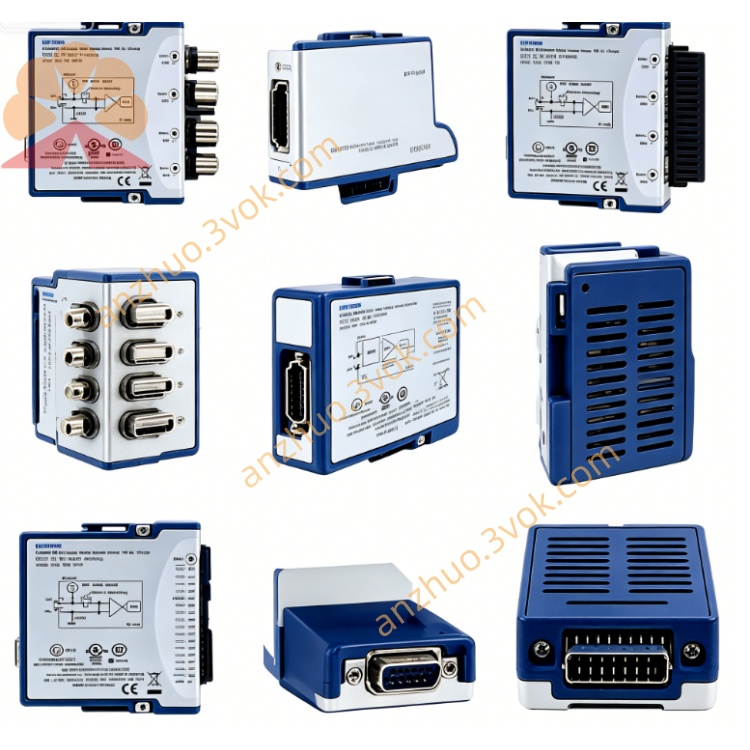
NI SCXI-1378 Screw Terminal Block for SCXI-1130 Matrix Switch Module
Description
Product Introduction
The NI SCXI-1378 is a fully shielded front-end wiring terminal board specifically designed for the SCXI-1130 high-density multiplexing / matrix switch module, used to configure the SCXI-1130 as a matrix topology. It features screw wiring and cable stress release design, is compatible with low-level voltages, thermocouples, and resistance signals, and the metal shielding shell can effectively suppress electromagnetic interference, making it suitable for high-channel-count matrix scanning and signal switching systems.
Model Interpretation
SCXI: Instrument Signal Conditioning Extension Platform (Signal Conditioning eXtensions for Instrumentation), is the modular signal conditioning hardware system of NI.
13xx: Front-end wiring terminal boards and functional accessories series for SCXI systems.
1378: Specifically refers to the dedicated terminal board for the SCXI-1130 matrix mode, complementing the SCXI-1377 terminal board for the multiplexing mode. Technical Specifications
Electrical parameters
Compatible modules: Only compatible with SCXI-1130, also compatible with PXI-2530.
Matrix configuration: Supports 4×64 single-line matrix and 4×32 dual-line matrix.
Signal types: Low-level voltage, thermocouple, resistance signal.
Maximum tolerance voltage: ±60VDC between signal terminal and common mode terminal.
Cold end compensation: On-board integrated temperature sensor, used for cold end compensation of thermocouple temperature measurement.
Shielding performance: Full metal shielding enclosure, suppressing EMI/RFI interference.
Adapter specifications: 26AWG to 14AWG.
Mechanical and environmental parameters
Installation method: SCXI standard front-end installation, 2 wing-shaped screws for fixation.
Operating temperature: 0℃ to 50℃.
Storage temperature: -20℃ to 70℃.
Relative humidity: 10% to 90%, no condensation.
Safety standards: Compliant with IEC 61010-1, UL 61010-1, CAN/CSA-C22.2 No.1010.1.
Interface and communication configuration
Front-end interface: Arranged screw terminal blocks, grouped by matrix rows and columns, equipped with cable clamps to prevent pulling and vibration-induced loosening.
Back-end interface: Special connectors, directly connected to the front end of the SCXI-1130 module, without the need for adapter accessories.
Communication characteristics: Passive terminal board, without independent communication circuit and jumpers, only responsible for signal conversion.
Driver compatibility: Compatible with NI-DAQmx driver, supports LabVIEW, C/C++, LabWindows/CVI, etc. development environments.
Core functions
Matrix topology adaptation: Achieve 4×64 single-line or 4×32 dual-line matrix configuration, meeting the requirements of large-scale signal matrix switching.
Cold end compensation integration: On-board temperature sensor, simplifying the configuration of thermocouple temperature measurement system, ensuring temperature measurement accuracy.
Full shielding anti-interference: Metal enclosure reduces industrial site electromagnetic interference, improving the stability and accuracy of weak signal acquisition.
Reliable wiring design: Screw terminals reinforced wiring, combined with stress release structure, resistant to vibration, anti-loosening, suitable for long-term on-site operation.
Quick system setup: High integration, simple installation and wiring, can quickly build a high-channel number matrix signal acquisition system. Applicable scenarios
High-channel-count temperature acquisition: Combined with the SCXI-1130 module, a matrix-type thermocouple and thermal resistance temperature measurement system is constructed.
Complex electromagnetic environment testing: Matrix switching and acquisition of low-level voltage signals in industrial sites, laboratories, etc.
Automation equipment monitoring: Matrix-based inspection and acquisition of multi-point sensor signals in automated production lines and equipment monitoring platforms.
Large-scale resistance signal measurement: Realize matrix-topological scanning and measurement of multiple resistance signals in various testing systems.
User and maintenance instructions Instruction Manual
Before installing the wiring, the power supply of the entire equipment must be cut off to prevent damage to the hardware during live operation.
Align the terminal board with the front interface of the SCXI-1130 module and push it in smoothly. Tighten the fixing screws to ensure a secure connection.
Connect the external signal cables according to the terminal markings in separate zones. Use cable clamps to organize the wires and prevent external forces from pulling them.
When measuring with thermocouples, confirm that the onboard cold junction compensation sensor is working properly. No additional compensation devices are required.
In the software, select the single-line or dual-line matrix mode according to actual needs. After configuration, start the data acquisition.
This device is only compatible with the SCXI-1130 module and cannot be used with other SCXI/PXI hardware models.
Maintenance instructions
The storage and operation environment of the equipment must be kept dry and ventilated. The temperature and humidity should be controlled within the rated range. Keep away from strong electromagnetic interference sources, dust, and corrosive gases.
Regularly check if the wiring screws are loose, if the terminal surface is oxidized, and if the cable outer skin is damaged. Address any issues promptly by cutting off the power and conducting maintenance.
Cleaning operations must be performed with the equipment powered off. Use a dust-free soft cloth to wipe the equipment surface and terminal connections. Do not use liquid cleaners to directly contact the components.
When the equipment is idle for a long time, remove all external cables, store the terminal board in a cool and dry place, and avoid moisture and direct sunlight.
Get a Quote