
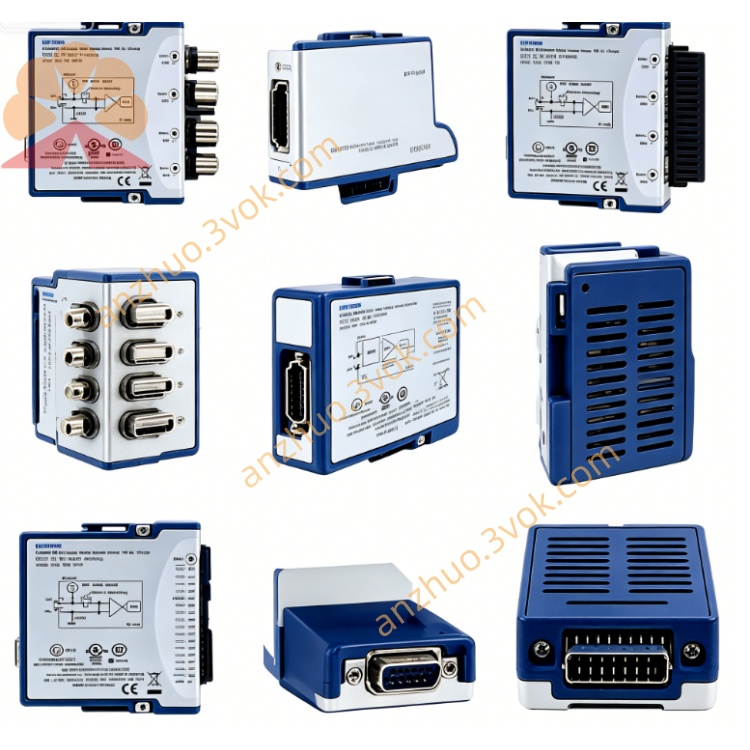
NI SCXI-1333 Terminal Block for SCXI-1122 Switch Module
The NI SCXI-1333 is a shielded terminal block dedicated to SCXI-1127 and SCXI-1128 multiplexer and matrix switch modules. It is designed for four-wire resistance measurement and precision resistance scanning. Equipped with built-in excitation resistors, it delivers stable excitation for resistance-based sensors. The full metal housing provides reliable shielding against electromagnetic interference. It supports high voltage and current loads and fits demanding industrial and laboratory measurement environments. The standard part number is 777687-33.
Description
Product Description
The NI SCXI-1333 is a shielded terminal block dedicated to SCXI-1127 and SCXI-1128 multiplexer and matrix switch modules. It is designed for four-wire resistance measurement and precision resistance scanning. Equipped with built-in excitation resistors, it delivers stable excitation for resistance-based sensors. The full metal housing provides reliable shielding against electromagnetic interference. It supports high voltage and current loads and fits demanding industrial and laboratory measurement environments. The standard part number is 777687-33.
Model Definition
SCXI stands for Signal Conditioning eXtensions for Instrumentation, a modular signal conditioning platform. The 13xx series refers to front-mounted terminal blocks for SCXI systems. SCXI-1333 is a specialized terminal block optimized for four-wire resistance measurement and paired with SCXI-1127 and SCXI-1128 modules.
Technical Specifications
Electrical Specifications
This terminal block is fully compatible with SCXI-1127 and SCXI-1128 modules. It is configured with dedicated terminals for four-wire signal connection and integrated excitation resistors for resistance measurement. The maximum rated voltage is 300 V following CAT II standards. Each channel can carry a maximum alternating and direct current of 2 A. It mainly supports 16-channel four-wire wiring mode for accurate resistance detection. No cold-junction compensation sensor is installed. The rear connector directly links to matched modules. The applicable wire gauge ranges from 26 AWG to 14 AWG.
Mechanical and Environmental Specifications
It adopts the standard SCXI physical form factor. The terminal block is mounted on the front of the target module and secured by two thumb screws. The operating temperature ranges from 0 degrees Celsius to 50 degrees Celsius, and the storage temperature ranges from -20 degrees Celsius to 70 degrees Celsius. The operating relative humidity is 5% to 90% without condensation. The full metal enclosure effectively blocks EMI and RFI. The product complies with IEC 61010-1, UL 61010-1 and CAN/CSA-C22.2 No.1010.1 safety standards.
Interface and Communication Configuration
The front panel is fitted with screw terminals for four-wire signals, ground lines and auxiliary circuits. The rear interface connects directly to SCXI-1127 and SCXI-1128 modules for signal transmission. There are no extra switches or independent communication circuits. It operates in plug-and-play mode without extra hardware setup. It is compatible with NI-DAQmx driver and supports LabVIEW, C/C++ and LabWindows/CVI development environments.
Core Functions
It provides complete four-wire connection circuits to eliminate wire resistance influence and ensure high-precision resistance measurement. Built-in excitation resistors supply stable driving signals for resistive sensors. The 300 V voltage rating and 2 A current capacity meet regular industrial signal switching demands. The metal shielding structure suppresses external interference and maintains consistent measurement performance in complex electromagnetic environments. Screw terminals with strain relief structure ensure firm wiring and strong vibration resistance for long-term operation.
Application Scenarios
It works with SCXI-1127 and SCXI-1128 to build multi-channel precision resistance scanning systems. It is widely used for RTD measurement and strain sensor detection in industrial process control. It serves test systems in semiconductor, automotive and aerospace industries for component resistance testing. It is also applied in laboratory precision calibration and material resistance characteristic testing.
Usage and Maintenance Instructions
Usage
Cut off all power before installation. Align the terminal block with the module connector, insert it firmly and tighten the thumb screws. Use wires within the specified gauge range and follow terminal labels to complete four-wire wiring. Connect the shielding terminal to earth ground to reduce interference. Set four-wire measurement mode in supporting software before starting data acquisition.
Maintenance
Place the device in a dry and ventilated area and keep ambient conditions within rated temperature and humidity range. Avoid exposure to strong electromagnetic fields, dust and corrosive gas. Inspect regularly for loose screws, oxidized terminals and damaged wire insulation, and repair defects in time. Perform cleaning only after power disconnection. Wipe the surface and terminals with anhydrous alcohol, and power on only after full drying. For long-term storage, detach the terminal block, put it into an anti-static bag and store in a cool and dry place.
Get a Quote