
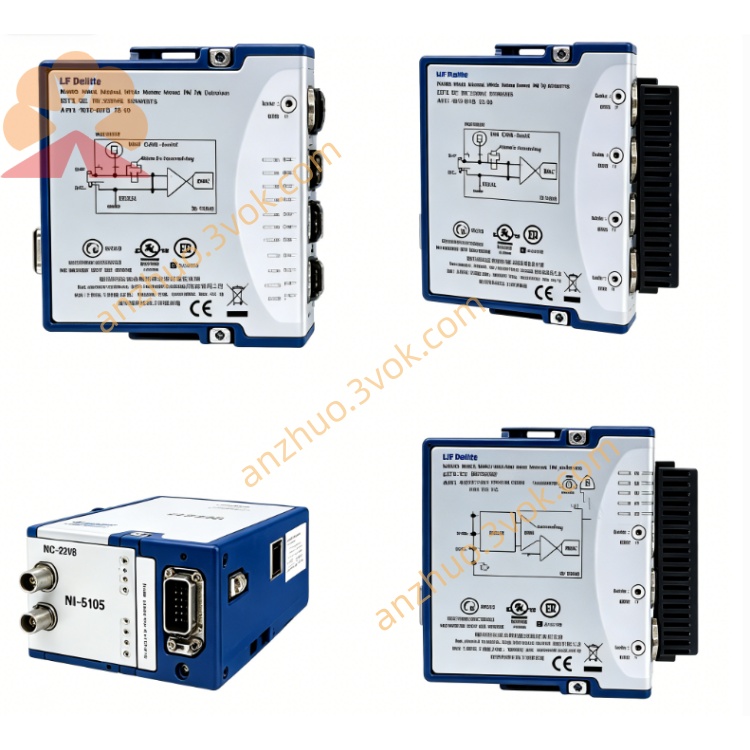
NI SCXI-1327 High Voltage Attenuator Screw Terminal Block
The NI SCXI-1327 is a shielded high-voltage terminal block equipped with precision voltage divider and bypass switches. It extends the input measurement range of SCXI-1120, SCXI-1120D, SCXI-1121, SCXI-1125 and SCXI-1126 modules up to 300 Vrms and ±300 VDC. This device integrates a 100:1 attenuation network and an onboard cold-junction compensation sensor for thermocouple applications. With full metal shielding, it delivers strong resistance to electromagnetic interference and fits harsh industrial working conditions. This terminal block is still available for use and supply.
Description
Product Description
The NI SCXI-1327 is a shielded high-voltage terminal block equipped with precision voltage divider and bypass switches. It extends the input measurement range of SCXI-1120, SCXI-1120D, SCXI-1121, SCXI-1125 and SCXI-1126 modules up to 300 Vrms and ±300 VDC. This device integrates a 100:1 attenuation network and an onboard cold-junction compensation sensor for thermocouple applications. With full metal shielding, it delivers strong resistance to electromagnetic interference and fits harsh industrial working conditions. This terminal block is still available for use and supply.
Model Definition
SCXI stands for Signal Conditioning eXtensions for Instrumentation, which is NI modular signal conditioning platform. The 13xx series refers to front terminal blocks for SCXI modules. SCXI-1327 is a dedicated high-voltage terminal block featuring signal attenuation and cold-junction compensation. Its standard part number is 777687-27.
Technical Specifications
Electrical Specifications
Compatible modules include SCXI-1120, SCXI-1120D, SCXI-1121, SCXI-1125 and SCXI-1126. It is fitted with 18 screw terminals that form nine differential input channels. The maximum input voltage reaches 300 Vrms for AC signals and ±300 VDC for DC signals under attenuation mode. The built-in precision resistor network provides a fixed attenuation ratio of 100:1 with high accuracy. In bypass mode, the circuit connects signals directly and supports input up to ±10 V. The overall input impedance is 1 megaohm. An integrated temperature sensor serves for cold-junction compensation of thermocouple measurement. Each channel is fitted with an independent switch to switch between attenuation and bypass status.
Mechanical and Environmental Specifications
The overall dimension is 30 by 173 by 203 millimeters, and the weight is around 450 grams. It adopts front mounting structure and is fixed to the matched module with two thumb screws on top and bottom. The operating temperature ranges from 0 degree Celsius to 50 degree Celsius, and the storage temperature ranges from -20 degree Celsius to 70 degree Celsius. The applicable humidity is 5 percent to 90 percent relative humidity without condensation. The full metal enclosure provides effective shielding against EMI and RFI. The product complies with IEC 61010-1, UL 3111-1 and CAN/CSA C22.2 No.1010.1 safety standards.
Interface and Communication Configuration
The front panel consists of 18 screw terminals and channel selection switches. Each differential channel can be set to attenuation mode or bypass mode via hardware switch. The rear side adopts a 96-pin DIN connector to directly connect with the front interface of matched SCXI modules. No extra communication circuit is required. Hardware setting is completed through local switches, and no additional software configuration is needed for the terminal block itself. It works well with NI-DAQmx driver, and supports mainstream development environments including LabVIEW, C/C++ and LabWindows/CVI.
Core Functions
It expands the original measurement range of matched modules to 300 Vrms and ±300 VDC by 100:1 precision attenuation, realizing industrial high voltage signal measurement. Each channel works independently, so users can select attenuation or bypass mode according to actual signal voltage, and measure high voltage and low voltage signals simultaneously. The onboard cold-junction compensation sensor ensures accurate temperature reading when connecting thermocouples. The full metal shielding structure suppresses external electromagnetic interference and maintains stable signal quality in complex industrial environments. The screw terminals with strain relief structure ensure firm connection and good vibration resistance for long-term field operation.
Application Scenarios
It is widely used for high voltage voltage monitoring of industrial equipment such as motor busbars, power supplies and frequency converters. It is applicable to signal collection and performance verification of power electronic devices like switching power supplies, inverters and uninterruptible power systems. It supports temperature measurement with thermocouples near high voltage circuits such as industrial furnaces and heat treatment equipment. It also acts as a high voltage front-end accessory to expand measurement capacity for SCXI-1120, SCXI-1121, SCXI-1125 and SCXI-1126 modules.
Usage and Maintenance Instructions
Usage
Carry out all installation operations with power disconnected. Align the terminal block with the connector of the matched module, insert it firmly and tighten the fixing screws. Select wires with gauge from 26 AWG to 14 AWG for wiring, and connect the shielding terminal to earth ground properly. Toggle the channel switch to attenuation position for high voltage signals, and toggle to bypass position for low voltage signals. When using thermocouples, enable the cold-junction compensation function in supporting software. When setting parameters in NI-DAQmx, calculate the actual input voltage based on the 100:1 attenuation ratio.
Maintenance
Place the device in a dry and ventilated environment, and keep temperature and humidity within the specified range. Stay away from strong electromagnetic interference sources. Conduct regular inspection to check loose screws, aging wire insulation and poor switch contact. Perform cleaning work after powering off, and wipe the surface and terminals with anhydrous alcohol. Do not let liquid flow into gaps of switches. For long-term storage, detach the terminal block, put it into anti-static bag, and store it in a cool and dry place.
Get a Quote