
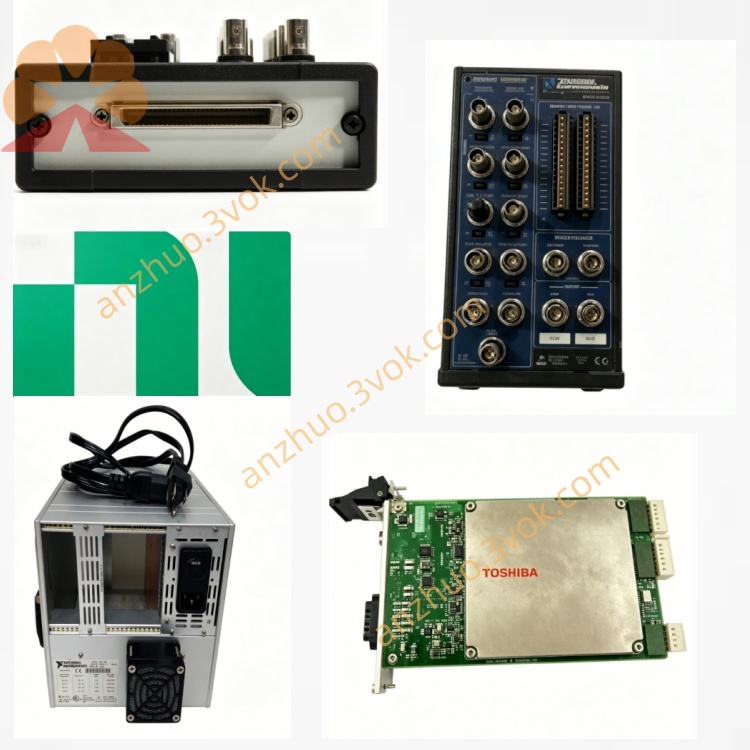
NI PXI-GPIB PXI Bus GPIB Controller Module
Description
Product Introduction
NI PXI-GPIB is a 3U single-slot PXI bus-based IEEE 488 (GPIB) instrument control module, used to connect and control traditional GPIB instruments in the PXI system, achieving the integration of new and old testing equipment with NI. It comes with hardware DMA and NI TNT ASIC controller, balancing high-speed transmission and industrial stability, suitable for long-term operation in laboratories and production lines.
Model and Core Identifier
Model: PXI-GPIB
Part Number: 778039-01
Standards: IEEE 488.1, IEEE 488.2, HS488 (NI High-Speed Protocol) Technical Specifications
Bus and Performance
Bus: PXI hybrid bus, supporting bus master control and DMA
Standard GPIB rate: 1.5 MB/s (three-wire handshake)
HS488 high-speed rate: 7.7 MB/s (NI patent, IEEE approved)
Connector: Standard 24-pin GPIB interface
Environment and Physics
Size: 3U single slot (PXI standard)
Operating temperature: 0°C ~ 55°C (NI)
Humidity: 10% ~ 90% (no condensation)
Shock resistance: 30g impact, 5 ~ 500Hz random vibration
Software and System
Driver: NI-488.2 (with authorization) NI
System: Windows (32/64-bit), LabVIEW real-time system NI
Development: Supports LabVIEW, C/C++, VB, etc.
Interface and Panel
Front panel: 1 24-pin GPIB interface, status indicator lights
Bus interface: PXI backplane, supports plug-and-play
Core functions
GPIB instrument control: Directly drive GPIB instruments within the PXI chassis, no external GPIB card required (NI).
High-speed data transmission: HS488 protocol significantly shortens test time and improves batch testing efficiency.
Multi-instrument networking: A single card can control multiple GPIB devices, building a hybrid bus test system (NI).
Industrial-grade stability: Hardware DMA reduces CPU load, suitable for long-term unmanned operation. Applicable scenarios
Laboratory: Integrating PXI with traditional GPIB instruments (such as oscilloscopes, signal sources, power supplies) by NI.
Semiconductor testing: Controlling test instruments with GPIB interfaces, building a mixed testing platform by NI.
Industrial automation: Controlling GPIB devices in production lines to achieve high-precision measurement and control.
Research: Used in physical experiments, RF testing, etc., for scenarios requiring the collaboration of multiple instruments.
Usage and Maintenance Use
When the power is off, insert the PXI peripheral slot (recommended as the bus master slot) and fix the panel.
Connect the GPIB cable to the instrument, power on and install the NI-488.2 driver for NI.
Identify the device through NI-MAX, configure the address and communication parameters for NI.
Write the program to control the instrument, supporting DMA acceleration (DMA needs to be disabled in the non-master slot). Maintenance
Regularly wipe the panel and interface with a dry soft cloth to prevent dust accumulation.
Check the GPIB cable and connector to prevent loosening or oxidation.
Monitor the temperature during long-term operation to ensure normal heat dissipation of the chassis.
Store in a dry environment at -20°C to 70°C with humidity less than 60% when not in use.
Get a Quote