
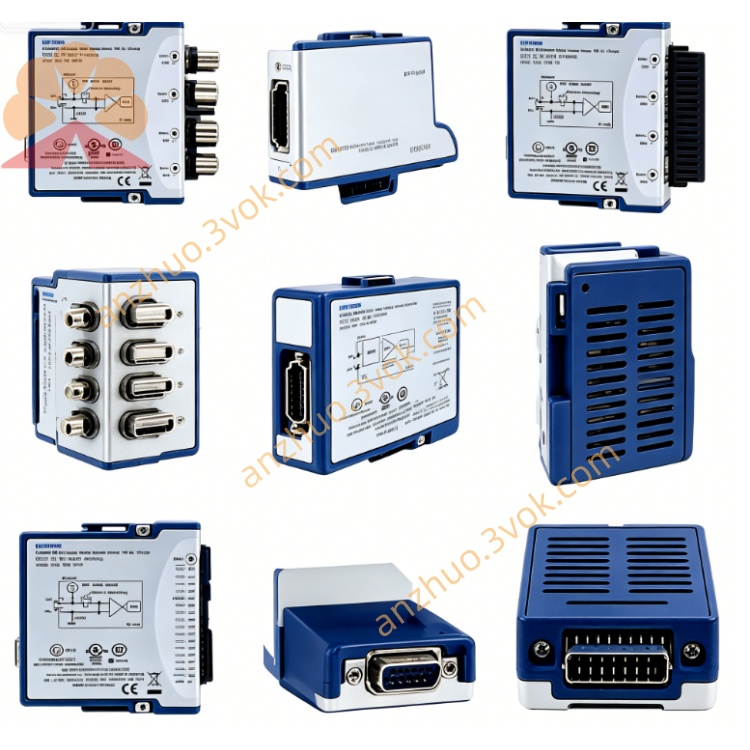
NI PXIe-8880 High Performance PXIe Embedded Controller
Description
Product Introduction
The NI PXIe-8880 is a 3U single-slot PXIe high-end embedded main controller. It needs to be installed in the system slot of the chassis and is the core control unit of the entire PXIe system. This module is equipped with a high-performance multi-core processor, and its hardware configuration has been comprehensively upgraded. Its computing power, interface richness, and real-time performance are all at the high-end level. It can independently drive the operation of the entire box modules and does not require an external computer. The overall stability is strong, making it suitable for high-load computing, complex real-time control, large data transmission, and long-term uninterrupted operation of industrial production lines in high-end test and measurement platforms.
Model Interpretation
PXIe represents that the device adopts the PXI Express bus and follows the 3U single-slot mechanical standard, and is compatible with various standard PXIe chassis. 8880 belongs to the NI high-end embedded controller series and is positioned as the flagship-level system main controller. It is used to build a high-performance and highly reliable integrated PXI test and control system, different from the coprocessing module, fully responsible for the resource scheduling, computing processing, and peripheral management of the entire chassis. Technical Specifications
Core hardware
The module is equipped with a high-performance Intel six-core processor, which supports multi-threaded parallel computing and can handle high-load multi-task scenarios. It comes with a large-capacity memory and supports memory expansion to meet the temporary caching requirements for large programs and massive data. It is also equipped with a high-speed solid-state drive, which has fast read and write speeds and excellent shock resistance, suitable for frequent data reading and writing as well as long-term storage. The module adopts the new-generation PXIe bus specification, with a powerful backplane data throughput capability, and can interact with various high-speed modules inside the chassis to exchange data stably. The entire machine is powered by the chassis backplane, with reasonable power consumption control, and when combined with the chassis cooling system, it can work continuously for a long time. Environmental parameters
The standard operating temperature range of the equipment is from 0 degrees Celsius to 55 degrees Celsius. It has industrial-level dust-proof, shock-proof and electromagnetic interference resistance capabilities. The required humidity for the working environment is between 10% and 90%. The equipment can operate normally without condensation throughout the process and is suitable for various complex on-site environments such as laboratories and industrial workshops.
Interface and Communication Configuration
Box Bus Interface
Connects to the backplane of the box through the PXIe bus, fully accessing the clock, trigger bus and other synchronization resources of the box to issue instructions, collect status and achieve high-speed data transmission for all functional modules inside the box, ensuring the coordinated operation of multiple modules.
Front Panel Interface
The panel integrates multiple video output interfaces, supporting multi-screen display. Equipped with multiple gigabit Ethernet interfaces, it can achieve network segmentation, remote operation and networking interconnection of multiple box groups. It is equipped with multiple sets of different specifications USB interfaces, allowing for the connection of various external devices such as keyboards, mice, removable storage devices, and printers. It comes with common industrial serial interfaces that can directly connect to traditional serial port devices. At the same time, it has a system reset button, hardware status indicator lights, and dedicated expansion interfaces, which can be expanded with additional functions as needed.
Driver and Software Communication
Supports mainstream desktop operating systems and LabVIEW real-time operating systems. The system comes with a complete set of hardware drivers. After startup, it can automatically identify all PXIe functional modules inside the box. It is fully compatible with all series of supporting software such as NI-MAX, LabVIEW, and TestStand, and supports program development using multiple mainstream programming languages. Through network interfaces, remote desktop access, program deployment and equipment operation can be realized.
Core Functions
As the core main control of the entire machine, it uniformly manages all hardware modules inside the box, allocates tasks in a coordinated manner, and executes complex test processes and control logic. The powerful multi-core computing capability can complete high-load tasks such as complex signal analysis, big data computing, and simulation modeling. The rich onboard interfaces can directly connect to various external devices, industrial instruments and network equipment, simplifying the system wiring structure. It supports high-precision triggering and timing synchronization, and can build precise closed-loop control systems and multi-channel synchronous acquisition platforms. The hardware architecture has been strengthened for industrial use, has fault self-detection capabilities, and is suitable for unmanned continuous operation of automated production lines. Expansion interfaces are reserved to flexibly add function modules and improve the overall adaptability of the system. Applicable scenarios
High-end integrated semiconductor testing platform, capable of handling multi-channel parallel test data and executing precise testing algorithms. In the fields of radio frequency, radar, and wireless communication, it accomplishes ultra-wideband signal processing, protocol parsing, and real-time spectrum analysis. Large-scale industrial automation control systems, relying on real-time systems, achieve high-precision equipment linkage, data acquisition, and equipment monitoring. Large-scale simulation and physical experiment platforms in research institutes run complex algorithms and real-time simulation models. Distributed multi-box testing system, as the core node, uniformly controls multiple sets of equipment and aggregates and processes all data.
User and maintenance instructions Instruction Manual
When the equipment is in a power-off state, insert it into the dedicated system slot of the chassis, tighten the fixing screws, and confirm that the connection is secure before powering on. Connect the monitor, network cable, and peripheral cables according to the usage requirements, and complete the installation and configuration of the operating system and application software. After powering on, use the accompanying software to check the identification status of all modules in the chassis, confirm that the hardware is normal, and then run the business program. When switching to the real-time working mode, complete the parameter configuration according to the software instructions. During the operation of the equipment, avoid severe vibrations and do not randomly plug or unplug various connection cables.
Maintenance Instructions
Regularly use a dry soft cloth to wipe the equipment's casing, interfaces, and indicator light areas, clean the surface dust, and strictly prohibit contact with liquids. During long-term continuous operation, regularly check the air duct and cooling conditions of the chassis to avoid dust accumulation causing high-temperature faults. Regularly clear redundant system files, logs, and caches to ensure storage read/write efficiency and system operation speed. When the equipment is idle for a long time, place it in a dry environment ranging from minus twenty degrees Celsius to sixty degrees Celsius, with a relative humidity of less than 60%, and take anti-static protection measures. In case of abnormal startup, communication interruption, or peripheral failure, prioritize checking the power supply, wiring, and driver status; if the system operation is sluggish, investigate the background programs, memory, and storage usage.
Get a Quote