
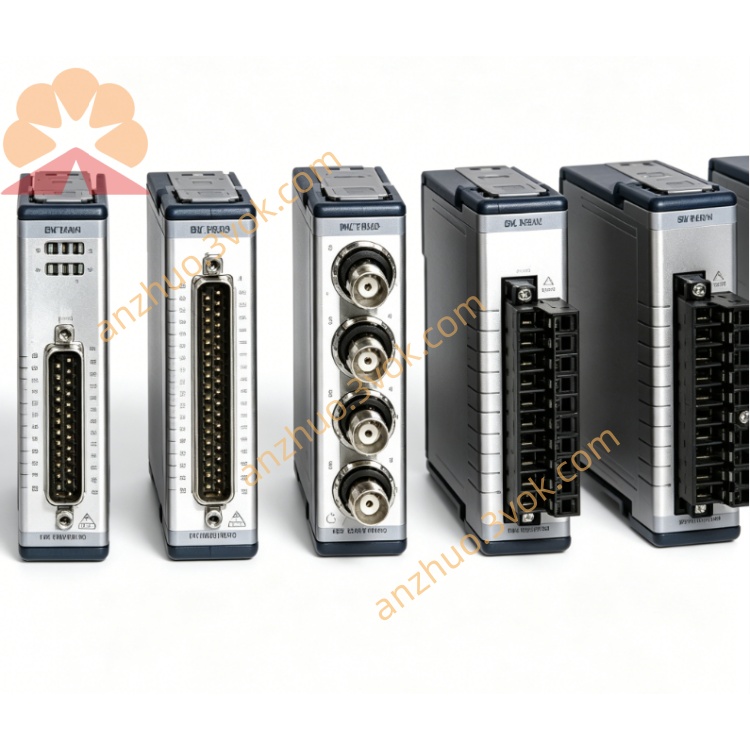
NI PXIe-8431/16 16-Port RS485 Serial Interface Module
Description
Product Introduction
The NI PXIe-8431/16 is a high-performance serial communication module with a 3U single-slot PXIe bus. It integrates sixteen independent RS-232 serial port channels, specifically designed for industrial serial device interconnection, instrument communication, and renovation scenarios of outdated equipment. The module relies on the PXIe bus to achieve data interaction with the chassis main controller. Each channel has independent electrical isolation and signal protection, and can stably execute command transmission and data transmission tasks for a long time, meeting the multi-serial port parallel communication requirements in industrial sites, automated testing, and equipment monitoring.
Model Interpretation
PXIe represents that the module uses the PXI Express bus and follows the 3U single-slot mechanical specification, which is compatible with standard PXIe chassis slots. 8431 belongs to the NI industrial serial communication series number, and the suffix 16 indicates that the module is equipped with 16 independent serial port channels. This model is a multi-channel RS-232 communication unit, focusing on the data transmission of traditional serial protocols. Technical Specifications
Serial Port Core Parameters
The module provides a total of sixteen completely independent RS-232 channels. Each channel is physically isolated from the others to avoid signal crosstalk between channels. The maximum baud rate of the serial port can reach 921.6 kbps. It supports standard serial port data format configuration, including data bits, stop bits, parity bits, flow control modes, and other conventional parameters. All channels have electrostatic protection and surge protection capabilities, capable of withstanding common electromagnetic interference in industrial environments.
Bus and Electrical Parameters
It adopts the PXIe Gen1 bus to achieve high-speed interaction between serial port data and the internal controller of the chassis, as well as other functional modules. A single module is of 3U standard size, with a working temperature range of 0 degrees Celsius to 55 degrees Celsius, meeting the requirements for industrial-level continuous operation. Each single serial port supports the standard RS-232 level specification, and the signal driving capability is compatible with conventional serial port cables for transmission.
Hardware Protection
All channels have an electrical isolation design, effectively blocking ground loop interference between different devices, improving communication stability. Built-in overvoltage and overcurrent protection circuits reduce the risk of damage to the module caused by faults in external devices.
Interface and Communication Configuration
Host Bus Interface
Connect to the chassis backplane through the PXIe bus to complete serial port data forwarding, command interaction, and can be coordinated with the chassis clock and trigger signals to achieve synchronous start and stop of serial port communication tasks.
External Signal Interface
The module externally uses high-density connectors to uniformly lead out sixteen RS-232 signals. Through the accompanying adapter cables, multiple serial ports can be split and connected to different serial port terminal devices.
Driver and Software Communication
It comes with a dedicated NI-Serial driver, compatible with Windows systems and NI real-time operating systems. Through NI-MAX, channel identification, serial port parameter configuration, and communication status monitoring can be completed. It fully supports development tools such as LabVIEW, TestStand, C/C++, Python, and provides standard serial port read and write application interfaces, compatible with mainstream serial port communication protocols.
Core Functions
Sixteen independent RS-232 parallel communications can simultaneously connect multiple serial port instruments, sensors, and industrial controllers, achieving centralized management of multiple devices. The hardware electrical isolation and multiple protections adapt to complex electromagnetic environments, ensuring long-term communication stability. Flexible configuration of serial port baud rate, parity mode, hardware flow control, and software flow control is suitable for various custom serial port devices. Relying on the PXI system architecture, traditional serial port devices are integrated into the modern PXI test platform to achieve the linkage of new and old devices. It supports real-time monitoring of communication status, fault reporting, and facilitates troubleshooting of link problems during operation. Applicable scenarios
In the field of industrial automation, serial port devices such as PLCs, frequency converters, and instrument sensors are connected to achieve centralized data collection and equipment control. The automation testing system interfaces with traditional serial port-type testing instruments to complete command issuance and test data transmission. In the equipment monitoring scenario, the status of multiple old industrial equipment is monitored and logs are collected. Laboratory equipment integration integrates various serial port instruments to build an integrated comprehensive testing platform. In the fields of rail transit and building automation, multiple serial port signals are centralized for routing and communication.
User and Maintenance Instructions Instruction Manual
When the power is off, insert the module into the standard 3U PXIe chassis slot and tighten the fixing screws. Connect the module to the external serial device using the dedicated cables provided, and verify the pin definitions to avoid wiring errors. Install the NI-Serial driver and the accompanying software on the upper computer, and configure each channel's baud rate, parity bit, flow control, etc. through NI-MAX. During communication operation, avoid pulling the communication cables, and choose shielded cables in strong electromagnetic environments.
Maintenance Instructions
Regularly wipe the module's outer shell and connector interfaces with a dry soft cloth, clean the dust, ensure reliable contact, and strictly prohibit contact with liquids. Regularly check the appearance and connection status of the communication cables, and replace aged cables in time. When the module is idle for a long time, store it in a dry environment ranging from -20°C to 60°C with a relative humidity of less than 60%, and perform anti-static treatment. In case of communication interruption or data garbled, first check the wiring, serial port parameter configuration, and cable shielding conditions; for single-channel failures, check the corresponding lines and the status of the external equipment.
Get a Quote