
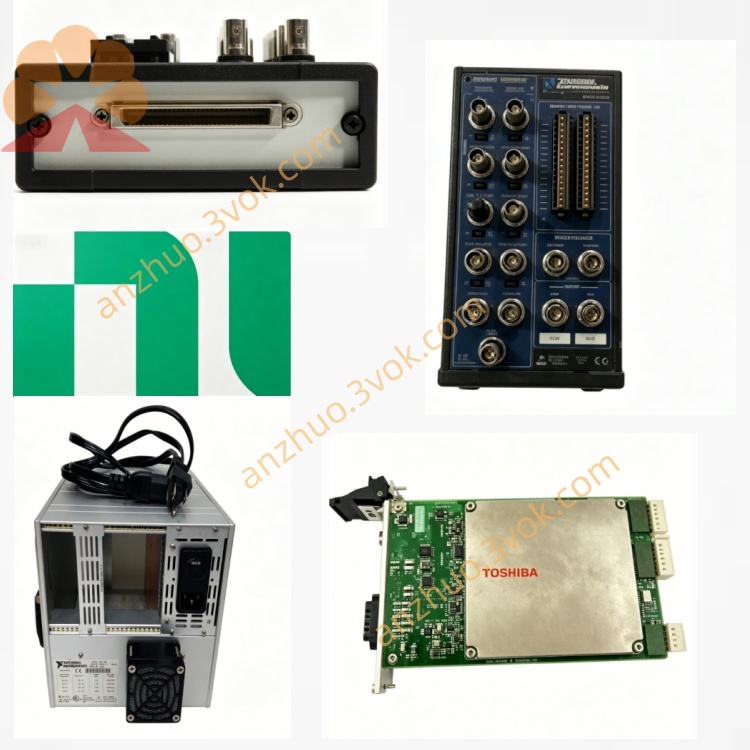
NI PXI-8423 2-Port Isolated RS485/422 Serial Module
Description
.Model Nomenclature
PXI: PCI eXtensions for Instrumentation (3U modular bus).
8423: NI serial series; 842x = industrial serial, 3 = isolated RS‑422/RS‑485.
Key Variant: PXI‑8423/4 (4 ports, isolated); siblings: PXI‑8421 (non‑isolated RS‑485), PXI‑8422 (isolated RS‑232).
Technical Specifications
Form Factor: 3U, single‑slot PXI.
Ports: 4 × isolated RS‑422/RS‑485 (software‑selectable).
Baud Rate: Up to 921.6 kb/s; supports 2 b/s–921.6 kb/s (±1% accuracy).
FIFOs: 4 kB transmit / 4 kB receive per port.
Isolation: 2 kVrms channel‑to‑chassis isolation.
Connectors: 2 × DB‑9 male (2 ports each).
Signaling: RS‑422 (differential, full‑duplex); RS‑485 (differential, half‑duplex).
Flow Control: Hardware (RTS/CTS, DTR/DSR); software (XON/XOFF).
Power: 5 V DC from PXI backplane; typical ~1.2 A.
Environment: Operating 0–55 °C; storage ‑20–70 °C; humidity 10–90% non‑condensing.
Driver Support: NI‑Serial, LabVIEW, Measurement Studio; Windows compatible.
Interface & Communication Configuration
Front‑panel I/O: Two DB‑9 connectors, each handling 2 ports; pinout configurable for RS‑422 or RS‑485.
PCI Interface: Plug‑and‑Play; 3.3 V/5 V PCI signaling compatible.
Port Configuration: Each port independently set for baud rate, data bits (5–8), parity (none/even/odd), stop bits (1/1.5/2), and protocol (RS‑422/RS‑485).
Interrupts: Shared interrupts; DMA‑capable for low‑CPU data transfer.
Termination: Software‑selectable 120 Ω termination per port (RS‑485).
Core Features
Isolated RS‑422/RS‑485: 2 kV isolation eliminates ground loops; robust for industrial EMI environments.
High‑Speed & Long‑Range: Up to 921.6 kb/s; RS‑485 reaches 1.2 km at lower baud rates.
Large FIFOs: 4 kB buffers reduce data loss in bursty traffic.
Multi‑Protocol Flexibility: Software‑selectable RS‑422 (full‑duplex) or RS‑485 (half‑duplex).
Industrial‑Grade Reliability: Isolation, wide temp range, and EMI immunity for factory floors.
PXI Integration: Plug‑and‑Play with NI software; syncs with other PXI modules.
Application Scenarios
Industrial Automation: Connect PXI to PLCs, motor controllers, and sensors on noisy factory floors.
Distributed Test Systems: Long‑distance links between test nodes in aerospace/automotive benches.
Legacy Device Connectivity: Interface with RS‑422/RS‑485 instruments, meters, and serial I/O modules.
Harsh Environment Monitoring: Power plants, rail transit, and outdoor data acquisition systems.
Multi‑Drop Networks: RS‑485 multi‑drop for connecting up to 32 devices per bus segment.
Usage & Maintenance Instructions
Installation & Configuration
Insert into a 3U PXI slot; secure the front panel.
Connect DB‑9 cables to front‑panel ports; wire devices per RS‑422/RS‑485 pinout.
Power on the chassis; OS detects the card via Plug‑and‑Play.
Install NI‑Serial drivers; configure ports in NI‑MAX or Device Manager.
In LabVIEW, use VISA functions to set baud rate, protocol, and termination.
Daily Maintenance
Inspect cables/connectors for wear, damage, or loose connections.
Operate within rated temp/humidity; keep chassis clean and dry.
For EOL units, stock spares to avoid downtime.
Monitor communication via NI‑Serial tools or LabVIEW VISA traces.
Store idle modules in anti‑static bags in a dry environment.
Safety & Disposal
Avoid hot‑swapping cables/modules when powered on.
Do not exceed isolation or environmental ratings.
Dispose of EOL modules per local electronic waste regulations.
Get a Quote