
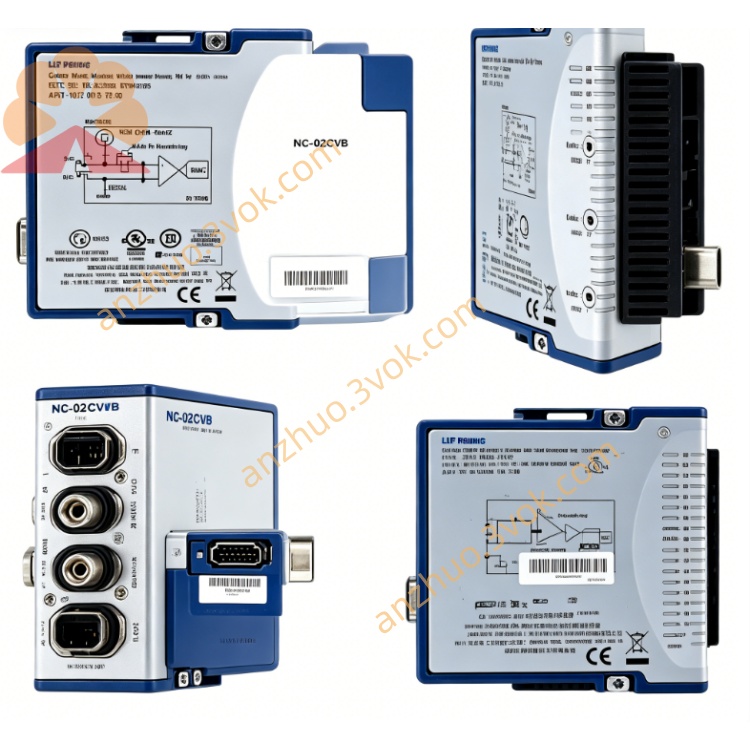
NI PXI-8176 1.26GHz Pentium III PXI Embedded Controller
Description
Model Nomenclature
PXI: PCI eXtensions for Instrumentation, denoting compliance with the PXI modular instrumentation bus standard.
8176: Belongs to the 8171 series (8174/8175/8176); 76 indicates the high‑end Pentium III‑based model in the series.
Full meaning: PXI bus, 8171 series, high‑end Pentium III embedded controller with GPIB.
Technical Specifications
Basic Specifications
Form factor: 3U, 4‑slot width (1 system + 3 expansion slots).
Processor: Intel Pentium III 1.26 GHz, 512 KB on‑die advanced transfer cache, 133 MHz FSB.
Chipset: Intel 815.
Memory: 128 MB SDRAM (standard), max 512 MB via two 144‑pin SO‑DIMM sockets.
Storage: Internal 2.5‑inch Ultra ATA100 HDD (10 GB minimum), 3.5‑inch 1.44 MB floppy drive.
Video: Integrated Super VGA (2 MB SGRAM), supports 1280×1024 (24‑bit) and 1600×1200 (256‑color) resolutions.
PXI bandwidth: 132 MB/s (reserved for PXI modules).
Power consumption: ~44 W (from PXI backplane).
Operating temperature: 0 °C to 50 °C.
Storage temperature: −20 °C to 60 °C.
OS support: Windows 2000, Windows XP, DOS, LabVIEW Real‑Time.
MTBF: 180,000 hours (Belcore method).
Onboard I/O Interfaces
Video: 1×VGA (DB‑15).
Serial: 2×RS‑232 (DB‑9).
Parallel: 1×IEEE 1284 (DB‑25).
USB: 2×USB 1.1.
Ethernet: 1×10/100 Mbps (RJ‑45).
GPIB: Integrated PCI‑based GPIB controller (IEEE 488.2).
PS/2: Keyboard and mouse ports.
Front panel: Reset button, POWER OK/DRIVE LEDs, floppy drive bay.
Interface and Communication Configuration
Internal Bus
PXI/CompactPCI: System controller slot, supports PXI trigger bus and RTSI synchronization.
PCI: Direct connection without bridge chip, maintaining full 132 MB/s bandwidth for PXI modules.
ISA: Integrated for legacy I/O compatibility.
Software Communication
Drivers: NI‑PXI, NI‑DAQ, NI‑VISA, NI‑488.2M (GPIB).
Programming environments: LabVIEW, LabWindows/CVI, C/C++, Visual Basic, .NET.
Protocols: TCP/IP, UDP, Serial, GPIB (native support).
Core Features
- Highest Performance in 8171 SeriesThe 1.26 GHz Pentium III with 512 KB cache delivers maximum processing power for demanding test, measurement, and control applications, supporting complex algorithms and multitasking.
- Integrated GPIB for Instrument ConnectivityNative PCI‑based GPIB eliminates the need for add‑on modules, enabling direct connection to GPIB instruments for streamlined test system integration.
- Full PXI Bandwidth PreservationDirect PCI connection without a bridge chip reserves the full 132 MB/s PXI backplane bandwidth for peripherals, ensuring high‑speed data acquisition and streaming.
- Ultra ATA100 Storage & Dual Serial PortsHigh‑speed HDD interface supports fast data logging and streaming; two RS‑232 ports enable connectivity with multiple serial devices.
- Rugged Industrial DesignCompact 3U form factor, industrial temperature range (0–50 °C), and backplane‑powered operation suit harsh industrial and field environments.
Applications
- High‑Performance Automated Test Equipment (ATE)Complex functional test of electronic assemblies, semiconductor test systems, and production lines with high computing and instrument connectivity demands.
- Industrial Control & MonitoringHigh‑speed factory automation, process control, and machinery monitoring requiring powerful processing and long‑term stable operation.
- High‑Speed Data Acquisition & LoggingDynamic signal analysis, high‑rate sensor monitoring, and large‑scale data logging in industrial/research settings.
- Portable/Field Test SystemsCompact, rugged PXI systems for on‑site maintenance, vehicle diagnostics, and remote monitoring with high performance requirements.
- Aerospace & Defense TestMilitary/aerospace test systems demanding high reliability, GPIB instrument integration, and robust performance.
Usage and Maintenance Instructions
Installation and Power‑On
Install in a standard 3U PXI chassis (e.g., PXI‑1020/1025), occupying 4 consecutive slots.
Power supplied via PXI backplane; ensure chassis provides ≥44 W per slot.
Connect peripherals (monitor, keyboard, mouse, GPIB/serial instruments) to front‑panel I/O before power‑on.
Software Setup
Install supported OS (Windows 2000/XP) and NI drivers (NI‑PXI, NI‑DAQ, NI‑VISA, NI‑488.2M).
Access BIOS via front‑panel reset during boot to adjust boot order, display settings, and hardware parameters.
Install application software (LabVIEW, LabWindows/CVI) for test/control development.
Environmental Requirements
Operating temperature: 0 °C to 50 °C. Maintain chassis airflow; avoid blocking fan vents.
Humidity: 20%–80% RH (non‑condensing). Keep in dry, dust‑free environment.
Daily Maintenance & Troubleshooting
Power off before maintenance; clean front‑panel connectors and chassis filters quarterly with a dry cloth.
Storage issues: Check HDD health via OS tools; replace faulty Ultra ATA100 HDD with compatible model.
Boot failures: Verify backplane power, reseat controller, or reset BIOS defaults.
Memory upgrade: Power off, install compatible 144‑pin SO‑DIMM SDRAM (max 512 MB).
Long‑term storage: Power off and store in dry area; power on for 1 hour monthly to prevent moisture damage.
Safety Notice
For indoor industrial use only, altitude ≤2000 m, pollution degree 2.
Dispose of electronic waste per local regulations; do not discard in general trash。
Get a Quote