
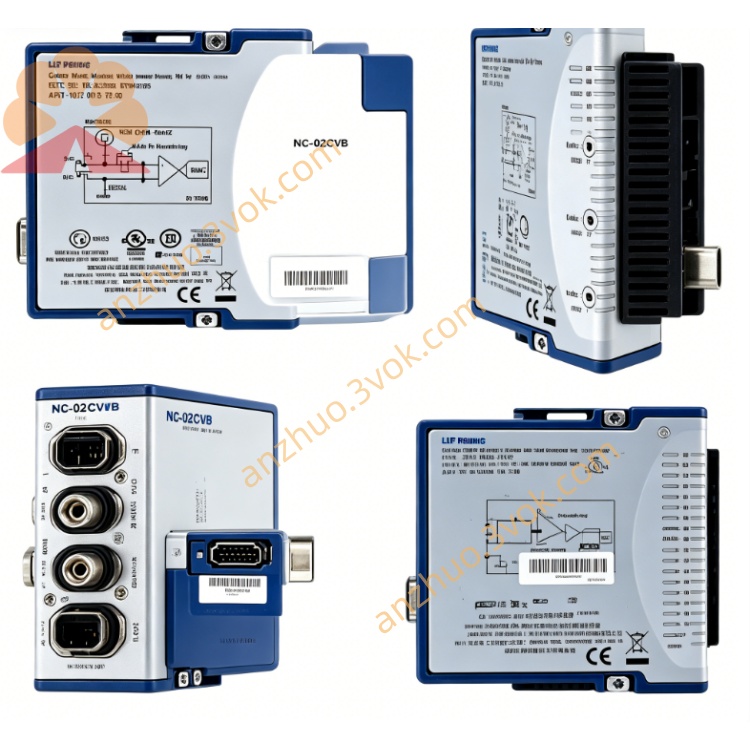
NI PXI-8106 2.16GHz Core 2 Duo PXI Embedded System Controller
Description
Model Nomenclature
PXI: Compliant with PXI (PCI eXtensions for Instrumentation) modular instrumentation bus.
8106: Controller series identifier; 81xx denotes PXI embedded controllers, 06 indicates the high‑end dual‑core model in the series.
Full meaning: PXI bus, 81xx series, high‑performance dual‑core embedded controller.
Technical Specifications
Form factor: 3U, 2‑slot PXI module.
Part number: 779919‑00 (standard), 779919‑01 (RT flash).
Processor: Intel Core 2 Duo T7400, 2.16 GHz dual‑core, 667 MHz FSB.
Memory: 512 MB DDR2 667 MHz (max 4 GB).
Storage: 30 GB+ HDD (standard); 4 GB+ flash (RT version).
PXI bandwidth: Up to 132 MB/s system/slot.
Power consumption: ~22 W (from PXI backplane).
Operating temperature: 0 °C to 55 °C.
Storage temperature: −40 °C to 71 °C.
OS support: Windows XP/Vista/7, NI Real‑Time OS (dual‑boot capable).
Video: DVI‑I (digital + analog).
Serial: 1 × RS‑232.
Parallel: 1 × IEEE 1284 ECP/EPP.
USB: 4 × Hi‑Speed USB 2.0.
Ethernet: 1 × Gigabit Ethernet (10/100/1000BASE‑TX).
Expansion: ExpressCard/34 slot.
Instrument control: Integrated GPIB (IEEE 488) controller.
Front panel: Reset button, PXI trigger I/O, watchdog timer.
Interface and Communication Configuration
PXI/CompactPCI interface: System controller slot, supports PXI trigger and RTSI synchronization buses.
DMA: Integrated bus mastering for high‑speed data transfer between PXI modules and system memory.
Drivers: NI‑PXI, NI‑DAQmx, NI‑VISA, NI‑GPIB.
Programming environments: LabVIEW, LabWindows/CVI, C/C++, .NET.
Communication protocols: TCP/IP, UDP, Modbus, CAN, GPIB, serial.
Core Features
- High‑Performance Dual‑Core ProcessingThe 2.16 GHz Core 2 Duo enables efficient multitasking, parallel signal processing, and complex algorithm execution, delivering 29% better performance than the PXI‑8105.
- Rich Integrated Peripheral I/ODVI‑I, 4×USB 2.0, Gigabit Ethernet, GPIB, RS‑232, and ExpressCard/34 provide full connectivity for displays, peripherals, instruments, and expansion.
- Dual‑Boot Real‑Time CapabilitySupports Windows + LabVIEW Real‑Time OS dual boot, switching between general‑purpose and deterministic real‑time operation for control and test applications.
- High‑Speed PXI Data TransferUp to 132 MB/s PXI bandwidth ensures fast data acquisition, signal processing, and multi‑module synchronization.
- Rugged and Portable DesignCompact 3U form factor, industrial temperature range, and backplane‑powered operation suit mobile, field, and industrial environments.
Applications
- High‑Speed Automated Test Equipment (ATE)Semiconductor test, functional test of complex electronic assemblies, and high‑volume production test systems.
- Real‑Time Data Acquisition and ProcessingHigh‑speed data logging, dynamic signal analysis, and multi‑sensor fusion in industrial and research settings.
- Industrial Control and Embedded SystemsHigh‑speed machine control, process monitoring, and embedded controller for real‑time machinery and automation.
- Aerospace and DefenseAvionics full‑interface test, radar signal processing, and ruggedized field test systems requiring high reliability.
- Portable/Field Test SystemsCompact, battery‑powered PXI systems for on‑site maintenance, vehicle diagnostics, and remote monitoring.
Usage and Maintenance
Install in a standard 3U PXI chassis, occupying 1 system slot + 1 expansion slot.
Power supplied exclusively via PXI backplane; ensure chassis provides ≥25 W per slot.
Connect peripherals (monitor, keyboard, network, instruments) to front‑panel I/O before power‑on.
For Windows: Install NI‑PXI, NI‑DAQmx, NI‑GPIB, and application software (LabVIEW, etc.).
For Real‑Time: Use NI MAX to deploy RT OS to flash and configure network/boot settings.
Configure BIOS (access via front‑panel reset during boot) for boot order and hardware settings.
Operating temperature: 0 °C to 55 °C. Maintain chassis airflow; avoid blocking fan vents.
Humidity: 10%–90% RH (non‑condensing). Keep in dry, dust‑free environment.
Clean front‑panel connectors and chassis filters quarterly (power off, use dry cloth).
Storage issues: Check HDD/SSD health via OS tools; RT flash corruption requires OS redeployment.
Boot failures: Verify PXI backplane power, reseat controller, or reset BIOS defaults.
Long‑term storage: Power off and store in dry area; power on for 1 hour monthly to prevent moisture damage.
For indoor industrial use only, altitude ≤2000 m, pollution degree 2.
Dispose of electronic waste per local regulations; do not discard in general trash。
Get a Quote