
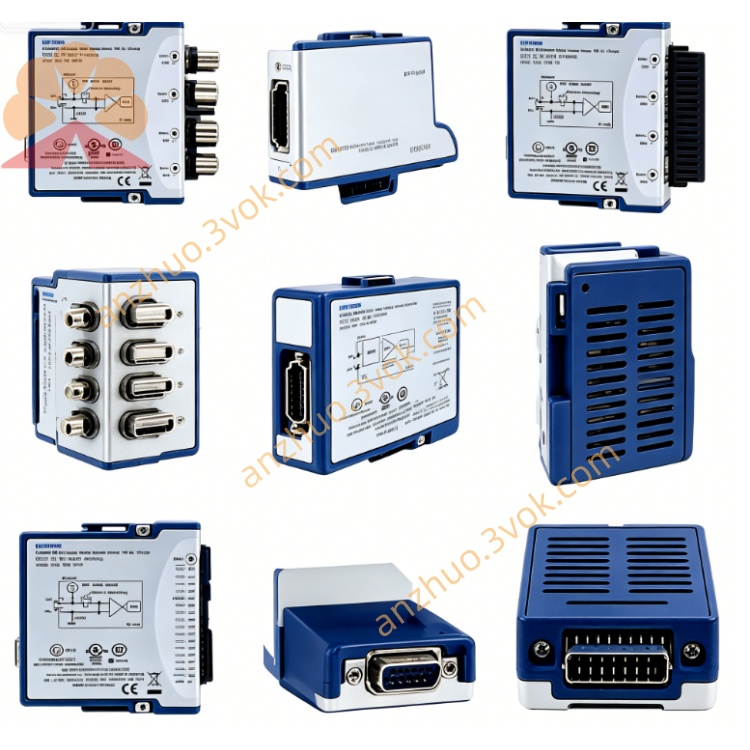
NI PXI‑6221 M‑Series Multifunction DAQ Module
Description
II. Model Interpretation
PXI: 3U single slot, PXI bus (compatible with PXI/PXIe chassis)
6221: M series multi-function DAQ, 16-bit, 250 kS/s, 16AI/2AO
M series: Multi-function, combining the features of E series high-density and S series high-precision
Part number: 779629-01 (standard), 779113-01 (SCXI control board)
III. Technical Parameters (25℃)
1. Analog Input (AI)
Channels: 16 single-ended / 8 differential (software selectable)
Resolution: 16 bits (no bit loss)
Sampling Rate: Total 250 kS/s (shared by multiple channels)
Range: ±0.2 V, ±1 V, ±5 V, ±10 V (programmable)
Input Impedance: >10 GΩ || 100 pF
Coupling: DC; Overvoltage Protection ±11 V (signal + common mode)
CMRR: 92 dB (DC–60 Hz)
FIFO: 8 k samples, supports DMA
2. Analog Output (AO)
Channels: 2 channels
Resolution: 16 bits
Range: ±10 V
Update Rate: 833 kS/s (per channel)
Drive: ±5 mA
3. Digital I/O (DIO)
Channels: 24 bidirectional TTL/CMOS
Level: High ≥ 2.4 V, Low ≤ 0.4 V
Rate: Up to 1 MHz (hardware timing)
4. Counter / Timer
Quantity: 2 channels 32 bits (80 MHz base)
Function: Event counting, frequency / period, pulse output, edge triggering
5. Physical and Environmental
Size: 3U single slot (approx. 22×124×126 mm)
Operating Temperature: 0~55℃
Power Consumption: Approximately 6.5 W
Calibration: Suggested once per year for traceability calibration
IV. Interface and Communication Configuration
Front panel interface: 68-pin SCSI-II female connector (with SH68-68-EP cable, CB-68LP wiring box)
Bus: Standard PXI (PCI, trigger, 10 MHz reference clock)
Driver: NI-DAQmx, supports LabVIEW, Python, C#, TestStand
Synchronization: PXI trigger bus / RTSI, multi-module synchronization
PFI lines: 8 programmable function inputs for triggering and timing routing
V. Core Functions
16-bit high-precision acquisition: High resolution, precise capture of small signals, excellent dynamic range.
Flexible channel configuration: 16 single-ended / 8 differential selectable, suitable for different sensors and interference environments.
Medium-high-speed continuous acquisition: 250 kS/s total sampling rate + 8 kFIFO, supports long-term streaming.
Multifunction integration: AI + AO + DIO + counter, one module completes measurement / control / timing.
Wide range and conditioning compatibility: 4 range settings; expandable SCXI/SCC high voltage / isolation conditioning.
VI. Application Scenarios
Industrial automation testing: Synchronous measurement and control of voltage / current / temperature at multiple nodes in production lines.
Research laboratory measurement: Sensor signals, biomedical signals, low-frequency vibration acquisition.
Electronic manufacturing ATE: PCB functional testing, component parameter measurement, closed-loop control.
Small-scale structural modal analysis: Multi-channel vibration / strain testing (non-ultra-high synchronization requirements).
Cost-sensitive high-precision system: Balanced accuracy, speed and budget for general measurement and control.
VII. Usage and Maintenance Instructions
Installation and Power On
Disconnect power, insert card, chassis grounded; After powering on, NI-DAQmx performs self-check and preheats for 15 minutes.
Operating temperature: 0–55℃. Keep the air duct unobstructed and avoid blocking the fan.
Wiring and operation
For analog input, use differential wiring (for strong interference environments), with shielded twisted pair.
Input voltage should not exceed ±10 V; avoid frequent plugging and unplugging of the 68-pin interface and recommend using a wiring box.
Multi-module synchronization: Share the PXI 10 MHz reference clock and trigger bus.
Daily maintenance and calibration
It is recommended to conduct a traceable calibration once a year; built-in self-calibration compensates for temperature drift.
Keep the interface clean, prevent dust accumulation during long-term inactivity; keep away from strong vibrations, condensation and strong electromagnetic interference.
Get a Quote