
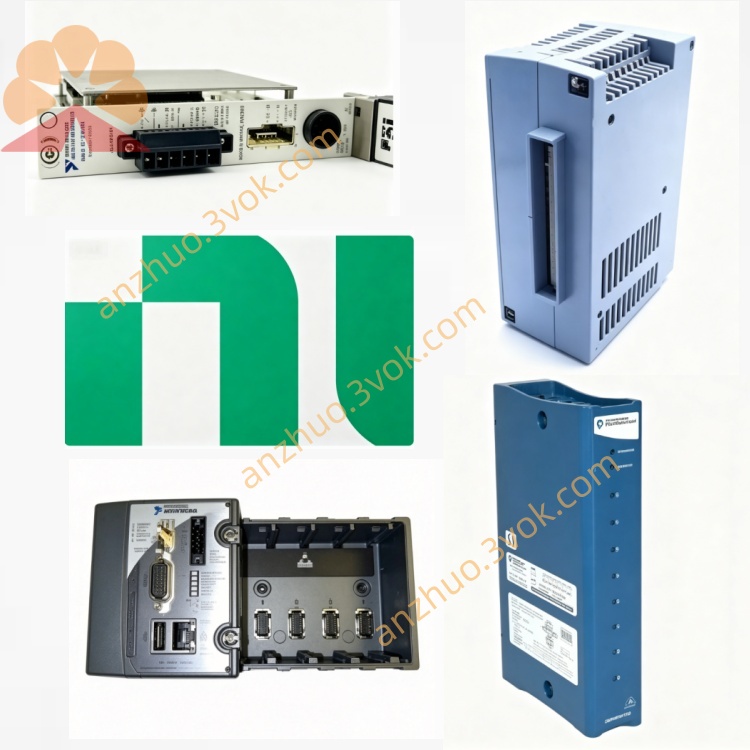
NI PXI‑5153 500MHz 2GS/s 8‑Bit PXI Oscilloscope
Description
Model Explanation
PXI: 3U standard PXI hybrid bus, single slot, compatible with PXI/PXIe chassis.
5153: NI 5100 series, representing 2 channels, 500 MHz bandwidth, 2 GS/s, 8-bit high-speed PXI oscilloscope.
Component Number (by memory):
780317‑01: 8 MB / channel
780317‑02: 64 MB / channel
780317‑03: 256 MB / channel
Technical Specifications (25℃, preheating 15 min):
Channels: 2 analog inputs, synchronous sampling
Resolution: 8 bits
Sampling Rate: Real-time maximum 2 GS/s; equivalent time 20 GS/s (repetitive signal)
Analog Bandwidth: 500 MHz (‑3 dB)
Input Voltage Range: ±100 mV to ±5 V (multiple levels, 200 mVpp to 10 Vpp)
Input Impedance: 50 Ω ±2% / 1 MΩ ±0.75% (software selectable)
Coupling Mode: AC/DC (per channel independent)
Onboard Memory: 8/64/256 MB / channel
Rise Time: ≤600 ps (50 Ω, 10%–90%)
Trigger: Edge, Window, Hold, Digital, Immediate, Software; 5 ps time resolution; pre/post trigger
Clock: Internal 2 GHz VCSO; External 10–200 MHz; Phase-locked PXI 10 MHz reference
Power Consumption: Approximately 23 W
Size / Weight: 3U single slot, approximately 480 g
Environment: Operating 0–55℃; Storage -40–70℃; Humidity 10%–90% RH (no condensation) 100 MHz <‑60 dB
Interface and Communication Configuration
Front panel interface
2×BNC (CH0/CH1): Analog input
1×BNC (TRIG): External analog trigger input
1×SMB (CLK IN): External sampling clock / reference
1×SMB (CLK OUT): Internal clock / reference output
2×SMB (PFI0/PFI1): Digital trigger I/O, programmable function interface NI Indicator light
PWR (Green): Power supply is normal
RUN (Green): The acquisition is constantly on, waiting for trigger to flash
ERR (Red): Overheating, overcurrent, PLL lock loss, configuration error NI
Bus and Synchronization
PXI mixed bus, supports trigger bus, Star trigger, RTSI
Multi-module synchronization phase error < 50 ps, supports multi-channel coherent acquisition
Software Driver
NI-SCOPE driver, supports LabVIEW, TestStand, Python, C#
NI MAX: Device management, self-check, configuration, calibration
Soft front panel SFP, high-speed waveform analysis, streaming inventory support NI Core function
500 MHz bandwidth + 2 GS/s sampling: Covers high-frequency digital, RF, and pulse signals, captures sub-nanosecond edges
Equivalent 20 GS/s sampling: Ultra-high time resolution for repetitive signals, suitable for clock / jitter measurement
Deep storage and long records: Up to 256 MB / channel, long-term high-speed acquisition and multiple waveform segments
Flexible input configuration: AC/DC coupling, 50 Ω/1 MΩ, multiple voltage ranges
Precise triggering and timing: 5 ps time resolution, multiple triggers, precise capture of transient events
High-speed streaming acquisition: Continuous data transmission and storage, suitable for long-term monitoring
Multi-module ps-level synchronization: Star trigger / RTSI extended multi-channel coherent system Applicable scenarios
High-speed digital testing: FPGA, high-speed interface (USB3/PCIe) timing, level, jitter testing
Radio frequency and communication: 500 MHz RF / modulation / pulse signal time-domain and frequency-domain analysis
Semiconductor testing: chip transient, pulse, high-speed acquisition of process parameters
Ultrasonic and non-destructive testing: high-frequency ultrasonic echo, imaging signal acquisition
Automotive electronics: high-speed sensors, radar, vehicle network testing
Research and defense: pulsed laser, high-speed physics, transient electromagnetic signal capture
User and maintenance instructions
Installation and power-on
Power off installation, single slot fixed; chassis reliable grounding to prevent static electricity
Power on preheating for 15 minutes, NI MAX self-check without hardware errors
Keep ventilation during operation, temperature ≤ 55℃, do not block fans
Wiring and operation
High-frequency signals use 50 Ω coaxial, BNC tightened to reduce reflection
Select 50 Ω for high frequency, 1 MΩ for low frequency/high voltage; AC coupling for small signals, DC coupling for DC
Set trigger level reasonably to avoid false triggering; prioritize edge triggering for high-speed signals
Use PXI Star for multi-module synchronization to ensure ps-level phase consistency
Maintenance and calibration
It is recommended to conduct NIST traceability once every 2 years; perform internal self-calibration to compensate for temperature drift
Regularly clean BNC/SMB interfaces to keep dry; add dust caps for long-term inactivity
Avoid condensation in the environment, humidity 10%–90% RH, away from strong electromagnetic interference and vibration
Do not input >±7 V voltage; do not plug and unplug while powered on; avoid severe vibrations
Get a Quote