
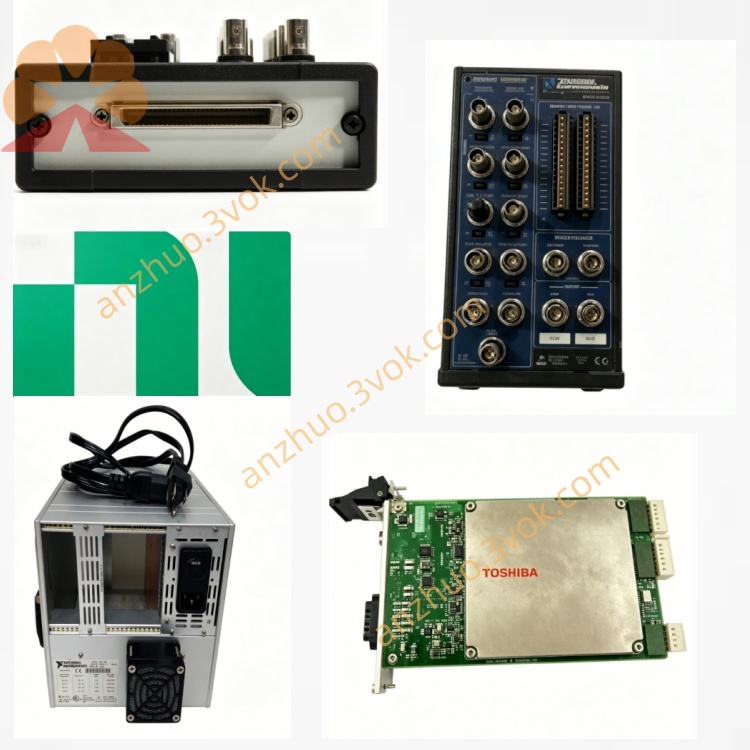
NI PXI‑4461 2‑Input 2‑Output 24‑Bit Sound‑Vibration DSA Module
Description
II. Model Interpretation
PXI: 3U PXI standard bus, single slot, compatible with PXI/PXIe mixed chassis.
4461: NI Dynamic Signal Acquisition (DSA) series code, representing 2AI + 2AO, 24-bit, high dynamic range, IEPE, audio/vibration dedicated.
779687‑01: Standard model, including 2 analog inputs + 2 analog outputs + IEPE conditioning.
Location: Mid-to-high-end audio/vibration DSA, integrated excitation and acquisition, suitable for closed-loop testing, frequency response, noise vibration analysis.
III. Technical Parameters (25 ℃, preheating 30 min)
(1) Channel Configuration
ChannelTypeResolutionSampling / Update RateDynamic Range
AI0~AI1Analog Input (differential)24-bit Σ‑Δ ADCMaximum 204.8 kS/s118 dB (typical)
AO0~AO1Analog Output (differential / pseudo-differential)24-bit Σ‑Δ DACMaximum 204.8 kS/s118 dB (typical)
(2) Input Characteristics (AI)
Voltage Range (6 levels): ±316 mV, ±1 V, ±3.16 V, ±10 V, ±31.6 V, ±42.4 V.
Gain: -20, -10, 0, +10, +20, +30 dB (software selectable).
Coupling: AC/DC (per channel independently).
IEPE Conditioning: 0/4/10 mA constant current excitation, 24 V compliance, supports IEPE accelerometers/microphones.
Input Resistance: 100 kΩ (voltage mode); 10 kΩ (IEPE mode).
No Aliasing Bandwidth: 92 kHz (204.8 kS/s).
THD+N: ≤‑100 dB (1 kHz, full scale).
CMRR: >100 dB (50/60 Hz).
(3) Output Characteristics (AO)
Voltage Range (4 levels): ±1 V, ±3.16 V, ±10 V, ±31.6 V.
Output Resistance: 50 Ω (pseudo-differential).
No Mirror Bandwidth: 92 kHz.
THD+N: ≤‑95 dB (1 kHz, full scale).
(4) Electrical / Mechanical / Environmental
Power Supply: PXI backplane + 5 V/+12 V, maximum 12 W.
Connectors: 4×BNC (AI0/AI1/AO0/AO1), 1×SMB (Trigger).
Size / Weight: 3U single slot (160×100×20 mm); approximately 241 g.
Safety: IEC 61010‑1, CAT I 30 V.
Temperature: Operating 0 ℃~55 ℃; accuracy guaranteed 15 ℃~35 ℃.
Storage Temperature: -20 ℃~70 ℃.
Calibration Cycle: 1 year (NIST traceable).
IV. Interface and Communication Configuration
(1) Front-End I/O (BNC/SMB)
AI0/AI1: Differential analog input, supports IEPE/voltage input.
AO0/AO1: Differential/pseudo-differential analog output, used for excitation signal generation.
Trigger In/Out (SMB): PXI trigger synchronization, supports PFI0, PXI_Trig<0…6>, TTL level, rising/falling edge selectable, minimum pulse width 10 ns.
(2) Status Indicator Lights (Panel)
PWR: Green = Normal power supply. RUN: Green = Collect / Output operation; Blinking = Trigger wait.
ERR: Red = Fault (over-temperature / over-current / calibration error).
(III) Bus and Software
Bus: Standard PXI, compatible with PXIe, supports PXI Trigger/PFI synchronization, multi-module synchronization delay ≤ 1 μs.
Driver: NI-DAQmx, compatible with LabVIEW/TestStand/Python/C#.
Configuration: NI MAX (Identification, Self-check, Parameter Configuration, Calibration, Trigger).
Software Tools: Sound and Vibration Toolkit, Order Analysis Toolkit.
VII. Core Functions
2-In-2-Out Synchronous Closed-loop Test: Synchronization of acquisition + excitation, suitable for vibration table control, speaker frequency response, with synchronization delay < 1 μs.
118 dB Ultra High Dynamic Range: Simultaneous measurement of weak and strong signals, suitable for microphone / accelerometer wide range requirements.
Integrated IEPE Sensor Conditioning: 0/4/10 mA constant current, direct drive for IEPE accelerometers / microphones, without external conditioner.
24-bit High Precision Σ-Δ Conversion: Low noise, low distortion, THD+N ≤ -100 dB, suitable for audio, vibration, acoustic precision testing.
Programmable Anti-aliasing / Anti-mirror Filtering: Independent per channel, suppresses high-frequency interference, ensures measurement accuracy.
AC/DC Coupling + 6 Gain Levels: Suitable for DC (such as sensor bias) and AC (such as audio / vibration) signals, maximizes signal-to-noise ratio.
TEDS Sensor Plug-and-Play: Automatically reads sensor electronic data sheet, automatically configures sensitivity / calibration.
Multi-module Synchronous Expansion: Up to 17 modules synchronous in a single chassis, supports large-scale NVH / acoustic array testing.
VI. Application Scenarios
Audio Testing: Speaker / Headphone frequency response, distortion, signal-to-noise ratio; Microphone calibration and sensitivity testing.
Automotive NVH: Vehicle / Component noise, vibration, sound vibration roughness analysis; Engine / Transmission vibration monitoring.
Vibration and Structural Testing: Modal analysis, impact response, resonance point identification; Rotating machinery condition monitoring (bearing / gear failure).
Acoustic Measurement: Environmental noise, sound pressure level, sound power; Building / material sound insulation / absorption testing.
Industrial Automation: Equipment health monitoring, fault diagnosis, predictive maintenance; Production line vibration / noise quality control.
Research and Education: Precise measurement in acoustic / vibration laboratories; University dynamic signal analysis teaching experiments.
VII. Usage and Maintenance Instructions
(I) Installation and Power On
Installation: Disconnect power, insert PXI single slot, tighten panel screws; Good grounding of the chassis, avoid static damage.
Preheating: Power on for 30 minutes to ensure 24-bit accuracy; NI MAX self-check without error report.
Heat Dissipation: Normal fan of the chassis, environmental temperature ≤ 55 ℃, no obstruction of the ventilation opening, avoid overheating and loss of accuracy.
(II) Wiring and Operation
BNC Wiring: Use 50 Ω coaxial cable for AI/AO, single-ended grounding of the shielding layer, reduces electromagnetic interference.
IEPE Sensor: Enable 4 mA excitation for AI channels (commonly used), do not connect ordinary voltage signals, to avoid damaging the sensor.
Coupling Selection: Use AC coupling for AC signals (audio / vibration); Use DC coupling for DC / low-frequency signals.
Gain Setting: Adjust gain to make signal amplitude ≥ 80% full scale, maximize signal-to-noise ratio, avoid overload. Synchronous Trigger: Utilize PXI Trigger for multi-module testing to ensure time synchronization and reduce phase errors.
(III) Maintenance and Calibration
Regular Calibration: Conduct an external NIST traceable calibration once a year; perform daily internal self-calibration to compensate for temperature drift and ensure long-term accuracy.
Cleaning and Maintenance: Regularly clean the dust on BNC/SMB terminals, keep them dry; disconnect and protect the terminals when they are not in use for a long time to prevent oxidation.
Environmental Control: The working environment should be between 0 ℃ and 55 ℃, without condensation, with a humidity range of 5% to 95% RH. Stay away from strong vibration / strong electromagnetic interference (such as motors, frequency converters).
Prohibition of Use: Do not input with excessive voltage (> ±50 V); avoid plugging or unplugging BNC/SMB terminals while they are energized; the IEPE channel must not be connected to electrostatic sensitive devices to prevent electrostatic breakdown.
Get a Quote