
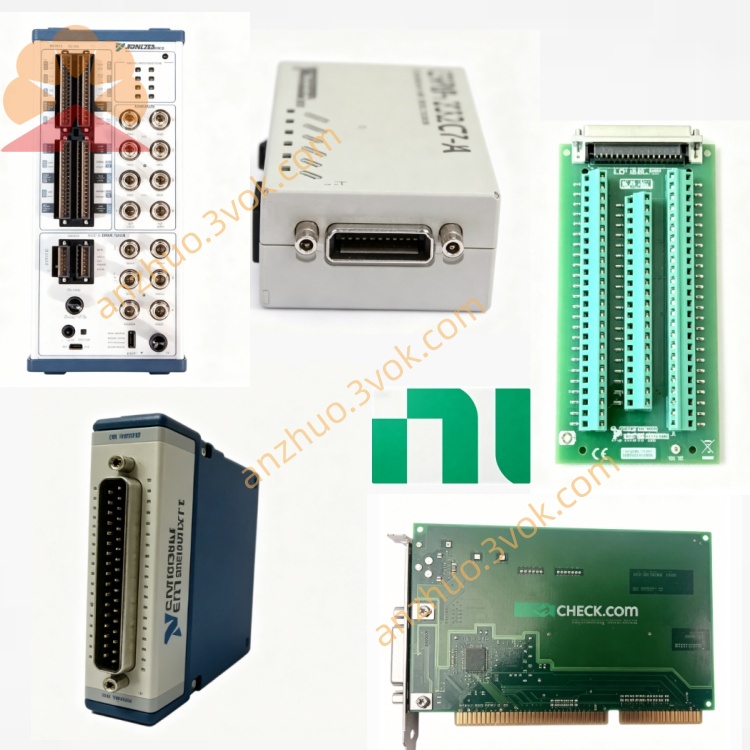
NI PXI‑1002 4‑Slot Universal AC‑Powered PXI Chassis
Description
II. Model Description
PXI: PCI eXtensions for Instrumentation, a modular measurement and control bus based on PCI extensions for instrumentation.
1002: Product series number; the 1000 series refers to general-purpose PXI chassis, with "02" indicating a 4-slot, entry-level compact configuration.
Part Number: 778114-01 (standard model).
III. Technical Specifications
Slot Configuration: 4 PXI slots (1 controller slot + 3 peripheral slots); 3 controller expansion slots (on the left side of the controller).
Power Supply:
Input: 90–264 VAC (universal mains), 47–63 Hz.
Output: 170 W (maximum available power).
Voltage: +3.3 V, +5 V, +12 V, -12 V, compliant with PXI module power requirements.
Backplane and Synchronization:
Compatible with PXI Rev 1.0 and CompactPCI PICMG 2.0 standards.
10 MHz reference clock, star trigger bus, and local inter-module bus.
Physical Specifications:
Dimensions: 4U height (177 mm), standard rack width.
Weight: Approximately 5.4 kg (excluding modules).
Environmental Conditions:
Operating Temperature: 0–50 °C.
Storage Temperature: -40–70 °C.
Humidity: 10%–90% (non-condensing).
IV. Interfaces and Communication Configuration
PXI Backplane Bus: 32-bit PCI bus supporting DMA and plug-and-play functionality.
Trigger and Synchronization:
Star Trigger: Independent trigger lines from the controller slot to each peripheral slot.
10 MHz Clock: Global backplane reference clock for multi-module synchronization.
Local Bus: High-speed point-to-point communication between adjacent modules.
External Interfaces:
Power switch, AC power input (IEC standard).
Optional side handle and feet pads for portability and desktop placement.
V. Core Features
Compact System Integration: 4-slot design saves space, ideal for small to medium-sized measurement and control systems with 1–3 peripheral modules.
Plug-and-Play Compatibility: Fully compatible with 3U PXI and CompactPCI modules—no additional adapters required.
High-Precision Synchronization: Integrated 10 MHz clock and star trigger on the backplane ensure synchronized data acquisition/output across multiple modules.
Portable and Rack-Mountable: 4U standard rack height with optional handle, suitable for lab, production line, or field applications.
Stable Power Supply: 170 W high-efficiency power supply with wide voltage input range, compatible with global power grids.
VI. Application Scenarios
Small-Scale Automated Testing: Functional testing of electronic products, rapid inspection on production lines.
Data Acquisition Systems: Sensor signal collection, vibration/noise monitoring, low-speed dynamic signal recording.
Portable Measurement and Control: Field equipment inspection, vehicle-mounted testing, on-site fault diagnosis.
Education and Research: Laboratory teaching platforms, compact measurement systems for small-scale research projects.
VII. Installation and Maintenance Instructions
Installation:
Rack Mounting: Install into a standard 4U cabinet using guide rails or screws.
Desktop/Portable Use: Attach optional feet pads and side handle for stable placement.
Module Installation: Insert 3U PXI/CompactPCI modules while powered off, then secure with mounting screws.
Power-Up and Operation:
Connect to a 90–264 VAC power source and turn on the chassis power switch.
The controller automatically detects modules; install drivers and system is ready for use.
Maintenance:
Regular Cleaning: After powering off, use a soft brush to remove dust from front and rear ventilation openings to prevent heat dissipation blockage.
Environment: Avoid humid, dusty, or high electromagnetic interference environments. Maintain operating temperature within 0–50 °C. Module maintenance: Power must be turned off before inserting or removing modules to prevent electrostatic damage and avoid severe vibration.
Get a Quote