
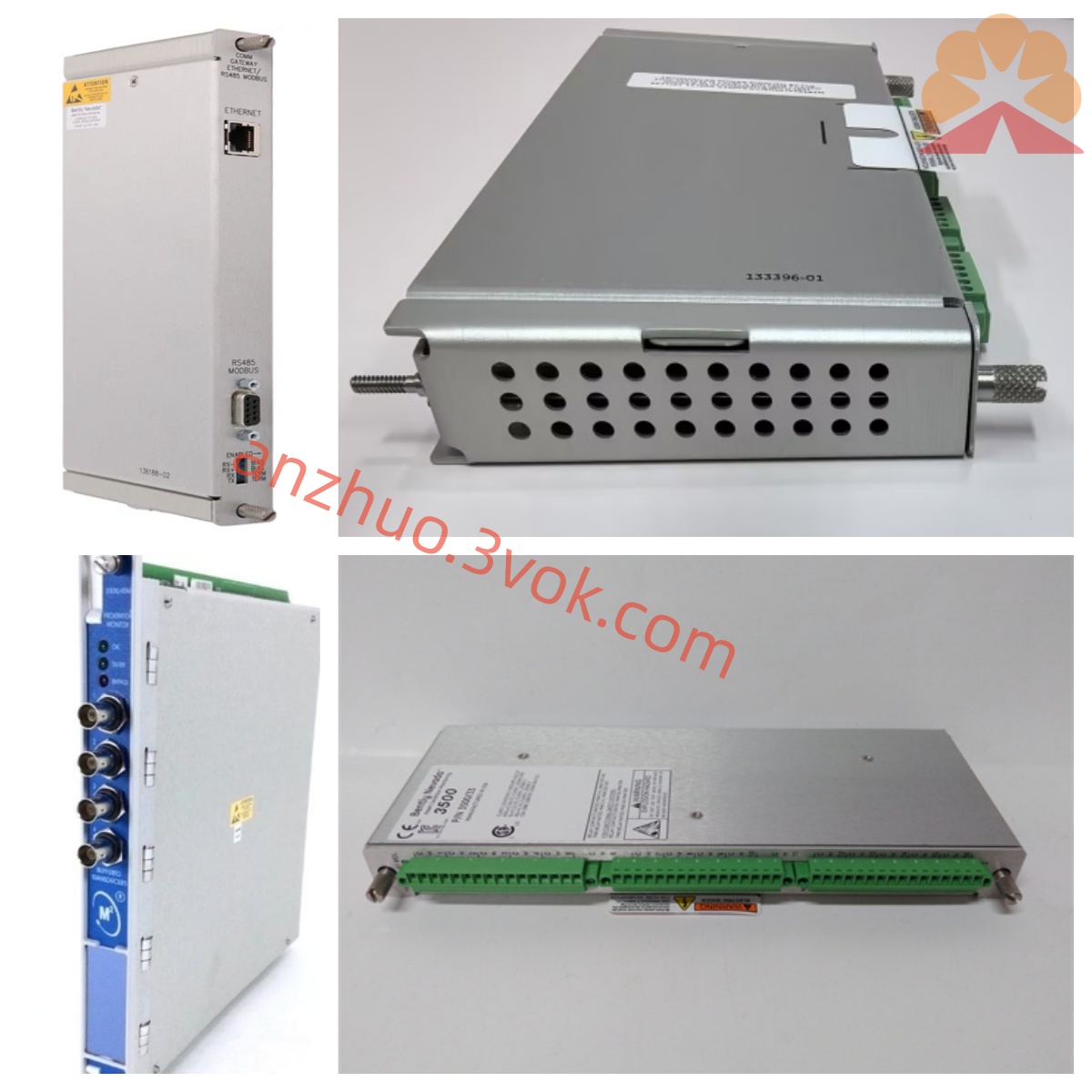
Bently Nevada 330701-00-20-10-12-00 3300 XL 10mm Proximity Probe
Description
I. Model Explanation (330701-00-20-10-12-00)
330701: 3300 XL 11mm 铠装less, 1/2-20 UNF thread probe series
00: No additional rod section (full thread)
20: Probe housing length 2.0 inches (50.8mm)
10: Built-in cable length 1.0m
12: Integrated fixed connector (non-detachable)
00: No explosion-proof / No special certification, standard industrial model
II. Core Parameters (Electrical / Mechanical)
Probe diameter: 11mm
Thread specification: 1/2-20 UNF
Sensitivity: 3.94V/mm (100mV/mil)
Linear range: 0.5 - 4.5mm (recommended working point 2.5mm)
Frequency response: 0 - 8kHz
Temperature range: Probe -52℃ - +177℃
Shell material: 304 stainless steel, IP67
Cable specification: 75Ω three-conductor, FEP insulation
Total system length: Probe 1m + extension cable, compatible with 5m or 9m preamplifier
III. Standard Accessories (5m System, Common Combination)
Probe: 330701-00-20-10-12-00 (1m, no armor)
Extension cable: 330730-040-00-00 (4m, no armor)
Preamplifier: 330780-50-00 (5m, panel-mounted)
Monitoring module: 3500/42 or 3500/45
IV. Typical Applications
Steam turbines, compressors, fans, shaft vibration / axial displacement / misalignment monitoring
Phase measurement (speed / phase reference)
Non-explosion-proof areas, medium-high temperature (≤177℃) equipment
V. Installation Tips
Cable cannot be shortened: Must use the original complete length, otherwise it will affect sensitivity and linearity.
Installation gap: Probe perpendicular to the measured surface, set at 2.5mm (linear midpoint).
Grounding specification: Shield layer single-ended grounding (preamplifier side), avoid circulating interference.
Environmental requirements: Suitable for non-explosion-proof conditions, maximum tolerance 177℃.
Connector protection: It is recommended to install connector protectors to prevent oil and water vapor erosion.
VI. Maintenance and Fault Diagnosis Maintenance
Regularly check for any damage to the cable's outer skin and whether the connectors are loose.
Keep the probe surface clean, free from oil stains and debris accumulation.
Calibrate the gap and sensitivity once a year to ensure measurement accuracy.
Common faults
No signal: Check if the cable is open circuit, if the connector is properly plugged in, and if the power supply of the preamplifier is normal.
Signal drift: Inappropriate installation gap of the probe, change in the material of the measured surface, or excessive environmental temperature.
Interference noise: Poor grounding of the shielding layer, presence of strong electromagnetic equipment nearby, or mixing of the cable with power lines.
VII. Notes
Do not plug or unplug the probe or extension cable while the equipment is powered on.
Avoid severe impacts or bending of the probe, as the internal coil is prone to damage.
When installing, ensure the probe is perpendicular to the measured surface, with an angle deviation of no more than 1°. Otherwise, it will affect linearity.
Get a Quote