
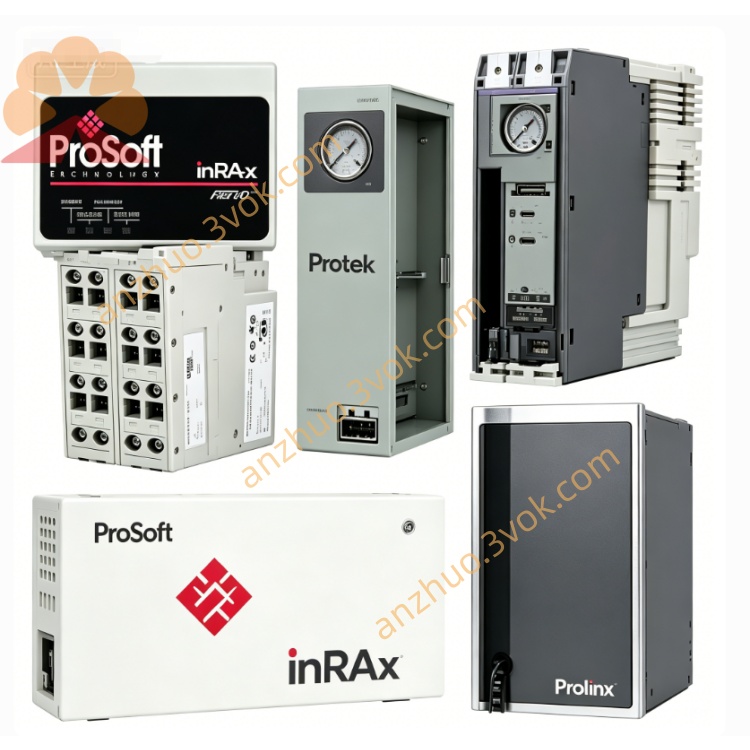
5204SE‑MNET‑PDPMV1 Modbus‑TCP to PROFIBUS‑DP‑V1 Master Gateway
Description
1. Product Overview
2. Key Features
Dual Master: Modbus TCP/IP (MNET) + PROFIBUS DPV1 (PDPMV1)
Slave Capacity: Up to 12 PROFIBUS DPV1 slaves
Modbus TCP: Client/server, 10/100 Mbps, up to 256 bytes per transaction
PROFIBUS DP: 9.6 kbps–12 Mbps, auto‑baud, DPV1 Class 1/2 support
Data Mapping: Register‑to‑register, no PLC programming required
Configuration: Built‑in web server + ProSoft Configuration Builder (PCB)
Isolation: Electrical isolation between Ethernet and PROFIBUS ports
Diagnostics: Real‑time status, error logs, bus statistics
Redundancy: Dual 24 VDC power inputs
Temperature: –20°C to +60°C (industrial harsh environments)
3. Technical Specifications
3.1 Power Supply
Rated: 24 VDC
Range: 18–36 VDC
Max power: ≤15 W
Redundancy: Dual terminal blocks
3.2 Modbus TCP/IP Interface
Speed: 10/100 Mbps auto‑negotiation
Connector: RJ45
Mode: Client (master) / Server (slave)
Data: Read/write coils, discrete inputs, input registers, holding registers
3.3 PROFIBUS DPV1 Interface
Role: DPV1 Master (Class 1 cyclic, Class 2 acyclic)
Connector: DB9 female
Baud rate: 9.6k, 19.2k, 93.75k, 187.5k, 500k, 1.5M, 3M, 6M, 12 Mbps
Slaves: Up to 12 DPV1 devices
Protocols: DP‑V0, DP‑V1, FMS
3.4 Environmental
Operating: –20°C to +60°C
Storage: –40°C to +85°C
Humidity: 5%–95% RH, non‑condensing
Vibration: IEC 60068‑2‑6 compliant
3.5 Physical
Mounting: 35 mm DIN rail
Dimensions: 132 × 52.6 × 115 mm
Weight: ~860 g
Certifications: CE, UL
4. LED Indicators
PWR: On = Power normal
RUN: Blinking = Operating normally
ENET: Blinking = Modbus TCP activity
PBUS: Blinking = PROFIBUS activity
ERR: On = Fault (config/comm error)
5. Installation & Wiring
Mount on DIN rail in cabinet.
Connect 24 VDC to power terminals (redundant recommended).
Connect Ethernet cable to RJ45 for Modbus TCP.
Connect PROFIBUS cable to DB9; use standard PROFIBUS pinout.
Set PROFIBUS slave addresses and baud rate via web UI/PCB.
Configure Modbus TCP IP, subnet, and register mapping.
Save config, reboot, verify communication.
6. Communication Functions
Modbus → PROFIBUS: Write Modbus register data to PROFIBUS slave I/O.
PROFIBUS → Modbus: Read slave data and map to Modbus holding registers.
DPV1 Services: Acyclic data, diagnostics, alarms, and parameterization.
Legacy Integration: Connect Modbus PLCs to Siemens PROFIBUS drives, I/O, and instruments.
Data Integrity: Cyclic I/O with watchdog and error handling.
7. Applications
Modbus–PROFIBUS Linking: Connecting Modbus TCP hosts to PROFIBUS DP slave devices.
Legacy System Upgrades: Integrate existing PROFIBUS equipment into Modbus‑based architectures.
Process Industries: Water treatment, chemical, pharmaceutical, and power plants.
Factory Automation: Automotive, packaging, and material handling lines.
Machine Networking: CNC machines, variable‑frequency drives, and remote I/O stations.
8. Safety Notes
Power Off: Wire only when power is disconnected.
Cables: Use shielded cables for both Ethernet and PROFIBUS.
Grounding: Properly ground gateway and devices to avoid ESD.
Bus Parameters: Match baud rate and slave addresses across the PROFIBUS bus.
Environment: Avoid direct sunlight, moisture, and strong EMI sources.
Get a Quote