
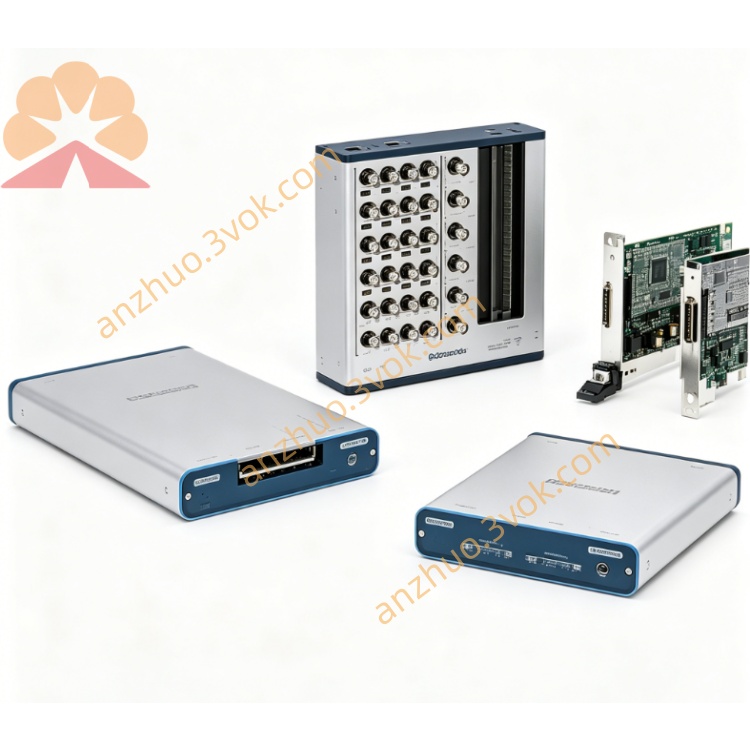
NI PCI‑CAN/2 Dual‑Channel PCI‑Bus CAN Interface Card
Description
I. Basic Information
Model: PCI-CAN/2 (Series 2)
Part Number: 777357-02, 189063C-02
Bus: 32-bit PCI (5 V, 33 MHz), does not support PCIe
Ports: 2 × High-speed CAN 2.0, DB-9 connector (each port is independent)
Protocol: CAN 2.0A (11-bit ID), CAN 2.0B (29-bit ID), does not support CAN FD
Status: EOL (has been replaced by PCI-8512/2)
Driver: NI-CAN (traditional driver, not NI-XNET)
II. Core Specifications (Easy to Understand)
1) CAN Communication
Transceiver: Philips TJA1041 (ISO 11898‑2 high speed)
Baud Rate: 40 kbps ~ 1 Mbps (Standard CAN, no CAN FD)
Controller: Philips SJA1000 (CAN 2.0B compatible)
Processor: Intel 80386EX (board-mounted, handles timing frames)
Terminal Resistor: None built-in, requires external 120 Ω
Isolation: Channel-to-bus 500 VDC isolation (2-second withstand voltage)
2) Hardware and Performance
Onboard Memory: Small capacity (only basic cache, no 256 MB)
Transmission: Non-DMA, dependent on CPU interrupt (compared to 8512 with lower performance)
Synchronization: RTSI bus (7 channels triggered, 1 channel clock)
Connectors: 2 × DB‑9 (CAN_H=7, CAN_L=2, GND=3/6)
Board Type: Full-height half-length PCI card
Power Supply: +5 V, typical 850 mA (approximately 4.25 W)
Temperature: 0 °C ~ 55 °C (operating)
Size: 20.7 × 11.18 cm (8.15 × 4.4 in)
III. PCI-CAN/2 vs PCI-8512/2 (Key Differences)
Driver: PCI-CAN/2 = NI-CAN (old); 8512/2 = NI-XNET (new)
CAN FD: PCI-CAN/2 = ❌ Not supported; 8512/2 = ✅ Supported (2 Mbps)
DMA / Performance: PCI-CAN/2 = No DMA, CPU usage high; 8512/2 = DMA, zero-copy, low latency
Onboard Memory: PCI-CAN/2 = Small capacity; 8512/2 = 256 MB
Status: PCI-CAN/2 = End of Life (production discontinued); 8512/2 = Mainstream in stock
Price: PCI-CAN/2 = Second-hand / In stock; 8512/2 = New official price
IV. System Compatibility (only for legacy systems)
System: Windows 2000/XP/Me/98, LabVIEW Real-Time (old version)
Unsupported: Native Windows 10/11, Linux, NI-XNET ecosystem
Software: LabVIEW (old version), LabWindows/CVI, C/C++, VB6
V. Typical Applications (only for legacy scenarios)
CAN communication for old equipment: Industrial equipment, automotive ECU (only CAN 2.0)
Maintenance of old systems: Replace faulty cards of the same type to maintain old production lines / test benches
Basic bus monitoring: Packet capture, simple diagnosis, does not support CAN FD / high load VI. Common Questions
⚠️ PCIe cannot be used: Must use old-fashioned PCI slot; PCIe should be selected as PCIe-8512/2
⚠️ Driver compatibility issue: Windows 10/11 requires compatibility mode. It is strongly recommended to upgrade to 8512/2
⚠️ No CAN FD: New models / High-speed buses cannot be used; Must replace with 8512 series
VII. Direct replacement models (must be selected)
PCI-8512/2: PCI bus, 2-port CAN/CAN FD, isolation, NI-XNET, in stock
PCIe-8512/2: PCIe ×1, 2-port CAN/CAN FD, native support for Windows 10/1
Get a Quote