
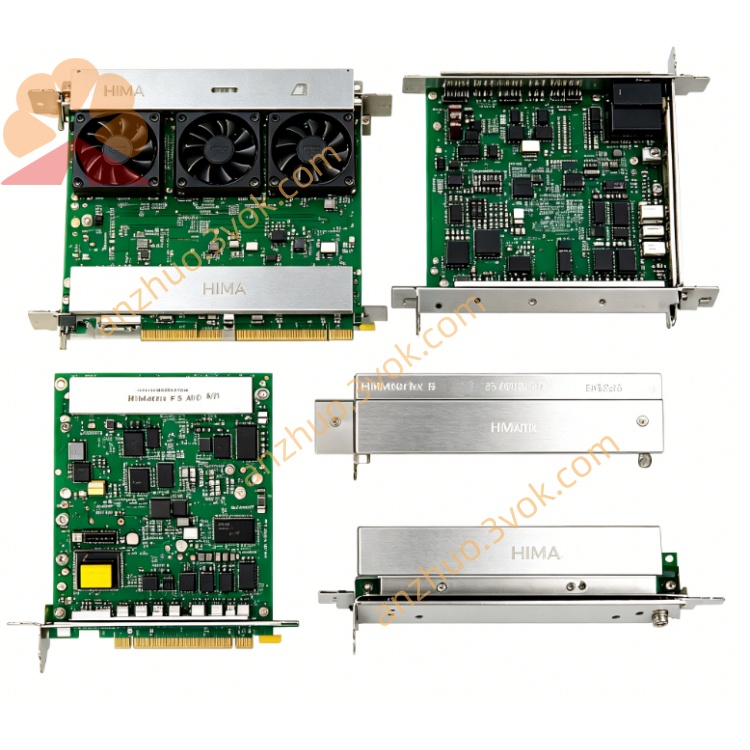
HIMATRIX H7505 Safety Module Housing
Description
I. Basic Information
Model: H7505
Brand: HIMA (Germany)
Type: Safety Communication / Signal Conversion Module (SIL3 Level)
Compatible System: H41q/H51q (HIQuad X) Series SIS/ESD System
Safety Level: SIL3 (IEC 61508), AK6, PL e/Cat.4
Certifications: CE, UL, TÜV
Installation: 19-inch standard rack, single slot (32mm wide)
Environment: IP20; Operating Temperature 0℃~+55℃, Storage -20℃~+85℃
Weight: Approximately 0.2kg (module) / 2.8kg (including packaging)
II. Core Parameters Interface:
RS-232C (DB9, point-to-point, 15m)
20mA current loop (differential, 1km, anti-interference)
System bus: Dual redundant SafeEthernet (100Mbps)
Protocol: Supports Modbus RTU, ASCII, custom serial protocol, compatible with HIMA security protocol
Baud rate: 1200~115200bps (software configuration)
Data bits: 7/8; Parity: None / Odd / Even; Stop bits: 1/2
Power supply: 24VDC (±15%), backplane power supply, power consumption ≤ 500mA
Isolation: System side ↔ Field side isolation withstand voltage ≥ 1500VAC
Diagnosis: Serial port failure, current loop disconnection / short circuit, communication timeout real-time self-check
III. Interface and Terminal Definitions Table
Interface / Terminal Type Function
DB9 (RS-232C) D-Sub 9-pin 1 - DCD; 2 - RXD; 3 - TXD; 4 - DTR; 5 - GND; 6 - DSR; 7 - RTS; 8 - CTS; 9- RI
20mA +/-Connector TerminalCurrent Loop Transmission / Reception (Differential)
ETH1/ETH2RJ45Dual Redundancy System Bus
PWR/GNDBackplane Contacts24VDC Power Supply / Ground
IV. Safety Features
Fault Safety: When the module fails or loses power, the communication port enters a safe silent state, without affecting the system safety logic.
Redundancy Compatibility: Supports dual-module redundancy and dual-bus redundancy, with a switching time of ≤ 500ms, no single-point failure.
Electrical Isolation: The system is completely isolated from the field side to prevent strong electrical interference and fault diffusion, meeting SIL3 isolation requirements.
Safe Communication: Data transmission with CRC check, timeout retransmission, and anti-tampering mechanism, in line with IEC 61508-7.
V. Installation and Wiring
Installation: Vertically installed in a 19-inch rack, single slot occupancy, with an upper and lower spacing of ≥ 20mm for heat dissipation; away from strong electromagnetic interference sources.
RS-232C Wiring: DB9 direct connection, crossed lines (TX ↔ RX, RX ↔ TX, GND ↔ GND), single-ended grounding of the shielding layer.
20mA Current Loop Wiring: 20mA + connected to the sending positive, 20mA - connected to the sending negative; the receiving end is connected correspondingly, twisted pair shielded at both ends grounded, the maximum distance is 1km.
Bus Wiring: ETH1/ETH2 connected to the system redundancy bus, industrial shielded network cable, shielded layer grounded at both ends.
VI. Debugging and Maintenance
Power-on Test: The power LED is constantly on; the bus LED flashes normally; the serial port / current loop LED has no alarm.
Configuration: Configure serial port parameters (baud rate, protocol), current loop mode, communication address through SILworX software.
Daily Maintenance: Check the wiring tightness, no corrosion every 6 months; dry air blowing for dust removal; backup configuration files.
Fault Troubleshooting:
Serial Port Alarm: Wiring error / baud rate mismatch → troubleshoot the wiring and parameters;
Current Loop Fault: Open circuit / short circuit → check the lines and terminal resistors;
Communication Interruption: Poor bus contact → reinsert or replace the network cable or module.
VII. Typical Applications
Petroleum / Chemical: SIS and DCS serial port communication, on-site 20mA instruments (such as pressure / level transmitters) signal connection;
Oil and Gas / Power: ESD system and third-party equipment (such as fire alarm controller, valve positioner) data interaction;
Compatible Scenarios: Industrial safety systems requiring SIL3-level safe communication and having RS-232/20mA interfaces.
Get a Quote