
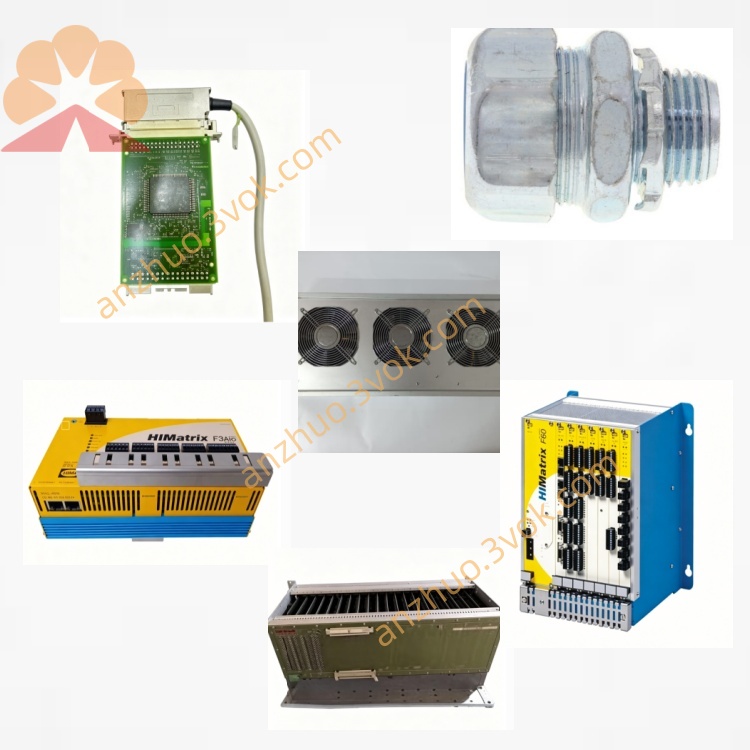
HIMATRIX F7133 Safety Power Supply Module
Description
I. Product Overview
Model: F7133
Brand: HIMA
Product Type: 4-channel power distribution module (card-type)
Applicable System: H51q/HIQuad Safety Instrumentation System (SIS), compatible with expansion rack F-BASE RACK 11
Safety Level: IEC 61508 SIL3, TÜV Certified
Component Function: Provides 24VDC safety power distribution for I/O modules and sensor contacts within the rack, each with an independent slow-blow fuse and status monitoring, fault isolation to ensure reliable power supply for the safety circuit.
Component Number: 984713360
Installation Method: Standard sub-rack slot installation
Protection Level: IP20
Weight: Approximately 0.25kg
II. Technical Specifications
(1) Electrical Parameters
Input Voltage: 18~35VDC (rated 24VDC, -15% to +20%)
Input Current: Maximum 11A; No-load Current 0.45A
Output Channels: 4 independent power distribution (CH1~CH4)
Output Voltage: 24VDC (same as input)
Single-channel Output Current: Maximum 4A (each channel has a 5×20mm slow-blow fuse)
Total Output Current: Maximum 8A
Insulation Voltage: Input - Output / Channel to Channel 500V AC/1min
Protection Features: Overcurrent, Short Circuit, Reverse Connection, Overheating Protection
Fault Signal: Relay Dry Contact (24VDC/1A), Normally Closed, Fault Open
Relay Action Time: Approximately 100ms
(2) Environmental Parameters
Operating Temperature: 0℃ ~ +60℃
Storage Temperature: -40℃ ~ +85℃
Relative Humidity: 10%~90%, No Condensation
Anti-Vibration / Impact: Complies with Industrial IEC Standards
(3) Physical Parameters
Size: 25mm×127mm×203mm (Width × Height × Depth)
Weight: Approximately 250g
Terminal Specifications: 0.75~2.5mm² Multi-strand Copper Wire
III. Core Functions
4 Independent Safety Power Distribution: Each channel 24VDC/4A, Built-in Slow-Blow Fuse, Single-channel Fault Does Not Affect Other Channels.
Fuse Status Monitoring: Each channel corresponds to 1 LED Indicator Light, Normal Bright, Fault / Missing Flashes; Relay Contacts Uniformly Feedback Total Fault Status.
Fault Isolation: When a single channel is short-circuited / overcurrent, this channel is quickly cut off to prevent the spread of the fault to the system power supply.
Redundant Adaptation: Can be combined with F7126/F7130A Power Module, F7131 Monitoring Module to build SIS System Redundant Power Supply Architecture.
Hot Swap: Supports Online Module Replacement, Does Not Affect System Operation, Automatically Restores Power Distribution after Replacement.
IV. Installation and Wiring
(1) Installation Steps
Environmental Check: No Corrosive Gases, No Strong Electromagnetic Interference, Reserve ≥ 20mm Heat Dissipation Space, Away from Frequency Converter, Contactors.
Mechanical Installation:
Align the sub-rack slot, push the module smoothly;
Tighten the panel fixing screws to ensure reliable contact.
Wiring (Power Off Operation):
Power Input: L + Connect 24V Positive, L - Connect 24V Negative, Cable ≥ 1.5mm²;
Output Channels: CH1~CH4 (d1/d2/d3/d4) Corresponding Connect I/O Module 24V Positive, Common Terminal (L-) Connect Power Negative;
Alarm Output: Relay Contact (d22/Z24) Connect DCS/PLC Alarm Circuit, Normally Closed, Fault Open;
Grounding: Module Ground Connect Cabinet Protection Ground, Ground Resistance ≤ 4Ω.
Power On Check: After Correct Wiring, Power On, PWR Light Always On, Each Channel LED On, Relay Contact Closed, Output Normal.
(2) Panel Indicator Lights
PWR (Green): Power Normal Always On, Off Indicates 24V Input Abnormal;
CH1~CH4 (Yellow): Corresponding Channel Normal Bright, Flashes Indicate Fuse Fault / Missing, Off Indicates Output Overload / Short Circuit. Check if the output circuit is short-circuited or overloaded, and resolve the faults before restarting.
The PWR light goes out:
Check the 24V input voltage, external fuses, and connection terminals;
Confirm that the input power has no overvoltage, undervoltage, or reverse connection.
Relay contacts disconnected:
Check the LED of each channel, locate the faulty channel;
Follow the above steps to check the fuses and output circuit.
Hot-swappable replacement:
Directly remove the faulty module, and the system triggers an alarm but operates normally;
Insert a new module, and the system automatically identifies and restores power distribution, eliminating the alarm.
(III) Maintenance cycle
Daily: Check the indicator lights and confirm no alarms;
Quarterly: Check the tightness of connection terminals, no overheating, and no oxidation;
Annual: Clean the dust on the module surface, check the specifications and aging of fuses;
Storage: When not in use for a long time, disconnect the power supply and store it in a dry and cool environment with a temperature range of -40℃ to +85℃.
VI. Safety precautions
Installation and maintenance must be operated by professional certified personnel, and follow electrical safety regulations;
Do not replace fuses or remove internal components of the module while powered on;
The output circuit must not be overloaded or short-circuited; the load current should be ≤ 4A per path;
When there is a fault, only replace the same model F7133; do not substitute other modules;
modules should be treated as industrial hazardous waste and cannot be discarded randomly.
Get a Quote