
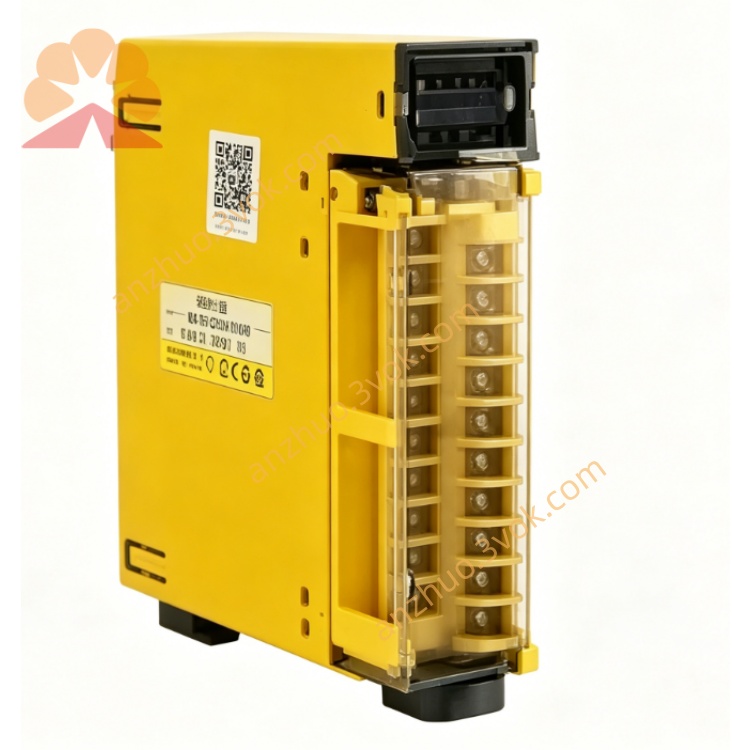
FANUC A06B-0086-B203 βiS6/3000iS Brake-Free AC Servo Motor
Description
2. Electrical Specifications
Rated Input Voltage: 380–400 VAC, 3-phase, 50/60 Hz
Rated Output Power: 2.2 kW
Rated Torque: 10.5 N·m
Rated Speed: 2000 RPM
Maximum Speed: 2500 RPM
Rated Current: 3.8 A
Insulation Class: F
Winding Type: Three-phase high-voltage brushless permanent magnet winding
Frequency: 200 Hz
3. Mechanical Specifications
Rotor Characteristic: Medium inertia rotor (balances response and stability)
Bearing Structure: Sealed bearing with lifetime pre-lubrication
Noise Level: ≤ 75 dB(A) under rated operating conditions
Shaft Precision: Low runout tolerance for high transmission accuracy
Rotation Direction: Standard counterclockwise (viewed from shaft end)
Mechanical Structure: Fully enclosed fanless industrial design
4. Environmental Operating Conditions
Operating Ambient Temperature: 0°C to +40°C
Storage Temperature: -20°C to +60°C
Relative Humidity: 40% ~ 80% RH, non-condensing
Installation Altitude: ≤ 1000 meters above sea level
Vibration Resistance: 0.5g within 10 Hz – 100 Hz frequency range
Application Environment: Indoor industrial use; not suitable for explosive, flammable, or strong corrosive atmospheres without protective measures
5. Key Features
High-Voltage 400V Class: Reduces operating current, supports long-distance wiring with low voltage drop, and saves cable costs.
Medium Inertia Rotor: Balances dynamic response and running stability, ideal for medium-load, high-precision positioning.
128K High-Resolution Encoder: Enables precise speed and position closed-loop control for accurate motion.
IP65 Protection: Withstands factory dust, oil mist, and coolant splashes for durability in harsh environments.
Straight Shaft with Keyway: Simplifies coupling installation and ensures stable torque transmission.
Brushless Design: Low noise, no carbon brush wear, long service life, and maintenance-free under normal use.
Fanless Cooling: Reduces failure points, lowers noise, and improves overall reliability.
6. Application Scope
400V-level CNC machine tools (lathes, milling machines, machining centers) for medium-load feed axes
High-voltage industrial automation lines for medium-load positioning mechanisms
Packaging, printing, textile machinery, and general industrial automation equipment
Servo systems requiring long-distance wiring with low current loss
High-speed, high-precision motion applications without vertical load holding requirements
7. Installation Guidelines
Mount on a rigid, flat base to avoid resonance and mechanical deformation.
Ensure precise coaxial alignment between motor and load shafts to reduce vibration and bearing wear.
Use dedicated shielded high-voltage power and encoder cables; separate power and signal wiring to minimize EMI.
Reserve sufficient space for natural heat dissipation; do not block the motor housing.
Avoid impact, dropping, or extrusion during handling/install to protect the motor and encoder.
8. Maintenance Instructions
Regularly inspect for abnormal noise, vibration, or overheating.
Keep the motor surface clean of dust, metal chips, and oil contamination.
Sealed bearings have lifetime lubrication; no regular refueling needed under normal conditions.
Periodically check encoder cable integrity and connector tightness.
Avoid long-term overload or frequent forward/reverse start-stop beyond load limits.
9. Safety Precautions
Cut off all 380–400V high voltage power before work; wait 15 minutes for capacitor discharge to prevent electric shock.
Do not touch rotating shafts or moving parts during operation.
Do not disassemble the motor or encoder privately; unauthorized disassembly voids the warranty and damages precision.
Avoid use in conductive dust, heavy condensation, or corrosive environments without protection.
10. Troubleshooting
Motor fails to start: Check 3-phase 400V power, wiring tightness, servo amplifier alarms, and enable signal.
Abnormal noise/vibration: Verify mounting rigidity, coupling alignment, bearing condition, and load jamming.
Overheating: Inspect for long-term overload, high ambient temperature, or poor ventilation.
Positioning deviation: Check encoder cable damage, loose connectors, parameter mismatch, or mechanical backlash.
Unstable speed: Confirm voltage fluctuations, sudden load changes, or encoder signal interference。
Get a Quote