
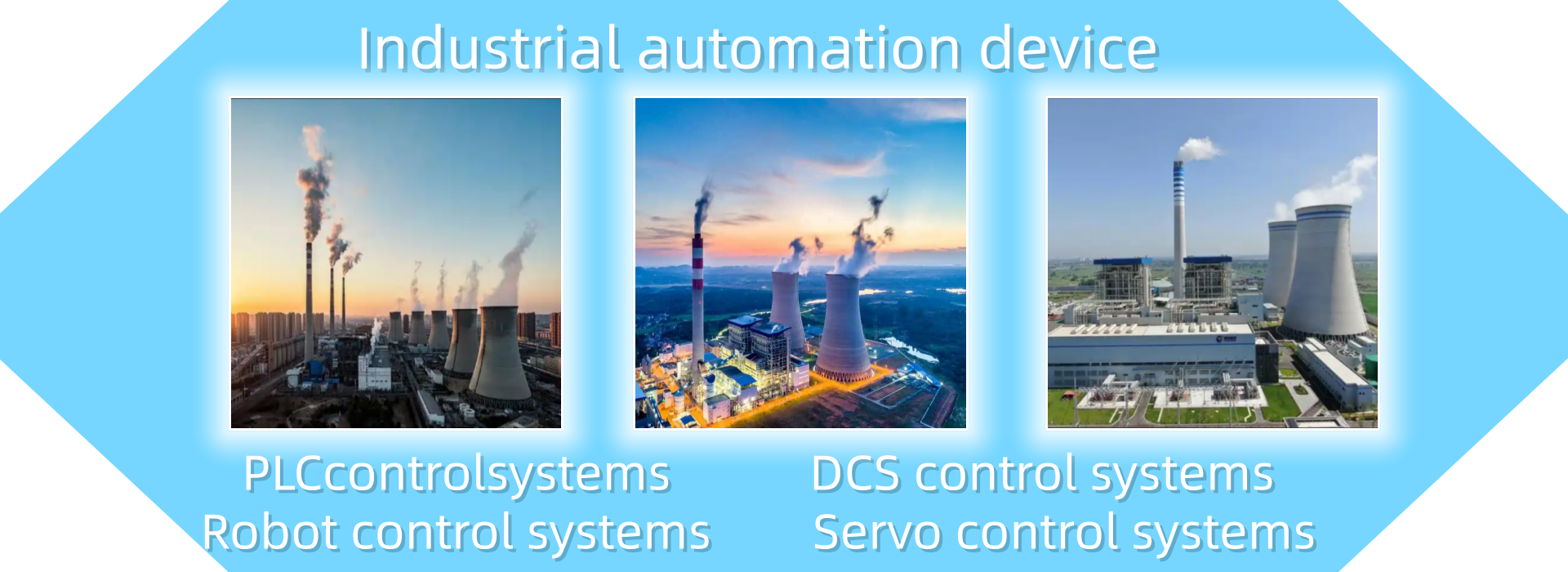
Global Industrial Control Industry Accelerates Agentic AI and Open Software-Defined Automation Deployment
Global Industrial Control Industry Accelerates Agentic AI and Open Software-Defined Automation Deployment
OverviewGlobal industrial control vendors including Rockwell Automation, Emerson, Siemens and Schneider Electric are rolling out new AI-native orchestration platforms and open software-defined DCS/PLC products, reshaping the architecture of traditional process and discrete automation. The latest industry consensus released at overseas automation summits shows that Agentic AI and Physical AI are shifting from pilot testing to formal production deployment, with open standard protocols such as OPC UA FX and Ethernet-APL becoming the mainstream foundation for cross-brand interconnection. The new generation control architecture decouples hardware and software, supports portable application containers, and greatly shortens the cycle of factory transformation and algorithm iteration. This open intelligent control system is widely applied in AI data center energy management, offshore unmanned facilities, new energy bases and continuous chemical processes, and brings new product and spare replacement demands for global automation system integrators and end users.
FeaturesThe open software-defined control architecture supports heterogeneous hardware access and hot-swap module replacement, with redundant CPU, power supply and communication configurations. The intelligent industrial control platform embeds native industrial cybersecurity and functional safety up to SIL3, and the built-in industrial AI agent can independently complete anomaly identification, trend prediction and closed-loop adjustment without continuous manual intervention. It supports unified engineering configuration, edge local execution and cloud digital twin synchronization, and can connect sensors, drives, safety systems and third-party host equipment of different brands. The whole set of solutions complies with IEC 61508, IEC 62443 and API 670 standards, helping users reduce engineering customization costs, cut unplanned downtime and realize flexible production matching multi-variety orders.
SpecsGeneral global open industrial control platform. The intelligent industrial control platform supported protocols: OPC UA FX, Ethernet-APL, PROFINET, Modbus TCP. Safety level: up to SIL3 / PL e. Deployment mode: cabinet rack, edge DIN rail installation. Software form: containerized application, independent of dedicated hardware. Data capacity: supports mass waveform, event and trend storage. It is supplied as a complete automation platform and supporting spare modules.
Operating ParametersControl module standard power supply: 24V DC; power drive unit: 380–480V AC. The intelligent industrial control platform standard operating temperature: 0℃ ~ +55℃; conformal coated wide-temperature version: -40℃ ~ +70℃. Relative humidity: 5%~95% non-condensing. Protection grade: IP20 for internal control modules, IP54/IP67 for field I/O units. EMC meets IEC 61000 series requirements. Altitude: 2000m without derating.
PrincipleField instruments collect process, vibration, temperature and energy data and transmit them to the control platform through unified industrial Ethernet. The intelligent industrial control platform runs deterministic control logic and AI agent tasks in parallel, executes safety interlock and process regulation locally at the edge, and uploads aggregated data to the cloud twin platform for global optimization. When communication or single hardware failure occurs, the redundant channel automatically switches to ensure uninterrupted control. The built-in continuous self-diagnosis mechanism monitors hardware and signal quality in real time; when the threshold is exceeded or a fault is detected, the intelligent industrial control platform triggers alarm records and safe protection actions.
ApplicationsThe platform is widely adopted in petrochemical, natural gas compression, thermal power, new energy storage, lithium battery manufacturing, water treatment and AI data center infrastructure. The intelligent industrial control platform undertakes process control, safety protection, energy scheduling and predictive maintenance functions. It connects with vibration monitoring systems, frequency converters, safety instrument systems and MES to build a full-link intelligent factory. It is a mainstream technical solution for the renovation and new construction of international large-scale industrial projects, and also generates a large demand for cross-brand spare parts and technical services.