
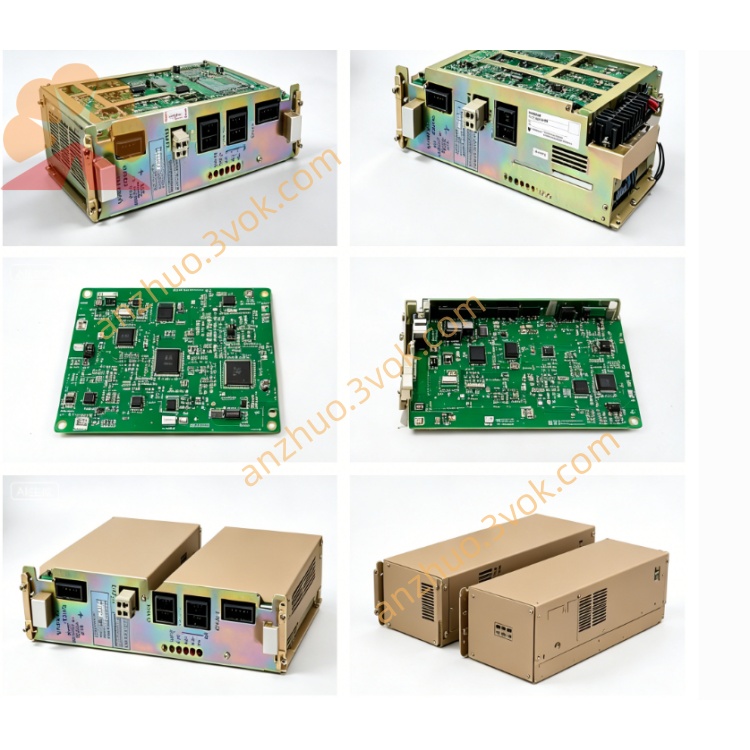
JANCD-G1001B
Description
Technical Specifications
Power Supply: Backplane bus 24V ±10%, typical power consumption approximately 28W.
Processor: Special CNC CPU, supporting multi-axis linkage, high-speed interpolation and program preprocessing.
Memory: Built-in system program storage and data cache, supporting power-off data retention.
Board Interfaces: System bus, I/O bus, display / panel interface, handwheel interface and expansion slot.
Environment: Operating temperature 0–55℃, storage temperature -20–70℃, humidity 10%–90% (no condensation), resistant to industrial vibration and dust.
Structure: 3U standard board card, metal shielding enclosure, weight approximately 0.6kg.
Installation and Wiring
The board card is vertically installed in the 3U standard slot of the control cabinet, with ≥50mm of heat dissipation space reserved above and below, and fixed screws locking for vibration prevention. The metal enclosure is reliably connected to the cabinet ground, with a grounding resistance of ≤4Ω, to suppress electromagnetic interference.
Internal communication and power supply are completed by the backplane bus, without external strong current wiring. Only external connections include the operation panel, display, handwheel, etc., with interfaces connected according to the silk-screen definition; long-distance signals use shielded single-ended grounding, with strong and weak electrical lines routed separately, with a spacing of ≥10cm to avoid interference.
Maintenance and Care
Daily inspection and observation of power supply, operation indicator light status, no bulging, burning, or peculiar smell on the board surface. Every quarter, use low-pressure dry compressed air to blow dust from the board card and slots, to prevent short circuits or poor contact due to dust accumulation.
Regularly tighten plugs and terminals, check capacitors and solder joints for aging, leakage, or short circuits. Every year, retest the continuity of grounding to ensure reliable grounding. For long-term shutdown and power-off storage, take measures to prevent moisture and dust; before restarting, conduct a 30-minute no-load power-on preheating to confirm normal operation before putting it into use.
Fault Troubleshooting
No power indicator: Backplane bus power supply abnormal, board card fuse blown, power chip damaged; measure bus voltage, check fuse, replace and test.
Operation light does not flash / system does not start: Poor bus contact, firmware abnormal, mismatch between board card and system; reinsert and lock, check model, reburn firmware.
Display abnormality / panel no response: Loose display interface, faulty driver chip, incorrect panel wiring; check plug, measure interface signals, and troubleshoot lines.
Random system crash / alarm: Poor grounding, excessive interference, memory / CPU failure; optimize grounding, straighten wiring, replace board card for testing.
Board Card Replacement: Replace the same model directly by plugging and unplugging, no parameters required; after replacement, conduct a 2-hour no-load trial run to confirm stability before processing.
Get a Quote