
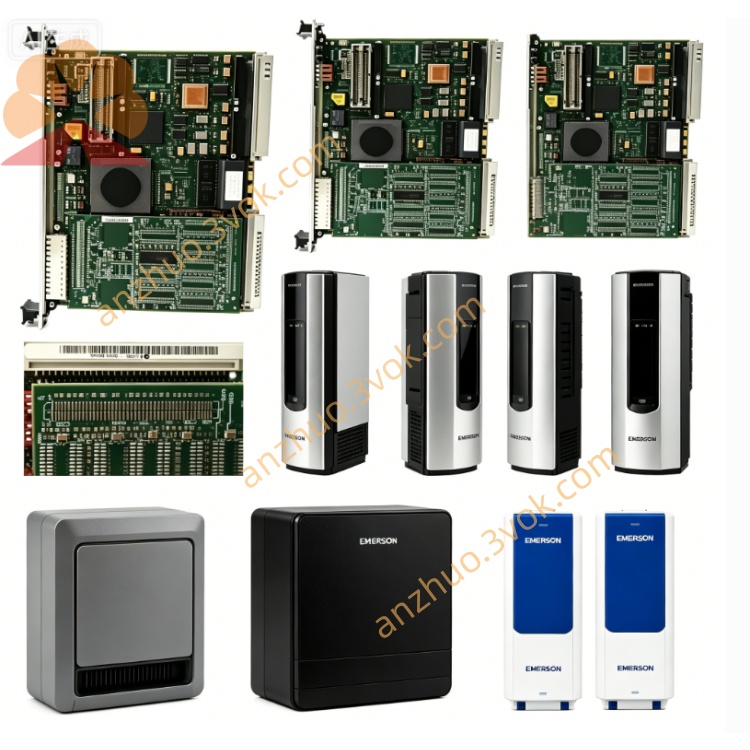
Emerson 1X00061H02 Ovation Digital Input Card
Description
Emerson 1X00061H02 Product Detailed Description
I. Product Overview
Emerson 1X00061H02 is an Emerson Ovation™/DeltaV™ series high-reliability analog input module, originally produced in the United States. It belongs to the 1X series of core process control components and is an upgraded and optimized version of 1X00061H01. This module integrates 16 high-precision analog inputs, 16-bit high-resolution signal processing, and an enhanced dual-redundant safety architecture. It is specifically designed for DCS and safety instrument systems (SIS) in power plants, chemical plants, oil and gas, etc., with enhanced anti-interference capabilities, a wider temperature range adaptation, and more comprehensive fault diagnosis functions. It is the core module for high-precision data acquisition and safety control in the process industry.
II. Core Functions
16 High-Precision Analog Input: Supports 16 single-ended/differential analog input channels, covering current, voltage, resistance, and thermocouple signals, suitable for various industrial field sensors such as temperature, pressure, level, and flow, enabling precise and synchronous acquisition of process variables.
16-Bit High-Resolution Signal Processing: Equipped with an upgraded 16-bit ADC conversion chip, with a resolution of 0.0015% FS, combined with low-noise amplification and digital filtering circuits, the stability of weak signal acquisition is significantly improved, with stronger anti-interference capability, and meeting the requirements of industrial high-precision measurement and control.
Enhanced Dual-Retaining Safety Architecture: Supports module-level dual-machine hot standby redundancy, with the standby module seamlessly taking over in the event of a main module failure, without any disturbance to the switch and no data loss. It complies with IEC 61508 SIL3 safety level requirements and is suitable for critical control scenarios requiring 7×24-hour continuous operation.
Multi-Signal Type Compatibility and Automatic Identification: Can be configured to access 4–20mA, 0–20mA, 0–5V, 0–10V, -10–10V, RTD (Pt100, Pt1000), TC (K, S, T, E, J type) and other signals. The new signal automatic identification function enables matching of sensor types without manual configuration, simplifying system integration.
Advanced Fault Diagnosis and Status Monitoring: Built-in chip-level self-diagnosis, channel open/closed/circuit over-range detection, signal drift alarm, power anomaly monitoring, communication link failure identification; real-time reporting of module operation status, channel health, and precise fault codes, supporting remote online diagnosis and maintenance, significantly reducing fault troubleshooting time.
Wide Temperature Robustness and Extreme Environment Adaptability: Certified to MIL-STD-810G military-grade environmental standards, with wide temperature, shock, anti-humidification, anti-corrosion design, suitable for control rooms and on-site cabinets in harsh conditions such as high and low temperatures, vibration, humidity, dust, etc., with stronger environmental adaptability.
System Seamless Integration and High-Speed Communication: Native compatibility with Ovation DCS, DeltaV system, supports Modbus TCP, EtherNet/IP industrial Ethernet protocols, the backplane high-speed bus communication rate is increased to 150Mbps, data transmission is real-time and stable, plug-and-play without complex configuration.
Hot Swap and Online Maintenance: Supports non-stop hot swapping, faulty modules can be directly replaced without system shutdown; supports online parameter configuration, firmware upgrade, and channel calibration, simplifying maintenance processes and reducing operation and maintenance costs.
III. Technical Specifications
(1) Input Channels and Signal Parameters
Number of Channels: 16 analog input channels, supports single-ended/differential configuration, channels are isolated from each other.
Resolution: 16 bits (65536 levels), measurement accuracy ±0.08% FS (25℃), temperature drift ≤30ppm/℃, accuracy and stability are superior to previous models. Input signal type: Current (4–20mA, 0–20mA), Voltage (0–5V, 0–10V, -10–10V), RTD (Pt100, Pt1000), TC (K, S, T, E, J type).
Sampling rate: Default 100ms per channel (configurable), up to 8ms in high-speed mode, meeting the requirements for rapid process response and dynamic monitoring.
Isolation strength: 1500VAC between channels, 2500VAC between channel and ground, 3000VAC between module and backplane, electrical isolation to effectively suppress common-mode interference and ground circulating current, ensuring signal integrity.
(II) Electrical parameters
Power supply voltage: 24VDC (±10%), unified power supply from the system backplane, supports redundant power input, power consumption ≤15W, low-power design reduces cabinet heat load.
Power protection: Overvoltage, low voltage, reverse connection, short circuit, overcurrent, overtemperature multiple protections, automatic fault shutdown to protect module and system safety, with fault self-recovery function.
Communication interface: Backplane high-speed bus (150Mbps), redundant synchronous interface, Ethernet debugging port (RJ45), configuration switch.
(III) Environmental parameters
Operating temperature: -40℃ to +85℃, wide temperature design, suitable for extreme temperature working conditions.
Storage temperature: -55℃ to +100℃, no damage during long-term storage, convenient for spare parts management and transportation.
Relative humidity: 5%–95% RH (no condensation), suitable for humid and dusty industrial sites.
Vibration grade: MIL-STD-810G, 5g (10–500Hz), able to withstand cabinet vibration and impact, improved anti-vibration performance.
Protection grade: IP30, dustproof and foreign object prevention, avoiding dust accumulation affecting heat dissipation and circuit stability.
(IV) Physical parameters
Size (width × height × depth): approximately 300mm × 150mm × 100mm, standard Ovation/DeltaV rack installation size, suitable for current cabinet layout.
Weight: approximately 1.42kg, lightweight design, facilitating installation, disassembly and maintenance.
Shell material: high-strength aluminum alloy + anti-corrosion coating + metal shielding layer, corrosion-resistant, impact-resistant, anti-electromagnetic interference, suitable for harsh industrial environments.
Four, Structure and Appearance Design
Rack-mounted modular structure: integrated sealing design, internal integration of upgraded ADC chip, precise signal conditioning circuit, enhanced redundant control unit, efficient power management module and optimized heat dissipation components, compact structure, direct insertion into standard rack, dedicated gold-plated connectors on the back and backplane power supply, bus seamless connection, reliable contact, anti-oxidation.
High-brightness clear status indication: front equipped with 10 high-brightness LED indicators, respectively for power (green, always on normal), operation (green, flashing normal), fault (red, always on alarm), redundancy (yellow, main/standby status), communication (yellow, flashing receive/transmit), channel alarm (red, channel abnormal), signal normal (green, channel normal), power abnormal (red, power failure), link failure (red, communication interruption), maintenance prompt (yellow, maintenance required), operation and fault status are clear at a glance, facilitating rapid troubleshooting.
Efficient heat dissipation and anti-interference design: high-density heat dissipation fins integrated on both sides of the shell, passive cooling without fan, avoiding dust accumulation, noise and fan failure; multi-layer PCB board, shielded wiring and independent isolated power supply, triple shielding design, resisting strong electromagnetic interference, ensuring long-term stable signal.
Zone interface and convenient operation: Side equipped with redundant synchronous interface, Ethernet debugging port, configuration switch and channel status indicator lights. The interface is clearly zoned and the silk-screening is clear. It supports online debugging, parameter configuration and firmware upgrade, and maintenance operations can be completed without disassembling the module.
VII. Product Advantages
Ultra-high precision and long-term stability: 16-bit high resolution + precise signal conditioning + digital filtering, high measurement accuracy, small drift, strong stability, no zero-point drift during long-term operation, suitable for high-precision process control and measurement scenarios.
Military-grade ruggedness and extreme environment compatibility: Certified by MIL-STD-810G, operates within a wide temperature range of -40°C to +85°C, resistant to shock, humidity, corrosion, interference, suitable for harsh industrial conditions such as power plants, chemical plants, oil and gas, metallurgy, etc., with environmental adaptability far exceeding ordinary industrial modules.
Enhanced dual redundant safety guarantee: SIL3-level redundant architecture + seamless switching + data synchronization, no data loss, no control disturbance, meets the requirements of safety instrument systems (SIS), reduces unplanned downtime risks, ensures the safe operation of key equipment and systems.
Multi-signal compatibility, high integration: 16 channels compatible with current, voltage, RTD, TC of all types of industrial signals, supports automatic signal identification, no need for additional conversion modules, simplifies system architecture, reduces equipment quantity, and lowers procurement and maintenance costs.
Easy maintenance and full lifecycle management: Supports hot swapping, online configuration, online calibration, online firmware upgrade, maintenance can be performed without downtime; complete fault diagnosis and precise fault codes, quickly locate problems, reduce maintenance time; 12-month original warranty, ensures stable operation throughout the lifecycle.
Compliance with safety standards and certifications complete: Certified by CE, UL, FCC, MIL-STD-810G, IEC 61508 SIL3, compliant with industrial electrical safety and electromagnetic compatibility standards, suitable for the global industrial market, safe and reliable.
VII. Application Scenarios
Power industry: Thermal power, hydropower, nuclear power Ovation/DeltaV DCS, used for high-precision collection and monitoring of boiler temperature / pressure, turbine vibration / speed, generator parameters, auxiliary system parameters, environmental emission parameters.
Chemical industry: Petrochemical, coal chemical, fine chemical, pharmaceutical chemical process control, used for reaction tank temperature / pressure, distillation tower liquid level / temperature, pipeline flow, storage tank liquid level, environmental emission parameter collection, suitable for explosion-proof, long-distance, strong interference scenarios.
Oil and gas industry: Oil and gas extraction, wellhead platform, pipeline transportation, refinery, LNG plant, used for wellhead pressure / temperature, pipeline flow / pressure, storage tank liquid level / temperature, equipment vibration / status monitoring, suitable for field, extreme temperature, strong corrosion conditions.
Metallurgy and building materials: Steel mills, aluminum plants, cement plants, glass plants, used for blast furnace temperature / pressure, rolling mill pressure / vibration, kiln temperature, mill vibration, production line parameters collection, suitable for high temperature, dust, strong vibration environments.
Pharmaceutical and food: Pharmaceutical factory, food processing plant, beverage factory clean area, used for fermentation tank temperature / pressure, purified water quality, production line pressure / flow, environmental temperature and humidity high-precision collection, meets clean and hygienic requirements.
Water treatment and environmental protection: Sewage treatment plant, waterworks, environmental monitoring station, used for water quality parameters, tank liquid level, pipeline flow, equipment status, environmental emission data collection, suitable for humid, corrosive, dusty environments.
VIII. Installation and Maintenance
(1) Installation steps
Select an idle slot in the Ovation/DeltaV standard rack with good ventilation, no strong electromagnetic interference, away from heat sources and corrosive gases, and reserve sufficient heat dissipation space. Make sure the rack is powered off, align the module to the slot and push it in steadily until the back connectors are fully engaged. Tighten the fixing screws to ensure a secure and tight installation without any looseness. Avoid vibration-induced poor contact.
Connect the on-site sensor cables: Current/voltage signals are connected to the terminals according to the positive/negative polarity, RTD/TC is connected according to the polarity, and the shielding layer of the cables is grounded at one end to reduce electromagnetic interference and avoid ground circulation.
Connect the 24VDC power supply to the rack and observe the LED indicators: The power green light is constantly on, the operation green light flashes, there is no red light alarm, indicating that the module has started normally; confirm the normal channel data, stable communication through the system software.
In redundant configuration, install the same model spare module, set the main/backup mode through the system configuration software, synchronize parameters and data, and manually trigger the switch to verify the normal redundant function.
(II) Daily Maintenance
Daily inspection: Check the LED status, the power and operation green lights are normal, and there is no red light alarm; check the module operation status, channel data accuracy, communication quality and fault information through the system monitoring software. Handle any abnormalities promptly.
Monthly cleaning: Use a dry soft cloth to wipe the module surface, heat sinks and terminal dust to avoid dust accumulation affecting heat dissipation and terminal contact reliability; avoid liquid entering the module during cleaning.
Quarterly inspection: Check if the fixing screws, connectors, and signal cables of the module are loose, oxidized or corroded, and tighten or replace them in time; check if the grounding of the cable shielding layer is good to avoid interference.
Environmental management: Keep the cabinet well-ventilated, with a temperature controlled at -40℃ to +85℃, humidity 5%–95% RH (no condensation), away from heat sources, water sources, corrosive gases and strong electromagnetic equipment (such as frequency converters, high-voltage motors).
Redundancy test: Manually trigger the main/backup switch every six months to verify that the switch is without disturbance and the data synchronization is normal; regularly back up configuration parameters to prevent data loss.
Calibration and upgrade: Calibrate the channel accuracy annually to ensure measurement accuracy; upgrade the firmware online according to the official release, fix vulnerabilities, optimize performance, and add new functions.
VIII. Notes
Power specification: Use 24VDC (±10%) power strictly, prohibit overvoltage, low voltage or reverse connection, otherwise the module circuit will be burned; it is recommended to configure redundant power to avoid power failure causing module shutdown.
Installation operation: Before installation or disassembly, must cut off the rack power supply to avoid damaging the connectors and circuits by plugging and unplugging while powered on; handle with care, avoid severe vibration and collision to prevent internal components from being damaged.
Signal wiring: The shielding layer of the sensor cables is grounded at one end to avoid ground circulation interference; RTD/TC wiring strictly distinguishes polarity to prevent measurement errors; the wiring should be firm to avoid signal fluctuations or interruptions caused by loosening.
Do not disassemble: There are no user-repairable components inside,私自拆解 will result in the invalidation of warranty, and even cause short circuits, electric shock and other safety accidents; contact the official after-sales service for repair or replacement of faulty modules.
Storage requirements: Spare parts should be stored in a dry, ventilated environment without corrosive gases, with a temperature of -55℃ to +100℃, avoid direct sunlight, rain, severe vibration, and long-term storage requires regular inspection.
Spare parts replacement: Replace the faulty module with the same model original module; non-original modules may cause compatibility issues, signal abnormalities, unstable communication or system failures, affecting production and operation.
IX. Warranty Information
Warranty period: The original brand new product is guaranteed for 12 months.
Warranty scope: Non-human damage to components, circuit faults, signal acquisition faults, communication faults, redundant function faults; human damage, unauthorized disassembly, overvoltage use, harsh environment (corrosion, water ingress, lightning strike, excessive vibration), illegal firmware upgrade, wiring errors causing faults are not within the warranty scope.
Get a Quote