
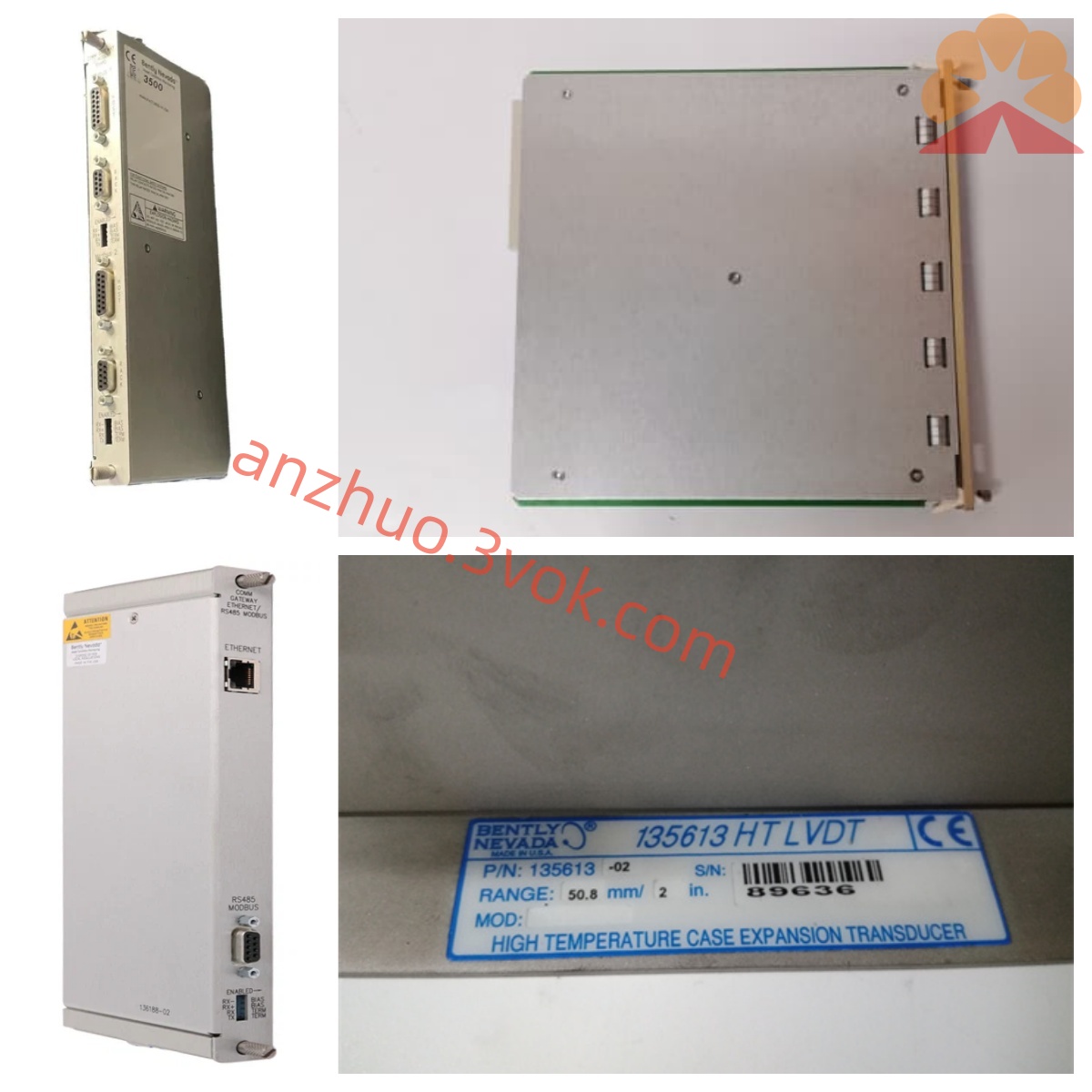
Bently Nevada 72101-XX-01-01-01-01-01 Series Customizable Eddy Current Proximity Probe
Description
II. Core Parameters (Standard Configuration)
Channels: 4 independent temperature inputs
Sensors: Compatible with PT100/PT1000 RTD, K/S/T type thermocouples
Measurement Range: -200℃ ~ +800℃ (depending on the sensor)
Accuracy: ±0.1% FS, cold end compensation (thermocouple)
Output: 4–20mA analog quantity (per channel), relay alarm (warning / danger)
Power Supply: Rack backplane -18 ~ -24VDC
Operating Temperature: 0℃ ~ +60℃; Storage: -40℃ ~ +85℃
Structure: Standard full-height card, metal casing, anti-interference
III. Model Code Explanation (72101-XX-01-01-01-01-01)
72101: Basic model (temperature monitoring)
XX: Number of channels / version (e.g. 01 = 4 channels standard)
01: Input type (RTD / thermocouple)
01: Output (4–20mA)
01: Alarm configuration
01: Certification
01: Firmware version
IV. Main Functions
Temperature Monitoring: Bearing temperature, motor winding, lubricating oil temperature, cylinder body temperature
Two-level Alarm: Warning (Alert), Danger (Danger), relay contact output
Analog Quantity Upload: 4–20mA connected to DCS/PLC, real-time trend and record
Self-Diagnosis: Sensor break, short circuit, over-range alarm
Rack Configuration: Set range, alarm value, filtering through 7200 rack software
V. Application Scenarios
Power: Turbine generator bearings, feedwater pump, fan
Chemical Industry: Centrifugal compressor, screw machine, pump set
Metallurgy / Air Separation: Large motors, expansion machines, gearboxes
VI. Installation and Wiring Tips
Insert into the slot of the 7200 series rack, lock to ensure reliable bus contact
Sensor cables correspond to channels, separate strong and weak electrical wiring
Alarm dry contacts are connected to the interlock and DCS system respectively
VII. Maintenance and Common Faults
Daily: Observe the LED on the panel (power / normal / alarm), confirm the values are stable
Regularly: Tighten terminals, calibrate alarms, test interlocks, check cable aging
Common Problems:
No data: Check backplane power supply, slot contact, sensor lines
Drift / Jump: Poor sensor contact, poor grounding, cable damage
False Alarm: Incorrect threshold setting, interference, oxidation of relay contacts
Get a Quote