
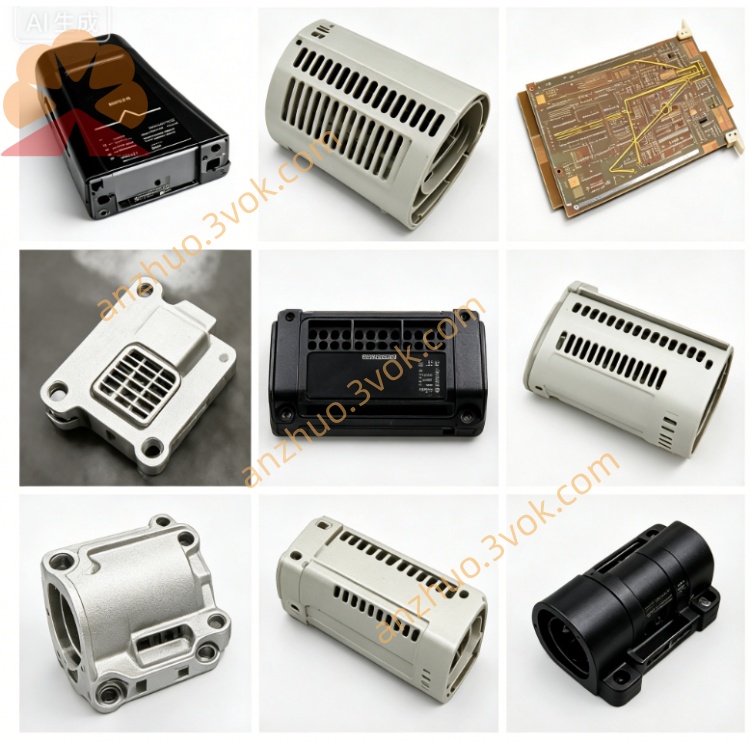
EMERSON 1C31166G02 Ovation Analog Output Module
Description
Emerson 1C31166G02 Product Description (Ovation Enhanced Serial Link Controller Module)
1C31166G02 is an enhanced high-performance serial link controller (Serial Link Controller) of Emerson (formerly Westinghouse)'s Ovation DCS system. It is an upgraded model of 1C31166G01. The core improvement lies in a wider temperature range, stronger isolation, higher resistance to interference, and more stable communication. It is specifically designed for the interconnection of third-party serial port devices in harsh industrial environments, enabling reliable data interaction between Ovation and devices of various brands such as PLCs, intelligent instruments, frequency converters, and serial port sensors. It is widely used in scenarios with strong interference, wide temperature ranges, and high stability requirements, such as power generation, chemical industry, oil and gas, and metallurgy.
I. Product Overview
Model: 1C31166G02
Brand: Emerson (formerly Westinghouse)
Series: Ovation DCS I/O Module (serial communication dedicated, enhanced version)
Core Function: Provides 1 RS-232 + 1 RS-485 independent isolated serial ports to enable data acquisition, command issuance, protocol conversion and fault diagnosis between Ovation DCS and third-party serial devices.
Supported Protocols: Standard Modbus RTU (master / slave), ASCII, custom serial protocol, baud rate programmable (300–115200 bps)
Design Position: Industrial-grade rugged serial communication core module, fully compatible with replacement 1C31166G01, plug-and-play, suitable for upgrading old systems and high-reliability deployment of new systems.
Origin: United States
Guarantee: 18 months (extended by 50% compared to G01)
II. Core Function Characteristics
1. Dual-interface enhanced multi-protocol communication
Integrates 1 RS-232 (isolated) + 1 RS-485 (enhanced isolation) dual independent serial ports. The dual interfaces can work simultaneously in parallel, suitable for different electrical interfaces and distances of serial port devices. The RS-485 interface has upgraded drive capability, supporting up to 32 slave stations stable mounting, with stronger bus compatibility. Supports Modbus RTU master / slave mode, ASCII protocol, and user-defined serial protocol. Baud rate, data bits (7/8), stop bits (1/2), parity check (none / odd / even) are all programmable via software. Compatible with most industrial serial devices on the market, achieving seamless connection and rapid integration.
2. Top-level isolation and enhanced anti-interference design
Uses 2500VAC serial port - bus, serial port - power dual isolation (G01 is 2000VAC), completely blocking industrial site ground potential difference, common mode voltage and electrical interference, avoiding communication interruption, data garbling or module damage. RS-485 interface ESD protection ±20kV, surge protection ±4kV (G01 is ±15kV/±2kV), hardware adds TVS transient suppression, common mode inductance, lightning protection circuit, suitable for environments with dense strong electromagnetic interference from frequency converters, motors, transformers. Data transmission uses CRC16 + LRC dual verification, combined with hardware filtering and software anti-jitter, error rate lower than 10^-10, ensuring zero error interaction of critical process data.
3. Wide temperature long-life and high stability operation
Uses military-grade wide-temperature components, working temperature range expanded to **-20℃~+70℃** (G01 is - 20℃~+60℃), capable of adapting to extreme high and low temperature environments of cabinets (such as no insulation in winter, high-temperature cabinets in summer); storage temperature - 40℃~+85℃, higher safety in transportation and storage. Optimized PCB layout, thickened shielding layer, enhanced heat dissipation design, MTBF (mean time between failures) ≥ 800,000 hours (G01 is 500,000 hours), minimal long-term drift, supports 24-hour continuous operation, long-term maintenance-free, suitable for high-reliability industrial scenarios.
4. Full-link intelligent self-diagnosis and status monitoring
Has module-level, interface-level, link-level three-level diagnosis, diagnostic coverage 100%, real-time monitoring of module power supply, serial port hardware, communication link, data transmission status. Support for accurate fault location for open/closed circuit conditions of serial ports, short circuit, reverse connection, cable breakage/aging, response failure of slave station equipment, data verification errors, protocol mismatch, communication timeout, etc. Through the Ovation system, fault codes and details can be remotely viewed. On-site, high-brightness PWR/RUN/COM/FAULT indicator lights are equipped, allowing for clear identification of the operating status over a long distance, significantly reducing maintenance difficulty and downtime.
5. Hot Swap and Redundancy Enhancement
Support for online hot swapping. Modules can be directly plugged in or replaced during normal system operation without the need for shutdown or power interruption. The plug-in and removal life is ≥ 1000 times. Maintenance is convenient. Compatible with the full redundancy architecture of the Ovation DCS system. Supports triple redundancy configuration for the controller, I/O bus, and serial communication link. Microsecond-level seamless switching occurs when the main link fails, without data loss or command interruption, ensuring continuous and stable critical communication services and meeting the requirements of high-security scenarios (such as power plant main control, chemical reactor control).
6. High-speed Data Interaction and Cache Upgrade
Built-in high-performance communication processor, data processing speed increased by 40%, response time < 0.7ms (G01 < 1ms), supports high-speed transmission of large data volumes, suitable for high-frequency, multi-node communication scenarios. Data cache capacity upgraded to 2048 bytes (G01 1024 bytes), can cache more historical data, avoiding data loss caused by network fluctuations and instantaneous interference, and providing stronger communication continuity.
III. Detailed Technical Specifications
Electrical Parameters
Power supply voltage: 24VDC ±20% (wide voltage design, G01 ±10%), derived from the main / auxiliary power supply of the Ovation backplane
Typical power consumption: ≤ 4.0W
Communication Interfaces: 1×RS-232 (isolated), 1×RS-485 (enhanced isolation)
Protocol Support: Modbus RTU (master / slave), ASCII, custom protocol
Baud Rate: 300–115200bps (programmable)
Data Bits / Stop Bits / Checksum: 7/8 bits, 1/2 bits, no / odd / even checksum (programmable)
Isolation Level: 2500VAC / 1min (serial port - bus, serial port - power)
Protection Level: RS-485 ESD ±20kV, surge ±4kV
Data Cache: 2048 bytes
Response Time: < 0.7ms
Maximum Slave Station Number: RS-485 supports 32
Maximum Transmission Distance: RS-485 1200 meters (9600bps), RS-232 15 meters
Environmental Parameters
Operating Temperature: -20℃ ~ +70℃
Storage Temperature: -40℃ ~ +85℃
Relative Humidity: 5%–95% RH (no condensation)
Vibration Resistance: 10g (IEC 60068-2-6, G01 5g)
Impact Resistance: 50g (IEC 60068-2-6, G01 30g)
Certifications: CE, RoHS, UL, CSA, ATEX (G01 CE, RoHS, UL) Physical parameters
Dimensions: 118 × 28 × 93 mm (Ovation standard module dimensions, compatible with G01 installation position)
Weight: Approximately 0.32 kg
Installation method: Standard DIN rail installation
Status indicator lights: PWR (power), RUN (operation), COM (communication), FAULT (fault)
Communication performance
Data update rate: 10–1000ms (programmable)
Data verification: CRC16 (Modbus), LRC (ASCII), double verification (customized)
V. Typical application scenarios
Power generation industry (supercritical / ultra-supercritical units)
Used for communication between Ovation DCS and boiler intelligent instruments, turbine monitoring devices, auxiliary machine PLC, flue gas analyzers, water quality monitors, etc., to collect key parameters such as temperature, pressure, speed, concentration, and liquid level, issue control instructions, and adapt to high-temperature, high-pressure, strong electromagnetic interference, and wide-temperature cabinet environments, ensuring stable and reliable integrated monitoring of power generation equipment.
Chemical industry (fine chemicals / large-scale refining)
Compatible with serial port devices such as reaction vessel temperature control instruments, online analysis instruments for distillation towers, tank liquid level meters, frequency converters, compressor controllers, catalyst monitoring equipment, etc., to achieve real-time collection of process parameters, remote control of equipment and interlock protection, meeting the strict requirements of continuous production in the chemical industry for communication stability, anti-interference, and wide-temperature adaptability.
Oil and gas industry (offshore platforms / desert oil fields / LNG plants)
Applied to serial data collection from oil well wellhead sensors, temperature / pressure instruments along oil and gas pipelines, PLC of compressors, LNG storage tank monitoring equipment, central control instruments of offshore platforms, etc., compatible with high-temperature, high-pressure, strong wind and sand, strong corrosion, strong interference, and long-distance wiring environments.
Metallurgical industry (hot blast stoves / continuous casting / hot rolling / cold rolling)
Used for connection of serial port devices such as high-temperature blast furnace monitoring instruments, steel water temperature meters, rolling machine PLC, cooling system sensors, heating furnace temperature control instruments, dust removal equipment controllers, etc., to realize real-time monitoring of metallurgical production process parameters, equipment linkage control and fault warning, compatible with high-temperature, high-dust, strong vibration, and strong electromagnetic interference scenarios.
Other highly reliable industrial scenarios
Widely applicable to water treatment (water quality analyzers, pump valve controllers, PLC of dosing systems), papermaking (drying cylinder temperature control instruments, paper machine PLC), pharmaceuticals (sterile workshop monitoring equipment, fermentation tank instruments), semiconductors (clean room monitoring sensors), and other industries. Also suitable for upgrading the old Ovation system with serial port expansion, directly replacing G01, to enhance the system's anti-interference and wide-temperature adaptability.
VI. Installation and wiring instructions
Module installation
Using standard DIN rail installation, compatible with Ovation standard cabinets. When installing, the module spacing should be ≥ 20mm to ensure heat dissipation space; install the module away from strong electromagnetic interference equipment such as frequency converters, motors, transformers, etc., to avoid signal interference. Support hot plugging operation, plug and unplug without power interruption, align and push in or pull out to operate conveniently.
Serial port wiring
RS-232 interface (DB9 terminal)
TXD: transmit data
RXD: receive data
GND: signal ground
Wiring method: Directly connect to the RS-232 interface of third-party devices, maximum distance ≤ 15 meters, recommended to use shielded DB9 serial cable.
RS-485 interface (wiring terminals)
A (+): data positive
B (-): data negative
GND: signal ground
Wiring method: Use shielded twisted pair hand-in-hand topology structure, connect 120Ω resistor at both ends of the bus; Maximum distance: 1200 meters, up to 32 slave stations. Shielding layer is single-ended grounded (at the cabinet side), to avoid circulating interference.
Cable requirements:
RS-485: Recommended to use high-shielded twisted pair (cross-sectional area 1.0–1.5mm²), with a temperature resistance rating of ≥80℃; RS-232: Use standard DB9 shielded serial cable, avoid laying in the same trough as power cables for long distances.
Software configuration (Ovation system):
After the module installation and wiring are completed, perform parameter configuration in the Ovation system: Select communication interface (RS-232/RS-485); Configure baud rate, data bits, stop bits, parity check; Select protocol type (Modbus/ASCII/Custom); Set master/slave mode, slave station address, data register address; Configure data update rate, alarm threshold and fault diagnosis parameters; Support communication link calibration and debugging, and it can be put into stable communication after configuration.
Six. Core differences between G02 and G01
Isolation and protection: G02 is 2500VAC isolated, ESD ±20kV, surge ±4kV; G01 is 2000VAC, ESD ±15kV, surge ±2kV, with stronger anti-interference.
Operating temperature range: G02 is -20℃~+70℃; G01 is -20℃~+60℃, suitable for more extreme high-temperature environments.
Reliability and lifespan: G02 is military-grade components, MTBF ≥ 800,000 hours, with a warranty of 18 months; G01 is industrial-grade, MTBF ≥ 500,000 hours, with a warranty of 12 months, with significant improvement in stability and lifespan.
Environmental tolerance: G02 vibration 10g, impact 50g; G01 vibration 5g, impact 30g, suitable for strong vibration scenarios.
Communication performance: G02 response time < 0.7ms, cache 2048 bytes; G01 response time < 1ms, cache 1024 bytes, better speed and continuity.
Certification: G02 adds CSA, ATEX certifications; G01 only CE, RoHS, UL, suitable for more compliant scenarios.
Seven. Ordering and supporting information
Ordering model: 1C31166G02
Supporting accessories:
Terminal block: Ovation standard serial port wiring terminal (compatible with RS-232/RS-485)
Connection cable: RS-232 DB9 shielded serial cable, RS-485 high-shielded twisted pair
Terminal resistor: 120Ω (used for matching on RS-485 bus)
Get a Quote