
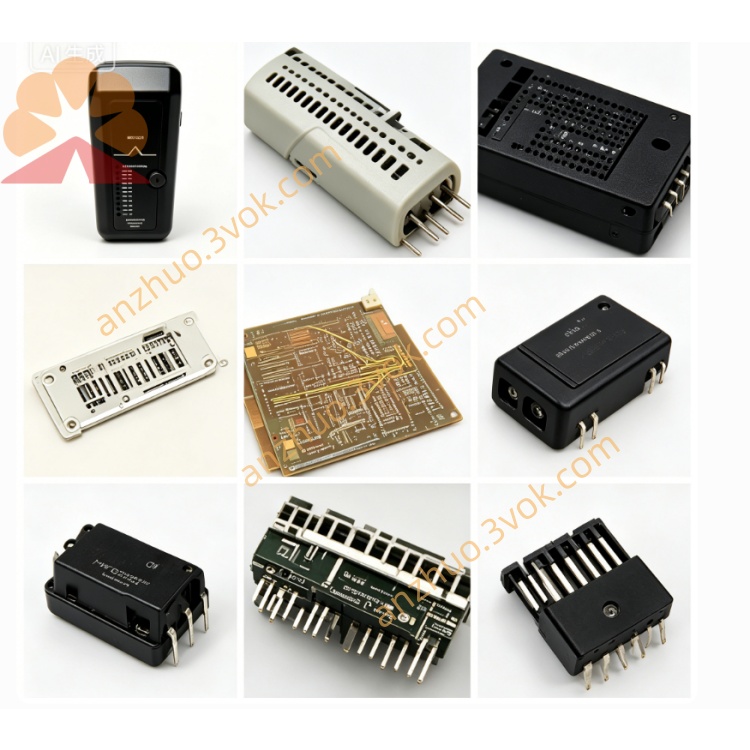
EMERSON 1C31161G02 Ovation Control Processor Module
Description
Emerson 1C31161G02 Product Description (Ovation High-Precision RTD Input Module)
1C31161G02 is a 16-channel high-performance RTD temperature input module for Emerson (formerly Westinghouse)'s Ovation DCS system. As an upgraded model of 1C31161G01, its hardware and firmware have been comprehensively optimized, featuring a wider operating temperature range, stronger anti-interference capability, and higher long-term stability. It is specifically designed for Pt100/Pt1000 platinum resistance signal acquisition and is widely used in key temperature monitoring scenarios such as power generation, chemical industry, oil and gas, and metallurgy.
I. Product Overview
Model: 1C31161G02
Brand: Emerson (formerly Westinghouse)
Series: Ovation DCS I/O Module (RTD-specific Personality Module)
Core Function: 16 independent isolated RTD (platinum resistance) temperature signal high-precision acquisition and conversion
Sensor Compatibility: Pt100 (100Ω @ 0℃), Pt1000 (1000Ω @ 0℃), compliant with DIN 43760 standard
Design Position: Industrial-grade precision temperature monitoring core component, fully compatible with replacing 1C31161G01, plug-and-play without rewiring or program modification
Origin: United States
Warranty: 12 months
II. Core Function Characteristics
1. High-density and high-precision temperature acquisition
The module integrates 16 independent isolated input channels, enabling multi-point dense temperature measurement with a single module, significantly saving cabinet space and wiring costs. It uses a 14-bit high-precision A/D converter, with a temperature measurement range of **-200℃ to +850℃**, suitable for most industrial high-temperature and low-temperature scenarios. The typical accuracy at 25℃ is ±0.1℃, and at 0℃, the accuracy can reach ±0.05% FS, with a resolution of 0.01℃, capable of accurately capturing minute temperature fluctuations. The sampling rate is 50–60 SPS (samples per second), with a response time of less than 500ms, ensuring rapid transmission of temperature change signals to the controller.
2. Full-channel fault self-diagnosis (core advantage)
It has complete channel-level and module-level diagnostic capabilities, monitoring the status of the equipment and lines in real time, reducing the difficulty of on-site fault troubleshooting. It supports RTD sensor open circuit and short circuit detection, capable of promptly alarming sensor breakage, poor contact, or short circuit faults; supports 3-wire/4-wire wiring cable breakage, resistance imbalance diagnosis, accurately locating line faults; and also monitors module power supply overvoltage/undervoltage and communication abnormalities with the Ovation controller, etc. A single-channel fault does not affect the normal operation of other channels, ensuring the continuous and stable operation of the system.
3. Strong isolation and anti-interference design
The module adopts a 1500VAC channel-to-channel and channel-to-bus dual isolation design, effectively blocking electrical interference and signal crosstalk. The common-mode suppression ratio is greater than 120dB, capable of suppressing common-mode interference generated by industrial equipment such as frequency converters, motors, and transformers. The hardware filtering and software filtering are configured in dual modes, with filtering time adjustable from 0 to 100ms, suitable for different interference intensities in the field environment. The G02 model optimizes PCB layout and shielding design, enhancing EMI/ESD protection capabilities, and significantly improving the anti-interference performance compared to G01.
4. Hot-swappable and redundancy support
It supports online hot-swapping, allowing direct insertion and replacement of modules while the system is running, without downtime, significantly reducing maintenance costs and downtime risks. It is compatible with the Ovation DCS system redundancy architecture, supporting redundant configuration of controllers and I/O buses, enabling seamless switching in the event of a fault, ensuring the continuity and reliability of critical process temperature monitoring.
III. Detailed Technical Specifications
Electrical Parameters
Power supply voltage: 24VDC ±10%, sourced from the main power supply and auxiliary power supply of Ovation
Typical power consumption: ≤4.8W
Input signal type: Pt100, Pt1000 (DIN standard)
Temperature measurement range: -200℃ ~ +850℃
Measurement accuracy: ±0.1℃ (25℃ environment, Pt100)
Resolution: 14-bit A/D converter (0.01℃)
Sampling rate: 50–60SPS Isolation level: 1500VAC / 1min (between channels, channel - backplane)
Common mode rejection ratio: >120dB
Filter configuration: Dual filtering of hardware and software, configurable from 0 to 100ms
Environmental parameters
Operating temperature: -10°C ~ +65°C (extends the temperature range compared to G01, suitable for harsh environments)
Storage temperature: -40°C ~ +85°C
Relative humidity: 5%–95% RH (no condensation)
Vibration tolerance: 5g (compliant with IEC 60068-2-6 standard)
Impact tolerance: 30g (compliant with IEC 60068-2-6 standard)
Protection level: IP20 (dust-proof, finger-proof)
Certifications: CE, RoHS certification Physical parameters
Dimensions: 122 × 50 × 165 mm (standard module size of Ovation)
Weight: Approximately 0.32 kg
Installation method: Standard DIN rail installation
Status indicator lights: Equipped with PWR (power), RUN (operation), COM (communication), and FAULT (fault) indicator lights, as well as 16 channel status indicator lights (CH0–CH15), which display the real-time operating status of the module and channels
Communication parameters
Bus protocol: Ovation dedicated I/O bus
Data update rate: 100ms (configurable)
Redundancy support: Compatible with Ovation system redundancy configuration, with no disturbance switching
V. Typical application scenarios
Power generation industry
Used for monitoring the temperatures of key equipment and media such as boiler tube wall temperature, turbine bearing temperature, flue gas inlet and outlet temperature, generator stator/rotor temperature, condenser temperature, etc., to ensure the safe and stable operation of power generation equipment.
Chemical industry
Suitable for precise temperature control scenarios such as temperature of reaction vessels, distillation tower interiors, pipeline medium temperatures, storage tank material temperatures, heat exchanger inlet and outlet temperatures, etc., meeting the strict temperature accuracy requirements of chemical processes.
Oil and gas industry
Applied to monitoring oil well wellhead temperatures, temperature along oil and gas pipelines, oil temperature in storage tanks, compressor equipment temperatures, reaction temperatures in refining and chemical plants, etc., suitable for high-temperature, low-temperature and strong interference environments in oil and gas sites.
Metallurgical industry
Used for monitoring temperatures of blast furnace sections, steel water temperature, heating furnace temperatures, cooling system water temperatures, rolling machine equipment temperatures, etc., to ensure the stable temperature and equipment safety in metallurgical production processes.
Other industrial scenarios
Widely applicable to pharmaceutical, food processing, water treatment, papermaking and other industries that require high-precision temperature measurement and control, and suitable for upgrading the old Ovation system, directly replacing 1C31161G01 to enhance system performance.
VI. Installation and wiring instructions
Module installation
The module is installed using the standard DIN rail installation method, compatible with Ovation standard cabinets. When installing, the module spacing should be ≥ 20mm to ensure the heat dissipation space; the installation position should be away from frequency converters, motors, transformers and other strong electromagnetic interference equipment to avoid signal interference. Hot plugging operation is supported, and no power-off is required when plugging or unplugging, simply align and push or pull the module into or out of the rail.
Sensor wiring (mainly 3-wire system)
3-wire system for Pt100/Pt1000 (industrial mainstream)
Channel +: Connect to the common end of the RTD sensor
Channel -: Connect to the other end of the RTD sensor
Compensation wire: Connect to the third wire of the RTD sensor to eliminate the influence of cable resistance on measurement accuracy
4-wire system (ultra-high precision scenarios)
4-wire system adds an additional compensation wire on the basis of 3-wire system, further eliminating the influence of cable resistance and contact resistance, suitable for extremely high-precision scenarios, with wiring method similar to 3-wire system, connect according to terminal markings.
Cable requirements
It is recommended to use shielded twisted pair cables, with a cable cross-sectional area of 1.5mm²; the shield layer is connected using a single-ended grounding method, only grounding on the cabinet side to avoid forming a circulating current and introducing interference. The maximum cable length of 3-wire system is ≤ 500m, and that of 4-wire system is ≤ 1000m, meeting the wiring requirements of most industrial sites.
Software configuration (Ovation system)
After module installation and wiring, simple configuration in the Ovation system can be performed for immediate use: select channel type as Pt100 or Pt1000; set wiring method as 3-wire system or 4-wire system; configure filtering time (0–100ms); select temperature unit (℃/℉); Set the alarm thresholds for high/low temperatures, disconnection alarms, etc.
VI. Core Differences between G02 and G01
Working temperature range: G01 is 0℃ to +60℃, while G02 extends to -10℃ to +65℃, suitable for low-temperature cabinets or high-temperature environments;
Anti-interference capability: G02 optimizes PCB shielding and filtering circuits, improving EMI/ESD protection levels, and enhancing anti-interference performance;
Stability: G02 uses higher-grade industrial-level components, with higher clock accuracy, smaller long-term drift, and longer MTBF (Mean Time Between Failures);
Compatibility: G02 is fully compatible with G01, can be directly replaced, and does not require modification of system programs or on-site wiring.
VII. Ordering and Supplementary Information
Ordering model: 1C31161G02
Supplementary accessories:
Terminal block: 1C31190G01 (16-channel dedicated terminals, for use with wiring)
Connection cable: Ovation dedicated I/O bus cable
Sensor adapter: Pt100/Pt1000 (3-wire/4-wire configuration, selected according to on-site requirements)
Get a Quote