
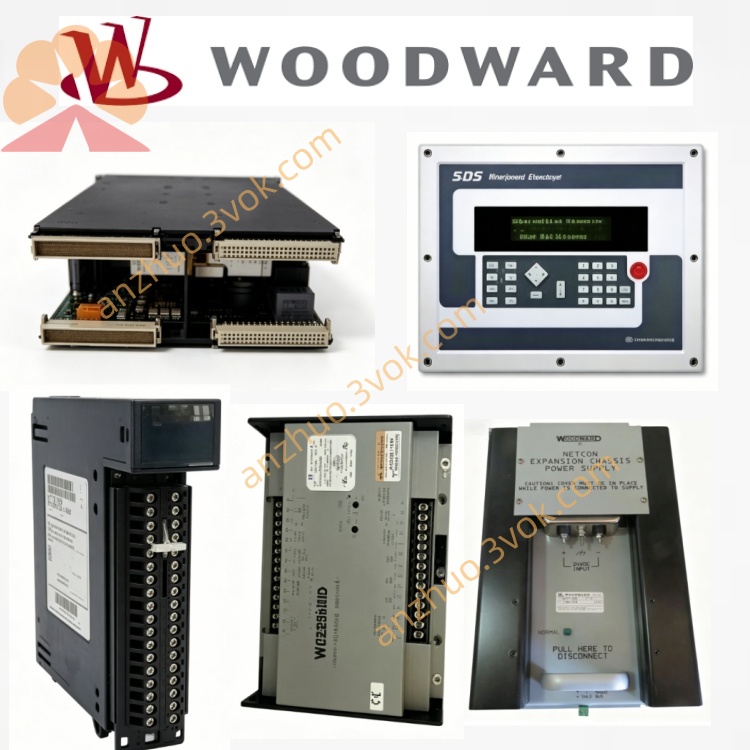
WOODWARD 5460-842 505 Turbine Controller
Description
Woodward 5460-842 Digital Speed Controller Product Manual
I. Product Overview
The Woodward 5460-842 is a digital speed / load controller (Digital Speed Controller) launched by the American company Woodward. It belongs to the 5460 series of industrial control modules and is specifically designed for high-precision speed regulation, load distribution, and synchronization control of industrial engines, turbines, and generator sets. As the core control unit of the 5460 series, it is positioned as the core of speed closed-loop control and can operate independently or in conjunction with the 505/505E control system to achieve precise speed regulation, stable operation, and multi-machine parallel control of rotating machinery.
1.1 Basic Positioning
It belongs to the 5460 modular control component. The core functions are engine/turbine speed regulation, generator synchronization, and load distribution.
It is compatible with diesel engines, gas engines, steam turbines, gas turbines, compressors, etc. and is suitable for single-machine operation, multi-machine parallel operation, isolated grid / grid-connected power generation scenarios.
It can be used as an independent controller or seamlessly integrated with Woodward 505, 505E, NetCon, etc. control systems.
1.2 Core Value
It provides a **±0.25%** speed control accuracy, ensuring stable equipment speed and precise frequency.
It supports dual regulation modes of no difference / difference, meeting the requirements of single-machine voltage stabilization and multi-machine parallel load balancing.
It integrates the synchronization function to achieve automatic matching of generator frequency, phase, and voltage, simplifying grid connection operations.
It has industrial-grade wide temperature, anti-interference, and explosion-proof design, suitable for harsh working conditions in the petroleum, chemical, power, and ship industries.
It has multiple communication interfaces + remote debugging functions, supporting remote monitoring, parameter configuration, and fault diagnosis.
2. Technical Specifications Parameters
2.1 Electrical Parameters
Power input: 18–32 Vdc (standard 24 Vdc), reverse polarity protection
Power consumption: Maximum 30 W
Analog signal input
Speed feedback: Magnetic-electric sensor (MPU) signal, 1–120 kHz
Control signal: 4–20 mA, 1–5 Vdc (remote speed setting)
Analog signal output
Actuator drive: 0–5 Vdc, 4–20 mA, PWM pulse (low current)
Status feedback: Speed / load analog output (4–20 mA/1–5 Vdc)
Digital interface
Serial port: Dual independent RS-232, RS-422
Ethernet: Redundant 10/100 Mbps ports
Optional protocols: Modbus RTU/ASCII, Profibus DP
Control accuracy: Speed regulation accuracy ±0.25%
Speed range: 0–15,000 rpm (compatible with different MPU sensors)
2.2 Physical and Environmental Parameters
Size: 200 mm × 150 mm × 50 mm
Weight: Approximately 430 g
Operating temperature: -40℃ to +85℃
Storage temperature: -40℃ to +125℃
Protection class: Class 1, Div 2 (explosion-proof certification)
EMC compatibility: EN 61000-6-2 (anti-interference), EN 61000-6-4 (radiation)
Reliability: MTTF ≥ 22,000 hours (confidence level > 95%)
3. Function Parameters
Regulation mode
No difference regulation (Isochronous): Eliminate static speed deviation, constant speed control
Differential regulation (Droop): Proportional regulation, supports automatic load distribution in multi-machine parallel operation
Synchronization function
Automatic frequency, phase, voltage matching (with AVR)
Synchronization output: Analog / discrete bias signal
Grid connection allowed / locked protection
Protection functions
Over-speed / under-speed protection, sensor break detection
Overcurrent / overload protection, power failure alarm
Actuator fault diagnosis, communication abnormal alarm
Compatible systems
Woodward 505/505E, 723/723+, NetCon, MicroNet
Third-party PLC, DCS control systems
3. Product Function Details
3.1 High Precision Speed Control Built-in 32-bit microprocessor and high-precision PID algorithm, it processes the MPU speed signal in real time and outputs stable actuator control signals. The speed control accuracy reaches ±0.25%.
Supports remote speed setting (4–20 mA/1–5 Vdc), compatible with centralized control of automation systems.
It has a fast dynamic response, small speed fluctuations during load changes, and short recovery time, ensuring stable operation of the equipment.
3.2 Dual Mode Adjustment and Load Distribution
Isochronous mode (No static deviation in speed, maintaining a constant speed, unaffected by load fluctuations.)
Applicable scenarios: Independent grid power generation units, single engine/turbine constant speed control.
Droop mode (Speed decreases according to the set ratio as the load increases (adjustable speed drop: 0%–10%))
When multiple units are connected in parallel, it automatically distributes the load, avoiding overload of a single unit and achieving load balance.
Applicable scenarios: Multi-engine/turbine parallel power supply, grid-connected power generation.
3.3 Integrated Automatic Synchronizer Function
Built-in microprocessor synchronizer, automatically detects grid/mast frequency, phase, and voltage, and outputs bias signals to regulate the speed and voltage of the units.
The synchronization process is fully automatic, without the need for manual intervention, shortening the grid connection time, and reducing the impact current.
Automatic locking in case of synchronization failure to prevent non-synchronous grid connection and protect the unit and grid safety.
3.4 Multi-protocol Communication and Remote Monitoring
Dual serial ports (RS-232/RS-422) + redundant Ethernet, supports real-time communication with upper computers, PLCs, and DCSs.
Optional Modbus, Profibus protocols, seamless integration into industrial automation networks.
Supports remote parameter setting, dynamic debugging, fault code reading, and historical data download.
Local LED indicators display real-time operating status and fault types, facilitating rapid on-site diagnosis.
3.5 Comprehensive Protection and Diagnosis
Speed protection: Speed over/under threshold can be set, triggering an immediate speed reduction or shutdown to protect equipment safety.
Sensor monitoring: Real-time detection of MPU sensor signals, outputting alarms when the signal is disconnected/abnormal and switching to the standby mode.
Fault recording: Automatically stores fault codes, occurrence time, and operating parameters, supporting traceability analysis.
Redundant design: Dual Ethernet ports redundancy, automatic switching of communication links in case of failure, ensuring continuous control.
4. Application Scenarios
4.1 Industrial Power Generation System
Diesel/gasoline generator sets: Single unit constant voltage power generation (isochronous mode), multi-unit parallel load distribution (differential mode).
Combined heat and power units: Adjusting the speed of steam turbines/gas turbines to match thermal/electric loads, stabilizing output frequency.
Ship power generation: Wide temperature resistance and anti-vibration design, suitable for ship vibrations and salt spray environments, ensuring continuous power supply.
4.2 Turbine Control
Steam turbines: Adjusting the main steam valve/valve opening to control speed and output power, suitable for extraction/auxiliary steam turbines.
Gas turbines: Precisely controlling fuel valve opening to stabilize speed, preventing overspeed/ignition, improving combustion efficiency.
Turboexpander: Adjusting speed to match process gas flow and pressure, ensuring energy recovery efficiency.
4.3 Engines and Fluid Machinery
Industrial engines: Speed regulation for diesel/gasoline engines, suitable for pumps, compressors, and fan drives, stabilizing speed and output power.
Compressor/pump sets: Speed adjustment to control flow/pressure, meeting process fluctuation requirements, reducing energy consumption.
4.4 Multi-unit Grid Connection System
Multi-unit grid connection: Automatic load distribution in differential mode, balanced load distribution among units, improving system stability and efficiency. Island Grid: In non-differential mode, it maintains the stability of the grid frequency, suitable for remote areas, mines, and oil fields for independent power supply.
V. Product Advantages
Excellent control accuracy
±0.25% speed control accuracy, with minimal frequency fluctuations, meeting the requirements for precise power generation and equipment drive.
Highly integrated functions
Integrates speed regulation, load distribution, automatic synchronization, and protection diagnosis, reducing external components and simplifying the system architecture.
Strong adaptability to operating conditions
-40°C to +85°C wide temperature range, explosion-proof, resistant to strong vibration / strong electromagnetic interference, suitable for extreme industrial environments.
Good system compatibility
Compatible with Woodworth's full range of control systems and third-party PLC/DCS, with modular design for easy installation and expansion.
Intelligent operation and maintenance
Remote debugging, self-diagnosis of faults, data recording, reducing on-site operation costs and improving equipment availability.
Reliable safety redundancy
Dual Ethernet redundancy, multiple protection mechanisms, high MTTF, ensuring continuous fault-free operation of critical equipment.
VI. Installation and Usage Tips
6.1 Installation
Installation method: Panel installation or standard guide rail installation, fixed in the control cabinet, avoiding strong vibration, high temperature, and strong electromagnetic interference sources.
Power connection: Connect to a stable 18–32 Vdc power supply, strictly distinguish positive and negative poles, use shielded cable.
Signal connection
Speed sensor (MPU): Double-core shielded wire, single-ended grounding of the shield layer.
Actuator: Analog/PWM output line, away from power cables, avoiding interference.
Communication line: RS-232/422 / Ethernet uses standard shielded cable, redundant ports are independently laid.
6.2 Debugging
Power-on self-check: LED indicator lights are normally lit, no fault alarm codes.
Sensor calibration: Set MPU gear number, pole pairs, calibrate zero point and range of speed.
Mode selection: Set non-differential / differential regulation mode, configure speed reduction ratio (differential mode).
Synchronization parameters: Set synchronization allowable range, voltage matching threshold, grid connection delay.
Protection configuration: Set over-speed / under-speed, overload protection values, enable fault alarm output.
6.3 Maintenance
Regularly check wiring terminals, power voltage, stability of sensor signals.
Fault troubleshooting: Locate faults through LED codes or communication messages (sensor, power, actuator, communication).
Module supports hot swapping (compatible with the system), no need to power off the entire machine when replacing, reducing downtime.
VII. Model Association and Accessories
7.1 Associated models of the same series
5460-840: Pressure reference module
5460-841: Auxiliary control module
5460-842: Speed / Load Controller (this model)
5460-843: Steam turbine actuator controller
5466-348: SIO Input Output Expansion Module
7.2 Common Accessories
Magnetic-electric speed sensor (MPU)
Actuator (electro-hydraulic converter, proportional valve)
RS-232/422 communication cables, Ethernet cable
Installation guide rails, fixing brackets
Woodworth 505 Control System Software, programmer
VIII. Summary
The Woodward 5460-842 digital speed controller is a high-precision, multi-functional core control unit in the field of industrial rotating machinery control. With ±0.25% speed accuracy, dual-mode regulation, integrated automatic synchronization, comprehensive protection diagnosis, and high-reliability industrial-grade design, it is widely used in power generation, turbines, engines, compressors, etc., providing stable, safe, and efficient control solutions for single-machine constant speed, multi-machine parallel operation, and grid power generation, and is a key core module of industrial automation and energy power systems.
Get a Quote