
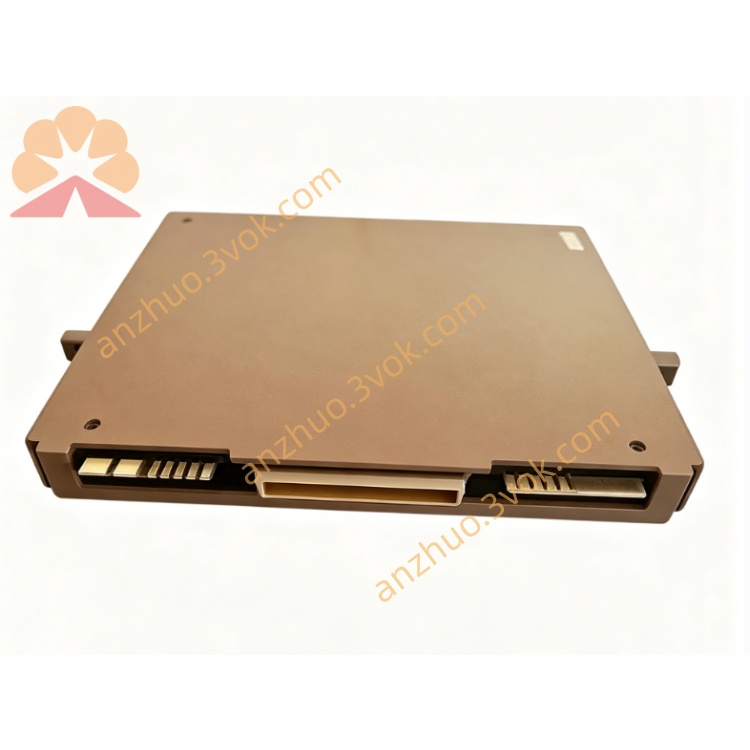
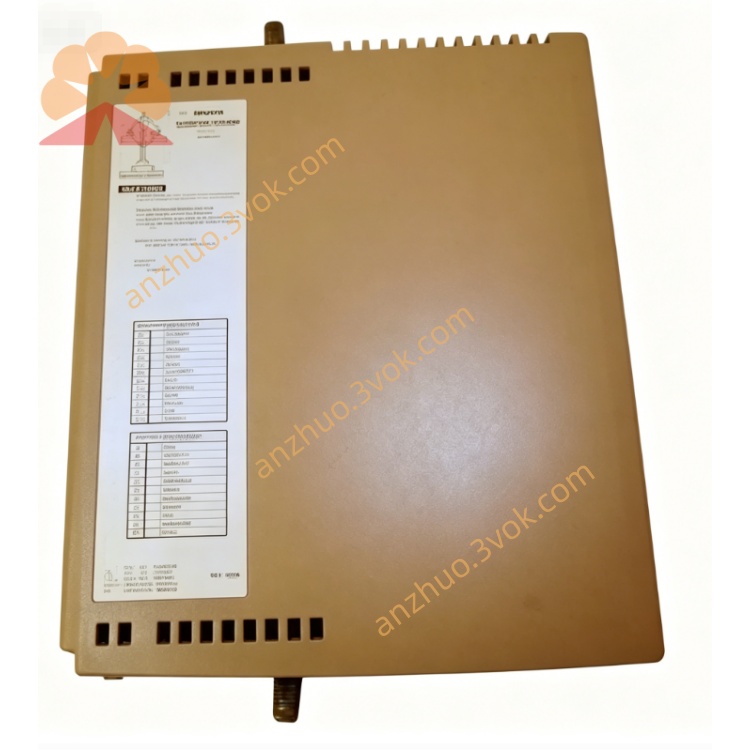
ICS Triplex T3470A Safety Digital Input Module for SIL3 TMR Safety Instrumented SIS System
Description
2. Key Features
8 isolated analog outputs, 4–20 mA range.
12‑bit D/A converter per channel for high resolution.
Hot‑swappable for online replacement without system shutdown.
Triplicated I/O Safetybus interface prevents unintended output changes from single faults.
2500 Vrms isolation between field and logic circuits.
TÜV certified (Risk Class 5), compliant with IEC 61508.
Front‑panel LEDs indicate active/fault and shutdown status.
3. Technical Specifications
Model: T3470A
Manufacturer: Rockwell ICS Triplex
System Compatibility: Regent/Trusted T3 series TMR systems
Logic Power: 24 VDC ±10%
Output Signal: 4–20 mA (sink/source selectable)
Resolution: 12 bits (0.025% of span)
Accuracy: ±0.1% of span (25°C)
Isolation Voltage: 2500 Vrms (field‑to‑logic)
Load Resistance: 0–600 Ω per channel
Power Consumption: 2.8 W (max)
Operating Temperature: −40°C to +70°C
Storage Temperature: −40°C to +85°C
Humidity: 5%–95% non‑condensing
Dimensions: 120 mm × 140 mm × 30 mm
Weight: 0.5 kg
Certifications: TÜV (Risk Class 5), CE, UL.
4. Installation & Wiring
4.1 Mechanical Installation
Mount in a standard ICS Triplex T3 series rack (slots 0–15).
Ensure chassis grounding for ESD protection.
Maintain ≥25 mm clearance around the module for ventilation.
4.2 Wiring
Backplane Connector: Connects to system backplane for 24 VDC logic power and triplicated I/O Safetybus communication.
Field Terminals:
8 analog output channels (CH1–CH8) for 4–20 mA devices.
Common ground terminals for field loops.
Cable Requirements: 18–22 AWG twisted shielded pair; torque terminals to 0.8–1.0 N·m.
Shielding: Connect cable shield to module chassis ground at one end only.
5. Operation
5.1 Power‑Up & Self‑Test
Apply 24 VDC logic power; the module runs a 5‑second initialization:
LED test (all status lights on)
RAM/PROM self‑tests
Normal mode (green “ACTIVE” LED on)
“ACTIVE” LED (green) lights; “FAULT” LED (red) remains off if healthy.
5.2 Normal Operation
Output Control: Triplicated commands from the system processor are voted; outputs update only if all three paths agree.
LED Indicators:
Green: Module active, no faults.
Red: Module/channel fault (open circuit, overload, internal error).
Signal Range: 4 mA = 0% scale, 20 mA = 100% scale (configurable via system software).
5.3 Fault Handling
Channel Fault: Module disables the faulty channel; “FAULT” LED lights. Check wiring, load resistance, or field device.
Module Fault: Communication loss or internal error. Verify backplane connection or replace the module (hot‑swap supported).
6. Maintenance
Monthly Inspection: Check LED status, wiring tightness, and module temperature.
Cleaning: Use a dry cloth to remove dust; avoid harsh chemicals.
Calibration: Recommended every 2 years (via system software or external calibrator).
Replacement: Hot‑swap procedure: remove faulty module, insert new one, and confirm operation via system diagnostics.
7. Safety Precautions
ESD Protection: Wear a grounded wrist strap when handling the module.
Power Isolation: Disconnect 24 VDC logic power before wiring.
Load Ratings: Do not exceed 600 Ω load resistance per channel.
Fault Response: Address “FAULT” LED alerts immediately to maintain safety integrity.
Get a Quote