
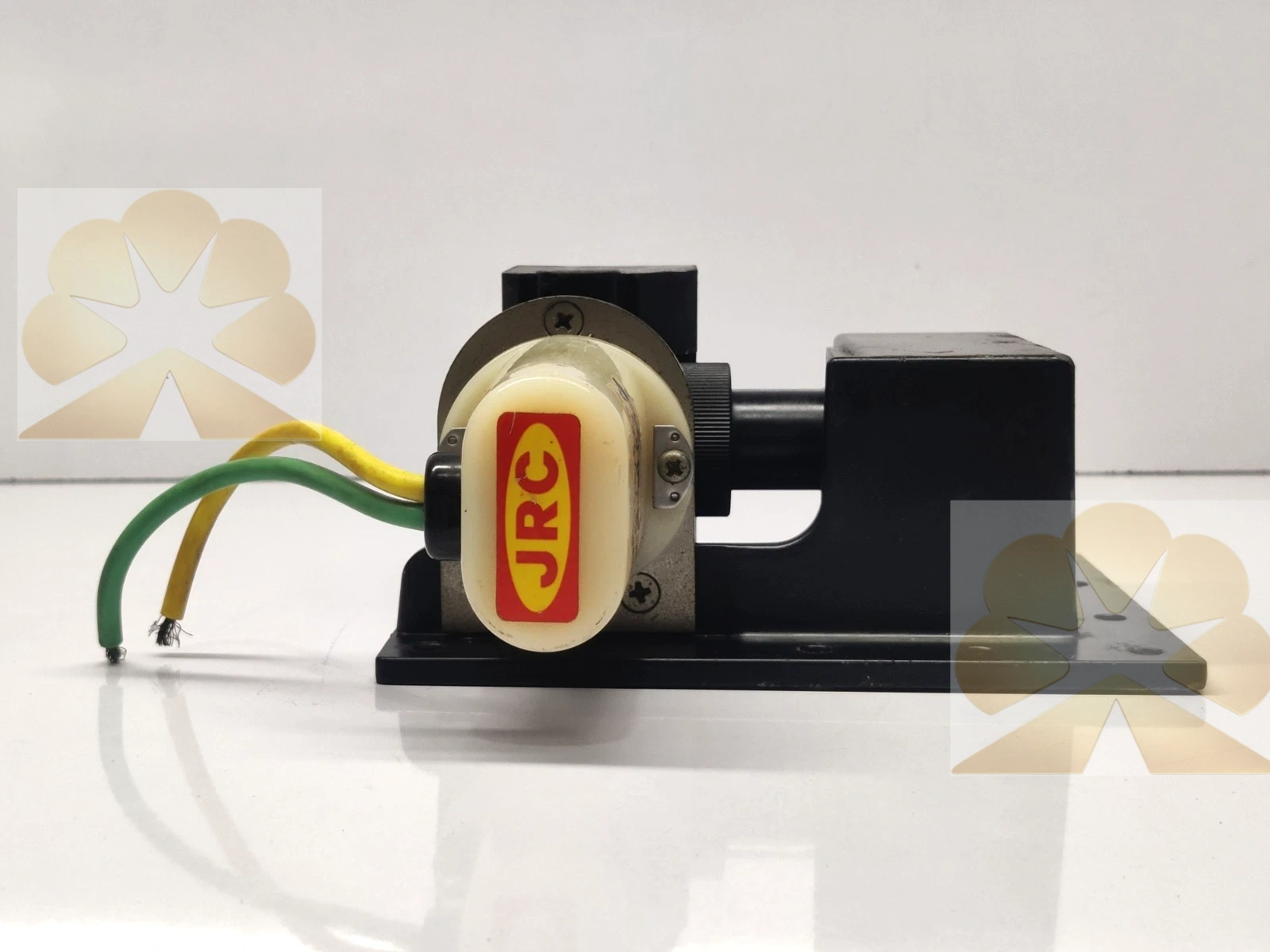
Description
JRC MAGNETRON M-1302A Product Description
Overview
JRC MAGNETRON M-1302A is an S-band pulse magnetron manufactured by JRC (Japan Radio Co.), designed as the transmitting microwave tube for marine radar systems. The JRC MAGNETRON M-1302A generates high-power pulsed microwave signals at S-band frequency for target detection, ranging and echo imaging on vessels. This M-1302A radar magnetron serves as a reliable JRC S-band marine radar magnetron, widely used for original and replacement transmit tubes on JRC marine radar equipment of the JRC S-band marine radar magnetron.
Features
This JRC MAGNETRON M-1302A adopts fixed frequency S-band design with integrated permanent magnet assembly for the JRC S-band marine radar magnetron. It delivers stable peak pulse power output under specified pulse width and duty cycle conditions. It is equipped with standard waveguide output interface, matched with the radar transmitter circuit and circulator assembly. It requires specified heater preheating before high voltage excitation to extend service life. The JRC MAGNETRON M-1302A is a precision microwave vacuum tube, sensitive to overvoltage, mismatched load and excessive VSWR. This model is mainly supplied as spare replacement part for maintenance and retrofit of legacy JRC marine radar systems of the M-1302A radar magnetron.
Specs
The JRC MAGNETRON M-1302A series: S-band marine radar pulse magnetron. Frequency range: 3.04 GHz ~ 3.06 GHz. Peak output power: 30 kW typical. Heater voltage: 6.3 V AC. Peak anode voltage: 8.0 kV typical. Pulse duration: 1.0 μs max. Duty cycle: 0.001 max. Output interface: waveguide. Cooling: natural convection air cooling. Weight: approx 2.3 kg. The JRC MAGNETRON M-1302A complies with marine radar component standards and CE requirements as a M-1302A radar magnetron.
Principle
JRC MAGNETRON M-1302A works by crossed-field microwave oscillation principle. The JRC MAGNETRON M-1302A heater heats the cathode to emit electrons, and electrons move under the combined action of high anode voltage and permanent magnetic field. Electrons interact with resonant cavity structure to form high-frequency microwave oscillation, and pulsed microwave energy is coupled out through waveguide port. The magnetron only outputs microwave during high voltage pulse excitation. The crossed-field oscillation structure of the JRC S-band marine radar magnetron converts high-voltage pulse energy into S-band microwave radiation for radar transmission.
Applications
This JRC MAGNETRON M-1302A is widely installed on cargo ships, tankers, fishing vessels and offshore platforms fitted with JRC S-band marine radar. It is applied for navigation target detection, collision avoidance and nautical surveillance. It is used for spare replacement and retrofit of legacy JRC radar transmitters. The JRC MAGNETRON M-1302A delivers dependable high-power microwave transmission for marine navigation radar as a proven M-1302A radar magnetron.
Get a Quote