
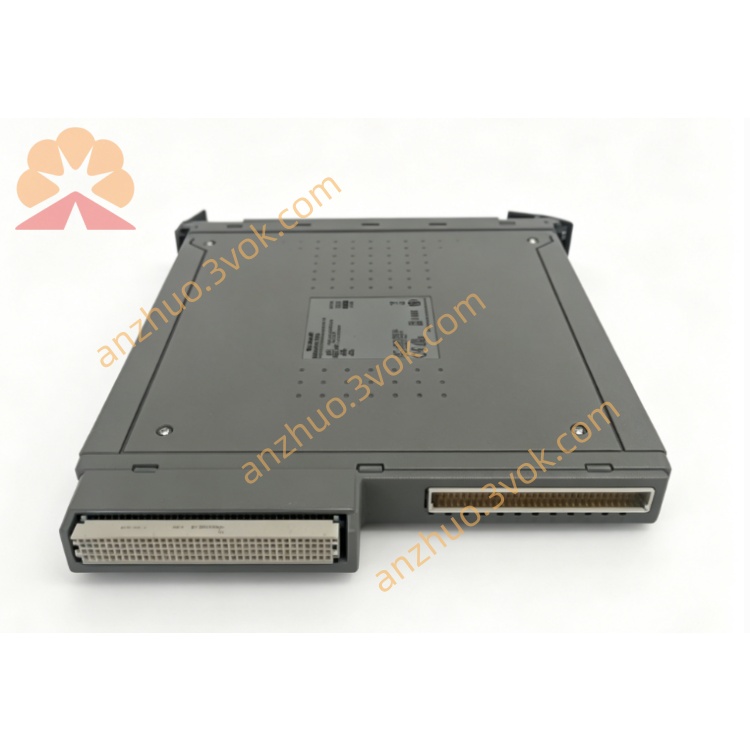
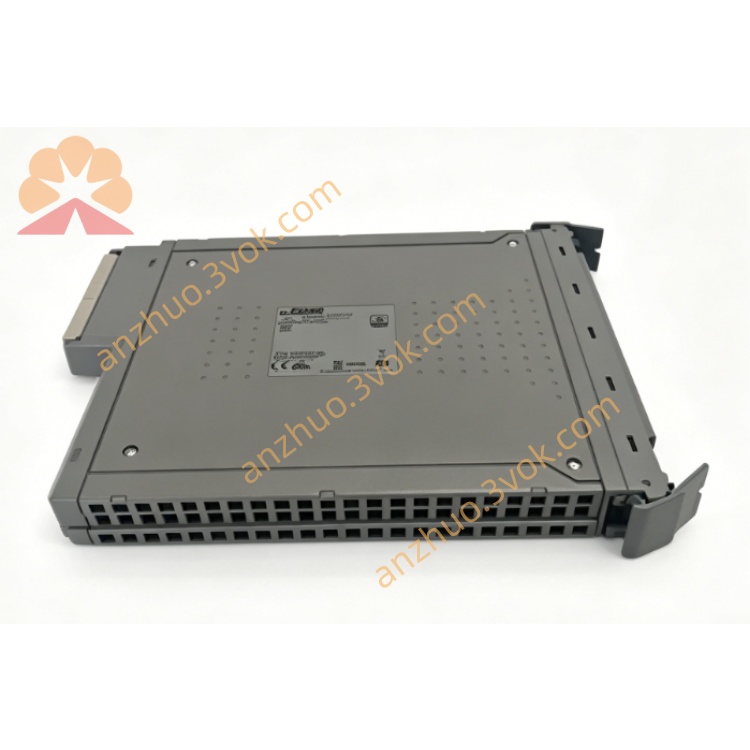
ICS Triplex 151661 Field Terminal Assembly Board for SIL3 TMR Safety Instrumented System
Description
2. Key Specifications
Manufacturer: ICS TRIPLEX (Rockwell Automation)
Model: 151661
Type: Redundant Control Module (for Triconex/Triplex systems)
Operating Voltage: 220 V AC (±10%), 50/60 Hz
Power Consumption: ≤ 150 W
Operating Temperature: 0 °C to +55 °C
Storage Temperature: −40 °C to +85 °C
Safety Integrity: SIL 3 (IEC 61508)
Communication: Dual redundant Ethernet (10/100 Mbps), Modbus TCP/IP, proprietary Triplex protocol
Redundancy: Triple‑modular redundant (TMR) architecture, hot‑swap capable
Certifications: UL 508, CE, IEC 61508, TÜV Rheinland
3. Functional Overview
Redundant Processing: Three independent processor channels perform identical logic; 2‑out‑of‑3 voting ensures fault tolerance and no single‑point failure.
I/O Interface: Connects to analog/digital I/O modules via redundant backplane; supports 4–20 mA, 0–10 V, 24 V DC discrete signals.
System Supervision: Monitors module health, voltage, temperature, and communication status; provides fault diagnostics and event logging.
Hot‑Swap: Replace module online without system shutdown; automatic synchronization of redundant channels.
4. Installation
Mount in standard ICS TRIPLEX chassis (e.g., Triconex 8100) via front‑loading slot.
Ensure chassis ground connection (PE) for EMC compliance and safety.
Connect redundant Ethernet cables to switch; use CAT5e/CAT6 shielded cables.
Verify backplane connector alignment; insert module firmly until latch clicks.
Power on chassis; module initializes and synchronizes with redundant peers (≤ 60 s).
5. Wiring
Power: L (220 V AC), N, PE (protective earth)
Ethernet: ETH1 (primary), ETH2 (secondary) – RJ45 connectors
Backplane: Internal high‑speed redundant bus (no user wiring)
6. Safety Instructions
Isolate Power: Disconnect all AC/DC power before installation, wiring, or maintenance.
Hot‑Swap Only: Replace modules only when system is in RUN state; do not remove during critical process phases.
EMC Compliance: Use only shielded cables; maintain minimum 10 cm separation from high‑power cables.
No Unauthorized Modification: Do not open module housing; internal components are factory‑sealed and non‑repairable.
Environmental Limits: Operate within specified temperature/humidity ranges to prevent overheating or condensation damage.
7. Maintenance
Daily: Check module LED status (RUN/FAULT/COMM); verify no alarm codes in system HMI.
Monthly: Inspect cable connections, ventilation filters, and chassis grounding; clean dust from module vents.
Quarterly: Test redundant channel switching; verify fault detection and alarm reporting.
Annual: Perform full system diagnostics; update firmware (if required) via official ICS TRIPLEX tools.
8. Troubleshooting
Module Not Powering On: Check 220 V AC supply, fuse, and chassis backplane voltage.
Fault LED On: Refer to system manual for fault code; common causes – overtemperature, communication loss, or channel mismatch.
Communication Failure: Verify Ethernet cable integrity, switch port status, and IP address configuration.
Redundancy Loss: Check peer module status, backplane connection, and synchronization parameters.
Overheating: Clean ventilation filters; ensure chassis airflow is unobstructed; check ambient temperature.
Get a Quote