
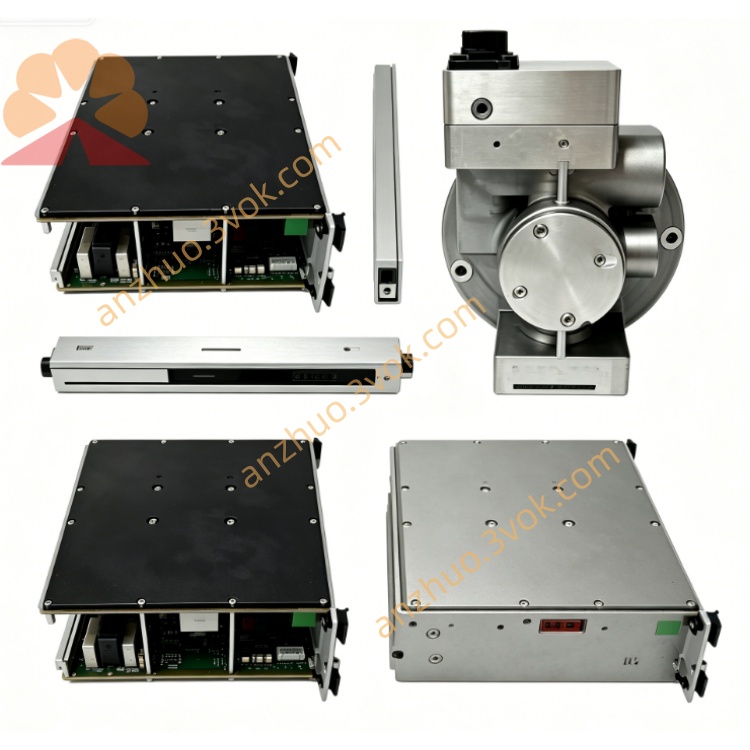
5462-757 WOODWARD 5462‑757 Controller Module Short intro (≤60 characters) Woodward 5462‑757 microprocessor‑based 505E controller for single‑valve steam turbine governing. Keywords Woodward 5462‑757,
The WOODWARD 5462‑762 is an industrial‑grade load‑sharing module designed for multi‑generator prime‑mover governing and generator paralleling applications. It realizes active‑power load distribution among multiple parallel‑running generator sets, works cooperatively with speed governors and AVR units to stabilize unit load under variable‑load operating conditions. Built for harsh industrial field environments, this unit withstands wide‑range temperature fluctuation, mechanical vibration and strong electromagnetic interference for long‑term continuous operation. It provides analog and discrete bias‑signal outputs for governor adjustment, and supports RS‑232 and RS‑422 serial communication interfaces for parameter configuration and status monitoring. Built‑in self‑diagnostic logic accelerates fault localization and shortens troubleshooting cycles. As genuine OEM spare hardware, it is widely deployed in power‑generation, gas‑compression and marine‑power facilities for system retrofits, component replacement and scheduled maintenance.
Description
The WOODWARD 5462‑762 is a field‑proven hardware unit belonging to Woodward’s prime‑mover control product portfolio, dedicated to load‑sharing and paralleling‑control functions for multi‑generator prime‑mover systems. As a dedicated load‑balance processing unit for parallel‑generator groups, this module collects generator‑unit power‑feedback signals, calculates target load‑distribution values according to system‑configured load‑sharing parameters, and outputs analog or discrete bias‑adjustment signals to connected speed governors and automatic‑voltage regulators. Its core objective is to achieve reasonable active‑power allocation among multiple paralleled generating units, prevent load‑unbalance and overload risks, and maintain stable system power supply performance when power‑generation assets undergo dynamic‑load shifts, improving overall power‑plant operational safety and unit‑running stability. The panel‑mount enclosure structure supports cabinet‑door or wall‑mount installation, and is suitable for various on‑site control‑cabinet layout conditions.
Constructed with industrial‑grade electronic assemblies, the module operates on nominal 24 VDC system power supply and delivers stable performance within the operating temperature range of ‑40 °C to +70 °C. It is equipped with independent RS‑232 and RS‑422 serial communication interfaces to support local and remote parameter setup and real‑time data reading. Internal signal‑conditioning circuits filter electrical noise introduced by long‑distance field wiring, guaranteeing high‑fidelity power‑measurement and load‑bias‑output signals for load‑sharing‑loop computation. Surge suppression, reverse‑polarity protection and EMC‑compliant hardware layout enhance resistance against on‑site power transients and electromagnetic radiation, lowering risks of unexpected misoperation caused by field‑side interference.
Embedded self‑diagnostic capability brings prominent practical value for on‑site servicing. The module continuously monitors supply‑voltage status, internal circuit health, communication‑link status and input‑signal validity. Once anomalies such as signal loss, communication dropout or internal hardware fault are captured, readable status‑information will be generated for service technicians. Operators can effectively distinguish internal‑module failures from defects originating in external sensors, governors, AVR hardware or cabling, avoiding blind component replacement and minimizing unplanned production downtime.
Typical application scenarios include multi‑unit gas‑turbine and diesel‑engine generator sets in power‑generation plants, natural‑gas‑compression facilities and marine‑power‑plant paralleling systems. Before installation, users shall confirm hardware and firmware compatibility with the existing Woodward governing and paralleling‑control platform. All mounting and wiring work must strictly comply with Woodward official technical documentation. Field signal cables need proper shielding and reliable grounding to preserve signal‑transmission integrity and reduce external interference.
Routine maintenance focuses on checking connector tightness, contact wear and surface‑dust accumulation. When fault alarms are triggered, technicians should read diagnostic status‑codes first for preliminary fault assessment. Unauthorized disassembly of internal circuitry will void OEM product warranty. All definitive technical specifications and application limits are subject to Woodward official datasheets. This module serves as a dependable spare‑part solution for hardware upgrade and daily maintenance of legacy multi‑generator paralleling‑control systems.
Get a Quote