
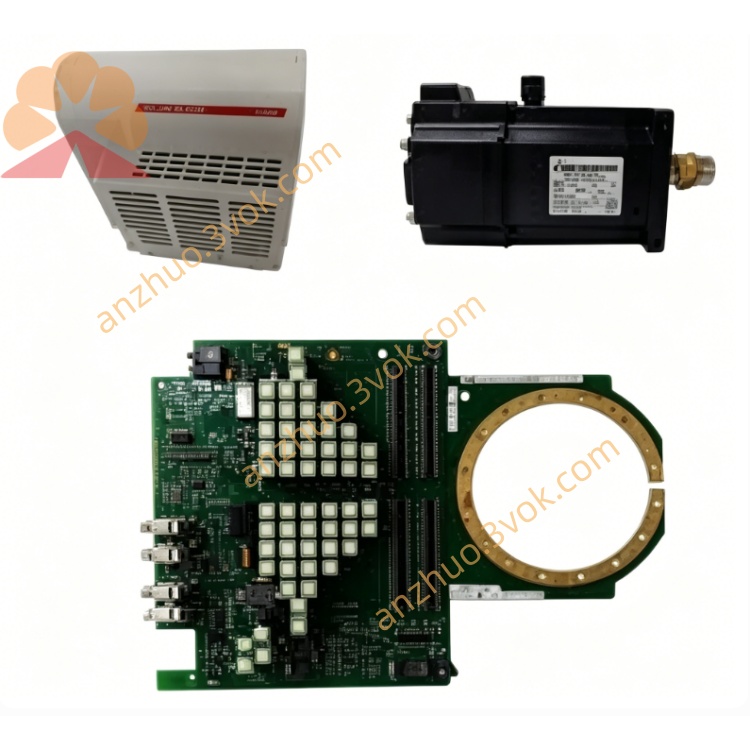
Woodward 5461‑775 Steam‑Turbine Digital Control Module
The Woodward 5461‑775 is a microprocessor‑driven digital turbine controller from Woodward’s 505/505E hardware series, designed for single‑valve steam‑turbine prime‑movers. It supports single‑extraction, admission and split‑range actuator configurations for thermal power plants, co‑generation facilities and chemical‑process installations. It receives real‑time feedback from speed pickups, pressure transmitters and valve‑position sensors, executes embedded governing algorithms and outputs actuator drive signals to stabilize turbine rotational speed and load under variable‑process conditions. Its integrated front‑panel operator unit with LCD display and keypad enables local parameter setup and status monitoring. Built‑in diagnostic logic delivers fault alerts to simplify commissioning and routine maintenance. It can interoperate with Woodward protective devices and plant‑side DCS systems to build complete turbine‑control architectures.
Description
The Woodward 5461‑775 is a dedicated microprocessor‑based digital control hardware optimized for single‑valve steam‑turbine prime‑mover control. It has wide‑ranging applications in thermal‑power stations, combined‑heat‑and‑power plants, refineries and chemical‑process facilities, where precise turbine speed regulation and stable load‑handling capability are essential for equipment safety and process stability. As a core signal‑processing and control‑execution component, it connects field‑mounted sensors, turbine actuators and higher‑level monitoring systems within Woodward control ecosystems.
This controller supports single‑extraction, admission and split‑range actuator setups to satisfy diverse process‑turbine configuration requirements. Multiple analog and digital input channels sample real‑time rotational‑speed, process‑pressure, valve‑position and load‑related feedback signals. Embedded governing and startup‑sequence algorithms compute actuator drive outputs to counteract speed deviations induced by load ramps, grid‑side disturbances or changing process‑operating states. Field‑service technicians can configure governing gain, droop settings, startup ramps and protective thresholds in accordance with turbine‑unit‑specific characteristics. Standard configuration is completed by parameter adjustment without custom programming work. Its front‑panel operator control panel with two‑line multi‑character LCD and multi‑function keypad supports local parameter review and modification without additional HMI hardware.
Designed for cabinet‑mount installation inside standard industrial control enclosures, the 5461‑775 complies with Woodward’s strict industrial hardware specifications. Circuit‑board assemblies are protected with conformal coating to improve resistance against humidity, dust and mild airborne corrosive contaminants. It tolerates wide‑range temperature variation and delivers robust immunity to vibration, conducted noise and electromagnetic interference commonly encountered in turbine‑house environments. Such hardware hardening enables reliable long‑term continuous‑cycle operation.
Continuous on‑board diagnostic logic monitors module internal health, sensor loops and actuator feedback circuits. Detected faults are locally indicated and internally logged, helping maintenance operators rapidly locate wiring defects, sensor failures or internal hardware anomalies and reduce unplanned equipment downtime. Good interoperability allows it to pair with Woodward protection relays and plant DCS peripherals, enabling system integrators to assemble complete turbine‑control solutions.
During practical field‑service operation, the 5461‑775 suppresses speed and load fluctuation during turbine startup, load‑transition and grid‑connected running. It implements overspeed‑protection logic and critical‑speed avoidance functions to enhance unit‑operating safety. Validated in numerous thermal‑power and process‑industry projects, this field‑proven control module maintains consistent stability and lowers commissioning workload for integrators and end‑users.
Get a Quote